
Best Stretchy Cord for Bracelets: 4 Options Compared

JULIMAIDONG 0.8 mm Clear Cord is the best stretchy cord for most bracelets because its 0.8 mm clear round profile can pass through many beads while helping conceal the cord. Choose a different option if your bead holes need thicker cord, you want white or black elastic, or you need multiple diameters.
Stretch cord is elastic string threaded through beads and knotted to make a bracelet without a clasp; bead-hole clearance and a secure knot matter more than stretch alone.
We earn a commission if you buy through links on this page. As an Amazon Associate I earn from qualifying purchases. Products are compared on manufacturer specifications, not hands-on testing.
- Best overall: JULIMAIDONG 0.8 mm Clear Cord – Its clear 0.8 mm round cord balances bead threading with a less visible finish.
- Best for flat cord: Paxcoo 1 mm Flat Elastic Cord – The 1 mm-wide, 0.7 mm-thick profile offers a flat alternative with a 328-foot roll.
- Best for multiple sizes: FIVEIZERO 3-Size Elastic Cord Set – The set includes 1.0 mm, 1.2 mm, and 1.5 mm cord plus a beading needle.
| Product | Best for | Cord profile | Length | Color | Shop |
|---|---|---|---|---|---|
| JULIMAIDONG 0.8 mm Clear Cord | fine beads | 0.8 mm round | 200 ft | Clear | Check Price on Amazon |
| Paxcoo 1 mm Flat Elastic Cord | flat cord | 1 mm wide × 0.7 mm thick | 328 ft | White | Check Price on Amazon |
| FIVEIZERO 3-Size Elastic Cord Set | size variety | 1.0, 1.2, 1.5 mm | 330 ft total | Black and white | Check Price on Amazon |
| LUSTEMBER 1 mm Elastic String, 2 Rolls | two colors | 1 mm | Two rolls; length — | Black and white | Check Price on Amazon |
Stretchy Cord for Bracelets
Match cord thickness and shape to the bead holes, finish, and style of bracelet you plan to make.
JULIMAIDONG 0.8 mm Clear Cord

The 0.8 mm round cord is the thinnest option here, making it a practical starting point for beads with narrow holes. The roll contains 200 feet of clear elastic polyester spandex, and the maker says the fine cord ties easily and helps hide knots. Its transparent finish suits designs where visible thread would interrupt the look. Measure the bead-hole opening before choosing; a cord that fits through once may not leave room to double it for a reinforced pass.
Bottom line: Choose this for smaller-hole beads and a less visible cord.
Paxcoo 1 mm Flat Elastic Cord
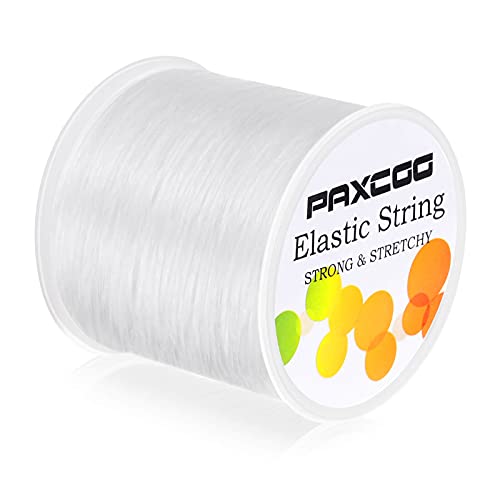
The flat profile distinguishes this white option from the round cords: it measures about 1 mm wide and 0.7 mm thick. Each roll contains 328 feet of elastic polyester spandex, and the maker says the flexible cord can pass through small or large beads and tie into a compact knot. The white color works best when it complements the bead palette rather than disappearing against every design. Check both dimensions against the bead hole, since a flat cord must pass with its wider side aligned.
Bottom line: Pick this when flat white cord and a long roll suit your project.
FIVEIZERO 3-Size Elastic Cord Set

The three diameters—1.0 mm, 1.2 mm, and 1.5 mm—make this the flexible choice when one project uses varied bead holes or you are deciding between cord sizes. The set totals 330 feet and includes black-and-white cord plus a beading needle. The maker says the 1 mm white cord stretches for bracelet making. The tradeoff is that the total is divided among sizes, so it does not provide one continuous 330-foot length of a single diameter.
Bottom line: Choose this when you want several cord thicknesses and a needle.
LUSTEMBER 1 mm Elastic String, 2 Rolls

The two-color format is the main distinction: this set provides black and white 1 mm elastic string, whereas the other choices focus on clear or multiple diameters. Its features describe braided rubber with nylon-polyester fabric and say the cord is flexible, easy to cut, and easy to knot. That makes it suitable for general beadwork and crafts where either color works with the design.
Bottom line: Pick this when black-and-white 1 mm cord fits your designs.
How to choose stretchy bracelet cord
Start with bead-hole clearance, then choose the cord finish and profile. A useful rule is to keep cord diameter at least 0.2 mm smaller than the narrowest bead hole; if you want to double the cord, test two strands through a bead before stringing the bracelet. Round cord is easier to orient through a hole, while flat cord can turn sideways and bind. Clear cord blends with many bead colors, whereas white or black can become part of the design. Elastic cord strength varies with material, braiding, and wear, so do not assume a thicker cord is automatically better for every bead or wrist.
| Project need | Starting choice | Check before stringing |
|---|---|---|
| Small holes | 0.8 mm round | Passage for a single strand |
| Flat profile | 1 mm wide, 0.7 mm thick | Hole clearance in both dimensions |
| Different bead sizes | Several diameters | Test each size with the smallest hole |
Bracelet cord thickness and bead-hole fit
Measure the smallest bead opening rather than judging by the bead’s outside size. A 0.8 mm cord is thinner than a 1 mm cord, but the flat option here is 1 mm wide and only 0.7 mm thick, so its orientation matters. For a doubled pass, two strands need more than twice the nominal diameter in practical clearance because cord and bead holes are not perfectly uniform. Thread a short test section through several beads before cutting a full bracelet length. If the cord catches, switch to a thinner option instead of forcing it, which can fray or damage the elastic.
Round, flat, and multi-size elastic compared
Round elastic is a straightforward choice for threading beads, flat elastic offers a distinct profile, and a mixed-size set lets you match several hole sizes. A clear finish is less conspicuous against many beads; white and black cord can coordinate with light or dark designs. A beading needle can help guide cord through beads, but it does not make an undersized hole safe to force. Treat roll length separately from diameter: a longer spool is useful for repeated projects, while a multi-size total is divided across its included sizes.
Knotting and caring for stretch bracelets
Secure elastic with a snug, compact knot and test it by gently stretching the finished bracelet before trimming the tail. A surgeon’s knot—an overhand knot with an extra wrap on the first pass—is commonly used for elastic jewelry; avoid pulling so hard that the cord nicks against a bead edge. Tuck the knot into a bead only if the opening is large enough to seat it without scraping the elastic. Stretch bracelets gradually lose recovery with repeated pulling, so roll them over the hand rather than yanking them open, and replace cord that looks fuzzy, flattened, or weakened.
Frequently Asked Questions
How much thinner should bracelet cord be than bead holes?
Aim for at least 0.2 mm of clearance between the cord and the narrowest hole for a single pass. For doubled cord, test two strands together through a sample bead because nominal diameters do not account for irregular holes.
Can elastic bracelet cord be doubled through beads?
Yes, if the bead hole has enough room for both strands without friction. Test the smallest hole first; forcing doubled cord can abrade the elastic or leave too little room to seat a knot.
What knot works for stretchy bead bracelets?
A surgeon’s knot is a common choice because the first pass uses an extra wrap before tightening. Pull it snug rather than sharply, then stretch-test the bracelet gently before trimming the tail.
How do I keep a bracelet elastic knot from showing?
Use a bead with an opening wide enough to hide the compact knot, and move the knot inside only after tightening it securely. Do not push it into a hole that scrapes or pinches the cord.
When should I replace stretchy bracelet cord?
Replace it when the elastic looks fuzzy, flattened, or fails to return after a gentle stretch. Repeatedly pulling a bracelet sharply over the hand accelerates wear, so roll it over the hand instead.