
IL Makiage No Filter Primer: 4 Options Compared

For the named No Filter smoothing primer, IL Makiage No Filter Primer, 30 mL is the clearest match if you want the larger 30 mL size and a claimed matte finish; Scinex No Filter Primer, 25 mL and No Filter Smoothing Primer, 25 mL are 25 mL options. The specifications do not identify the authentic branded source for every similarly named option, so verify the exact packaging before choosing.
We earn a commission if you buy through links on this page. As an Amazon Associate I earn from qualifying purchases. Products are compared on manufacturer specifications, not hands-on testing.
- Best overall: IL Makiage No Filter Primer, 30 mL – Its 30 mL size and claimed oil-free matte finish distinguish it from the 25 mL alternatives.
- Best for travel: No Filter Smoothing Primer, 25 mL – The 25 mL tube is the smallest volume among the pore-smoothing options.
- Best for fragrance-free prep: No Filter Primer, 30 mL – Its name calls out fragrance-free positioning alongside a matte makeup base.
| Product | Best for | Volume | Tint | Finish | Shop |
|---|---|---|---|---|---|
| IL Makiage No Filter Primer, 30 mL | Matte finish | 30 mL | White | Matte | Check Price on Amazon |
| No Filter Smoothing Primer, 25 mL | Travel routines | 25 mL | Clear | Soft focus | Check Price on Amazon |
| Scinex No Filter Primer, 25 mL | Simple pore prep | 25 mL | Clear | Smoothing | Check Price on Amazon |
| No Filter Primer, 30 mL | Fragrance-free prep | 30 mL | White | Matte | Check Price on Amazon |
IL Makiage No Filter Primer Options
Compare each primer by its volume, tint and intended makeup-prep effect.
IL Makiage No Filter Primer, 30 mL
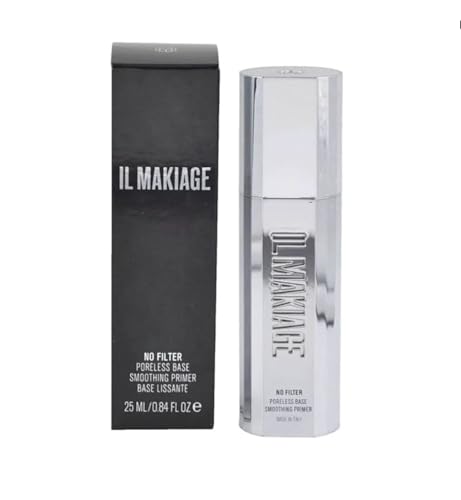
At 30 mL, this is the largest No Filter pore-smoothing option, and its feature claims include oil-free wear and a natural matte finish. The white formula is described as lightweight and intended to reduce the appearance of pores before foundation. It suits shoppers seeking a larger tube for regular makeup prep, especially if shine control is a priority. Its all-day wear and pore-minimizing effects are maker claims, not guaranteed results; choose another option if you prefer a clear formula or need a specifically redness-correcting tint.
Bottom line: Choose this if you want the larger size and a claimed matte, oil-free base.
No Filter Smoothing Primer, 25 mL

The clear 25 mL format makes this No Filter option the compact choice among the pore-smoothing primers. Its feature claims describe a silky canvas that blurs uneven texture and can be worn alone or under foundation, so it suits travel or a minimal routine that does not call for a white-tinted primer. Its soft-focus and makeup-wear effects are claims, not assured outcomes.
Bottom line: Pick this for a clear, compact primer, after confirming the volume.
Scinex No Filter Primer, 25 mL

This 25 mL clear primer is a minimal-data alternative within the No Filter poreless-base group: its product name identifies it as a smoothing primer, but gives no formula or finish claims. That makes it suited to shoppers who want the named product type in the smaller size and are comfortable choosing without a finish preference. Unlike options with feature claims, there is no basis here to compare its oil control, texture-blurring performance or wear time. Verify the exact packaging if matching the IL Makiage-branded product is important.
Bottom line: Choose this only if a 25 mL smoothing base is your priority.
No Filter Primer, 30 mL

This 30 mL option is the only No Filter entry whose name specifically calls out fragrance-free, vegan and oil-free positioning. Its features describe a white primer that blends invisible across skin tones, with a balanced matte finish and a lightweight feel. It may suit shoppers prioritizing those formula attributes alongside pore-smoothing makeup prep.
Bottom line: Pick this if fragrance-free and vegan claims are priorities.
How to choose a pore-smoothing primer
Start with the finish and the formula claims that matter to your routine: a matte, oil-free claim points toward shine-focused prep, while a clear primer avoids adding a visible tint. Primer is applied in a thin layer before foundation; using too much can leave a slippery layer that interferes with makeup sitting evenly. For a typical routine, use a pea-sized amount for the face and let it settle before layering. Match the primer to your foundation base where possible: silicone-heavy and water-heavy layers can sometimes pill when rubbed together, so test a small area before applying full-face makeup. Treat claims such as all-day wear as claims, not a guaranteed wear time.
Primer sizes and volume checks
For makeup primers, 1 US fluid ounce is about 29.6 mL, so a 25 mL tube is about 0.85 fl oz and a 30 mL tube is about 1.0 fl oz. That makes the 30 mL options roughly 20% more volume than a 25 mL tube. Some entries pair a 25 mL name with a 1 fl oz size, a meaningful mismatch; confirm the volume printed on the package when that distinction affects your decision. A smaller tube can take less space in a travel bag, but tube dimensions alone do not establish how much product it holds. Use volume, not package height or width, to compare quantity.
Clear and white primer tints
Clear primers add no obvious color on application, while white primers are intended to blend away. A tint does not by itself establish how well a primer blurs pores, so compare the finish and formula claims rather than assuming color determines performance. Apply primer sparingly; a thick layer can leave a visible cast or interfere with foundation. The available No Filter options include clear and white versions, so choose based on the formula appearance you prefer and whether you want a tint-free base.
How to layer primer under foundation
Primer belongs after skincare and before foundation; allow moisturizer or sunscreen to settle first so the layers are less likely to slide. Use a small amount, press or smooth it over the target areas, then give it about 30 to 60 seconds before applying foundation. Rubbing repeatedly can disturb a tacky layer and encourage pilling. If a product irritates the skin, stop using it and rinse it off; a “sensitive skin” suitability claim does not guarantee that every individual will tolerate it. For a new formula, patch test a small area first and avoid applying it to broken or irritated skin.
Frequently Asked Questions
How much primer should I use on my face?
A pea-sized amount is a useful starting point for the whole face. Add only a little more where needed, since a thick layer can make foundation slip or pill.
Should primer go on before sunscreen?
No, primer generally goes after sunscreen and before foundation. Let sunscreen settle first, often for several minutes, to reduce disruption of its layer.
Can I wear pore primer without foundation?
Yes, a pore-smoothing primer can be worn alone if you want a more polished-looking base. The No Filter 25 mL option in the features explicitly says it can be worn alone.
How long should primer dry before foundation?
Give primer roughly 30 to 60 seconds to settle before applying foundation. If the surface still feels wet or pills when touched, wait longer and use less product next time.
Can I layer two types of face primer?
Yes, layer small amounts rather than mixing formulas together, since mixing can change how each applies. Apply pore-smoothing primer only where texture is the concern, then add other prep products where needed.