
Best Sting Proof Bee Suit: 3 Picks for Fit and Ventilation

USKEEPERS 3-Layer Ventilated Suit, Large suits most beekeepers who want layered ventilation and a choice of two detachable veils. Choose QHZHANG Ventilated Polycotton Suit, Large for its specified 65% cotton, 35% polyester blend, or ANDES Sting Proof Suit, XXL if XXL sizing and included goatskin gloves are the deciding factors.
A bee suit covers the body and pairs with a veil to shield the head and face; no suit should be treated as guaranteed sting-proof, so check fit and closures before approaching a hive.
We earn a commission if you buy through links on this page. As an Amazon Associate I earn from qualifying purchases. Products are compared on manufacturer specifications, not hands-on testing.
- Best overall: USKEEPERS 3-Layer Ventilated Suit, Large – Three mesh layers and two detachable veil styles offer flexibility for warm hive work.
- Best for a simple veil: QHZHANG Ventilated Polycotton Suit, Large – Its detachable fencing veil and 65/35 cotton-polyester blend suit buyers seeking a straightforward setup.
- Best for XXL sizing: ANDES Sting Proof Suit, XXL – The XXL size and included goatskin gloves distinguish this option.
| Product | Best for | Fabric | Veil | Included gloves | Shop |
|---|---|---|---|---|---|
| USKEEPERS 3-Layer Ventilated Suit, Large | Veil flexibility | Three-layer polycotton mesh | Fencing and round | Yes | Check Price on Amazon |
| QHZHANG Ventilated Polycotton Suit, Large | Fencing veil setup | 65% cotton, 35% polyester | Detachable fencing | Yes | Check Price on Amazon |
| ANDES Sting Proof Suit, XXL | XXL with gloves | 65% cotton, 35% polyester | Fencing | Goatskin | Check Price on Amazon |
Best sting proof bee suits
Compare the included coverage, materials and fit cues before choosing a suit for hive work.
USKEEPERS 3-Layer Ventilated Suit, Large
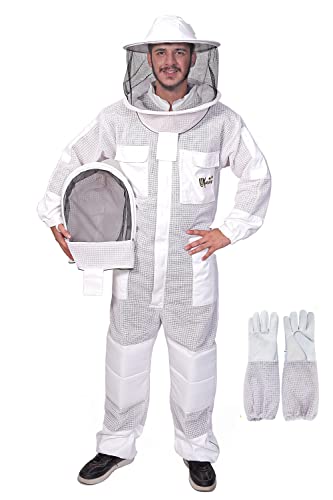
USKEEPERS 3-Layer Ventilated Suit, Large stands apart with two detachable veils: a fencing style and a round style. Its three intersecting layers of polycotton mesh are designed to create space between the outer fabric and skin while allowing airflow. This Large suit suits buyers who value veil choice and ventilation in one set. The tradeoff is that the size is Large; anyone outside that fit should compare their measurements with the maker’s sizing guidance before ordering.
Bottom line: Choose it if you want two veil styles and a Large fit.
QHZHANG Ventilated Polycotton Suit, Large

QHZHANG Ventilated Polycotton Suit, Large uses a 65% cotton and 35% polyester fabric blend and pairs it with a detachable fencing veil. Its description also identifies a resin zipper with a metal pull tab and a tight-seal design, making closure fit an important point to inspect before hive work. The Large size fits shoppers already looking for that size and a single veil configuration. Unlike suits that offer multiple veil styles, this one centers on a fencing veil; buyers who prefer a round veil should choose a different configuration.
Bottom line: Pick it for a Large polycotton suit with a detachable fencing veil.
ANDES Sting Proof Suit, XXL

ANDES Sting Proof Suit, XXL is the XXL option in this group and includes a fencing veil plus thick goatskin gloves. The suit uses a 65% cotton and 35% polyester blend, with metal zippers and reinforced seams. Its size cue is especially useful for taller buyers, though the height range wording is inconsistent with its numeric height fields, so confirm the intended size range before buying. The gloves add hand coverage, but their material may feel less suited to tasks requiring fine finger dexterity than a thinner glove.
Bottom line: Choose it when XXL sizing and included goatskin gloves matter most.
How to choose a sting proof bee suit
Choose a bee suit by matching coverage, closure design and fit to the work; the word “sting-proof” alone is not a safety guarantee. Bee suits typically use woven cotton, polycotton or ventilated mesh, and many rely on elastic or secured openings at wrists and ankles to reduce gaps. A fit that pulls tight can press fabric against skin, while oversized sleeves can snag on equipment. For hot weather, ventilated layers can help air move through the garment, but they do not eliminate heat stress. If temperatures are high, schedule work for cooler hours, take breaks and drink water.
Before approaching a colony, make sure cuffs overlap gloves and trouser legs cover footwear. A veil should remain secured to the suit without gaps around the neck.
Bee suit sizing and sting protection
Correct sizing matters because protection depends on keeping fabric away from skin and openings closed. Measure chest, waist, sleeve length and height over the clothes you expect to wear; use the maker’s size chart rather than choosing by everyday clothing size. If you plan to wear thick layers underneath, include their bulk in the fit decision. A suit that is too short can expose wrists or ankles when bending, while a tight fit can compress ventilated fabric.
Protective clothing reduces exposure but cannot guarantee against stings, particularly where fabric is pressed to skin or closures separate. Inspect zippers, seams, elastic and veil attachment before each use, and replace damaged gear before hive work.
Fencing and round bee veils compared
Fencing veils hold mesh away from the face with a structured front, while round veils use a rounded shape around the head. Both styles must maintain a clear gap between mesh and facial skin and stay attached securely to the suit. Choose based on visibility, head movement and compatibility with the suit closure rather than appearance alone.
The table shows what the included veil choices mean for selecting a configuration.
| Veil setup | What to consider | Decision rule |
|---|---|---|
| Fencing | Structured front and open viewing area | Choose if front visibility is your priority |
| Round | Rounded mesh around the head | Choose if you prefer a rounded profile |
| Two detachable styles | Allows switching between configurations | Choose when you need both styles |
Bee suit safety and care
Wear a complete set of protective clothing, including gloves and closed footwear, and keep the veil clear of the face. Never assume a “sting proof” label makes a suit impenetrable: bees can sting through compressed fabric, and openings can expose skin. Work with a partner when possible, keep an exit route clear, and avoid hive work if you have a known severe sting allergy without an emergency plan.
Wash care depends on materials and construction; one product in this comparison allows machine or hand washing of the suit while specifying hand washing for its hat. Remove detachable components only as directed by the maker, and inspect stitching, zipper tracks and mesh after cleaning so damage does not go unnoticed.
Frequently Asked Questions
Can a bee suit completely prevent stings?
No protective suit can be treated as a guarantee against stings. Fabric pressed against skin or a gap at a cuff, zipper or veil can leave exposure points, so inspect closures and keep the material loose around the body.
How should a bee suit fit over clothes?
A bee suit should leave enough room for fabric to stand away from skin without restricting movement. Try it over the layers you will wear, then bend and reach to confirm wrists, ankles and the neck remain covered.
Are ventilated bee suits cooler to wear?
Ventilated layers are designed to let air move through the fabric, which can help in warm conditions. They do not prevent overheating, so choose cooler working hours and take breaks when temperatures are high.
What should I check on a bee veil?
Check that the veil stays attached around the neck and that mesh does not touch the face when you turn or bend. A clear mesh gap is especially important around the nose and cheeks.
How often should I inspect a beekeeping suit?
Inspect the suit before every hive session for loose seams, damaged mesh, worn elastic and zipper gaps. Repair or replace damaged gear before use, since even a small opening can expose skin.