
Telfa Non-Stick Pads: Sizes and Alternatives

For Telfa non-stick pads, Telfa Non-Adherent Pads, 2 x 3 in suits small areas with its 2 x 3-inch size, while Covidien Telfa Pads, 3 x 8 in covers a wider area at 3 x 8 inches. Choose a non-Telfa alternative if you need a 3 x 4-inch pad instead.
Non-adherent pads cover a wound while helping limit sticking during removal; secure one with tape or a bandage, and select a size that covers the wound without constricting surrounding skin.
We earn a commission if you buy through links on this page. As an Amazon Associate I earn from qualifying purchases. Products are compared on manufacturer specifications, not hands-on testing.
- Best overall: Telfa Non-Adherent Pads, 2 x 3 in – The 2 x 3-inch size offers compact Telfa coverage in a 100-pad package.
- Best for wider coverage: Covidien Telfa Pads, 3 x 8 in – The 3 x 8-inch Telfa pad is the widest option here and comes in a 50-count pack.
- Best for 3 x 4 inches: CURAD Sterile Non-Adherent Pads, 3 x 4 in – This sterile non-adherent alternative has a 3 x 4-inch size and 100 individually sterilized pads.
| Product | Best for | Size | Count | Sterile wrapping | Shop |
|---|---|---|---|---|---|
| Telfa Non-Adherent Pads, 2 x 3 in | Small wound coverage | 2 x 3 in | 100 pads | — | Check Price on Amazon |
| Covidien Telfa Pads, 3 x 8 in | Longer wound coverage | 3 x 8 in | 50 pads | Individually wrapped | Check Price on Amazon |
| CURAD Sterile Non-Adherent Pads, 3 x 4 in | Sterile 3 x 4 pads | 3 x 4 in | 100 pads | Individually sterilized | Check Price on Amazon |
| Gauze Care Non-Stick Pads, 3 x 4 in | Wrapped first-aid pads | 3 x 4 in | 100 pads | Individually wrapped | Check Price on Amazon |
| MED PRIDE Non-Stick Pads, 3 x 4 in | Light to moderate drainage | 3 x 4 in | 100 pads | Individually wrapped | Check Price on Amazon |
Telfa Non-Stick Pads and Alternatives
Compare the Telfa sizes with similar non-adherent pads by coverage, count, and packaging.
Telfa Non-Adherent Pads, 2 x 3 in

Telfa Non-Adherent Pads, 2 x 3 in is the compact Telfa option, measuring 2 x 3 inches in a 100-pad package. That smaller footprint can suit a localized area when a wider pad would be cumbersome; choose a pad that fully covers the wound, not one that leaves its edges exposed.
The product name identifies these as non-adherent Telfa dressing pads. The package information does not establish individual sterile wrapping, so confirm the packaging requirement if that matters for your intended use. A non-adherent dressing still needs an appropriate way to stay in place, such as medical tape or a bandage.
Bottom line: Choose this when you want Telfa pads in a compact 2 x 3-inch size.
Covidien Telfa Pads, 3 x 8 in

Covidien Telfa Pads, 3 x 8 in stands apart with a 3 x 8-inch shape, substantially longer than the other pads here. The maker says the absorbent cotton pad has perforated non-adherent film on both sides and is intended as a primary dressing for lightly draining wounds; it can be cut to fit without separating.
Each dressing is sterile and individually wrapped in a peel-open envelope. The 50-count pack is smaller than the 100-count options, and the long format may be awkward for a small wound. Select it when the wound area needs lengthwise coverage, and secure the dressing without wrapping tightly.
Bottom line: Choose this for a longer Telfa dressing and individually wrapped pads.
CURAD Sterile Non-Adherent Pads, 3 x 4 in
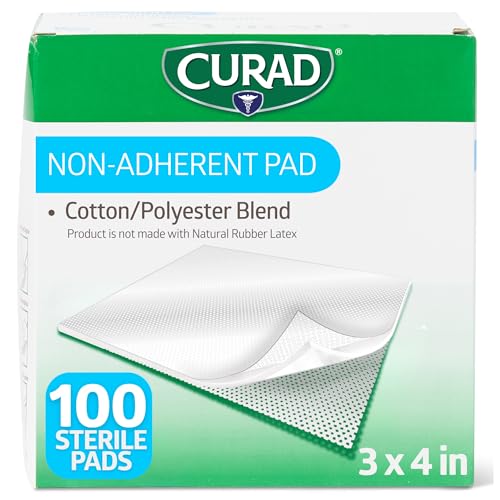
CURAD Sterile Non-Adherent Pads, 3 x 4 in is a non-Telfa alternative with a 3 x 4-inch footprint and an absorbent rayon-and-polyester core. The maker says each pad is individually sterilized and designed to cushion a wound with soft edges, which may suit someone seeking a wider pad than the 2 x 3-inch Telfa option.
This box contains 100 pads. Its material and size differ from the Telfa choices, so choose it for the 3 x 4-inch format rather than as a like-for-like Telfa replacement. Check that the pad covers the area and can be secured without restricting circulation.
Bottom line: Choose this if a sterile 3 x 4-inch non-Telfa pad fits your needs.
Gauze Care Non-Stick Pads, 3 x 4 in
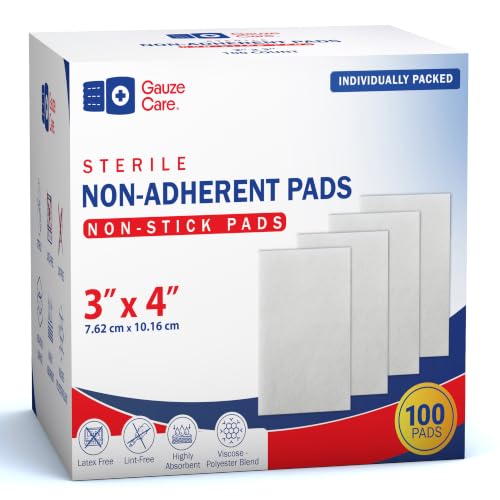
Gauze Care Non-Stick Pads, 3 x 4 in offers 3 x 4-inch non-adherent pads in individually wrapped packaging, making it a different-size alternative to the Telfa options. The maker describes these pads as sterile, latex-free, lint-free, and absorbent for light drainage, with a soft construction intended for minor cuts and scrapes.
The pack contains 100 pads. These are not Telfa-branded dressings, so buyers who specifically need Telfa should choose one of the Telfa products instead. For any dressing, use a size that extends beyond the wound edges and change it if it becomes wet or soiled.
Bottom line: Choose this for individually wrapped, non-Telfa 3 x 4-inch pads.
MED PRIDE Non-Stick Pads, 3 x 4 in

MED PRIDE Non-Stick Pads, 3 x 4 in is a non-Telfa alternative in a 3 x 4-inch size, with 100 pads individually sealed in sterile pouches. The maker says the pads absorb light to moderate drainage and are intended for minor cuts, scrapes, minor burns, and small post-operative wounds.
The size and use make this a wider alternative to the 2 x 3-inch Telfa pads, not a substitute when Telfa specifically is required. The package also advises securing a pad with medical tape or a roll bandage. Use only a dressing suitable for the wound and avoid wrapping the area too tightly.
Bottom line: Choose this for individually wrapped 3 x 4-inch pads for light to moderate drainage.
How to choose a non-stick wound pad
Choose a pad that covers the wound and extends beyond its edges, then consider drainage and how you will secure it. A pad that is too small can leave the wound exposed; one that is unnecessarily large can be harder to position. Non-adherent pads use a contact layer intended to limit sticking, while an absorbent core takes up drainage. For a small area where a 2 x 3-inch pad fully covers the wound, select that footprint; for a wound needing more width, consider a 3 x 4-inch pad. Match absorbency to drainage: the options here describe use for light drainage, with one maker also specifying light to moderate drainage. Use tape or a bandage to hold the pad in place without restricting circulation.
| Need | Choice |
|---|---|
| Compact coverage | 2 x 3 in |
| Wider coverage | 3 x 4 in |
| Long coverage | 3 x 8 in |
Pad size and wound coverage
Pad dimensions describe the dressing, not the wound area it can cover with a secure margin. A practical fit rule is to choose a pad whose edges extend beyond the wound; if the wound reaches the pad’s edge, move up to a larger size. The 2 x 3-inch Telfa size is the smallest option here, while the 3 x 4-inch alternatives add width and the 3 x 8-inch Telfa pad adds length. Avoid cutting a pad unless its design allows it; the maker says Covidien Telfa Pads, 3 x 8 in can be cut without separating. Regardless of size, tape or a bandage should hold the pad without pulling skin or restricting blood flow.
Changing and handling non-adherent dressings
Change a dressing at least daily, and sooner if it becomes wet, dirty, or loose; drainage and wound condition can call for more frequent changes. Wash your hands before and after changing a wound dressing, and clean a minor wound with clean running water before covering it. Sterile wrapping helps keep an unused pad protected until opened, but it does not make a dirty wound clean. Do not wrap a finger, limb, or joint tightly: numbness, tingling, color change, or increasing pain can signal excessive pressure. Get medical care for a deep or puncture wound, a serious burn, uncontrolled bleeding, an animal bite, or signs such as spreading redness, warmth, swelling, or pus.
Frequently Asked Questions
How much larger should a wound pad be?
Choose a pad that extends beyond every edge of the wound so the wound is not exposed when the dressing shifts slightly. If the wound reaches the edge of the pad, choose a larger size.
How often should a non-stick dressing be changed?
Change a wound dressing at least once a day, or sooner if it becomes wet, dirty, or loose. Heavy drainage or a change in the wound may call for more frequent changes or medical advice.
Can non-adherent pads be cut to size?
Some can, but the construction matters: the maker says Covidien Telfa Pads, 3 x 8 in can be cut without separating. For other pads, use an intact size that covers the wound rather than assuming cutting will preserve the dressing.
Should a non-stick pad touch the wound?
A non-adherent pad is intended to sit over the wound as its contact dressing, with its absorbent side managing drainage. Keep the area clean and use a larger pad if the wound would extend to the pad’s edge.
When should a wound be checked by a clinician?
Seek medical care for a deep or puncture wound, animal bite, serious burn, or bleeding that will not stop with steady pressure. Spreading redness, increasing warmth or swelling, or pus also warrants prompt medical advice.