
Honma D1 Golf Balls Compared for Distance

Honma D1 Distance, White is the closest match for golfers seeking Honma D1 distance balls, with a low-spin core and 368-dimple pattern as its defining features. Golfers choosing by bulk quantity or a different ball construction may prefer one of the alternatives.
We earn a commission if you buy through links on this page. As an Amazon Associate I earn from qualifying purchases. Products are compared on manufacturer specifications, not hands-on testing.
- Best overall: Honma D1 Distance, White – The only product explicitly identified as a Honma D1, with a low-spin core and 368-dimple pattern.
- Best for bulk play: Honma 48-Pack Bulk Golf Balls – The 48-ball pack is suited to frequent play or practice.
- Best for layered construction: Honma BERES 3S Distance – The BERES 3S is described as a soft, three-layer distance ball.
| Product | Best for | Pack size | Construction | Cover | Shop |
|---|---|---|---|---|---|
| Honma D1 Distance, White | D1 distance play | 1 dozen | Low-compression core | Surlyn | Check Price on Amazon |
| Honma 48-Pack Bulk Golf Balls | Frequent practice | 48 balls | — | Ionomer; Surlyn | Check Price on Amazon |
| Honma BERES 3S Distance | Three-layer feel | 1 dozen | Three-layer | Surlyn | Check Price on Amazon |
| Amazon Basics Core Soft, Yellow | Alignment aid | 24 balls | Low-compression core | — | Check Price on Amazon |
Honma D1 golf balls
Compare the D1 with related options by their construction, cover and package size.
Honma D1 Distance, White

Honma D1 Distance, White is the direct match for the Honma D1 search, unlike the bulk pack and BERES alternative. Its low-compression, low-spin rubber core and Surlyn cover are paired with a 368-dimple pattern; Honma says the design promotes higher flight and distance. The white, standard-size ball comes in a dozen. This is a sensible fit for golfers prioritizing the D1 model and distance-focused design. Its feature set emphasizes flight and speed, so golfers seeking alignment marks or a larger quantity should compare the other options instead.
Bottom line: Choose this if you specifically want the D1 model in a dozen-ball pack.
Honma 48-Pack Bulk Golf Balls

Honma 48-Pack Bulk Golf Balls stands apart through its 48-ball bulk pack rather than a named D1 model. The product is described as a Honma distance ball with a soft ionomer cover and a durable Surlyn cover; because those cover descriptions conflict, verify the cover material before choosing based on it. The larger quantity may suit frequent play or practice, and the features emphasize straight flight and soft feel. Golfers who need the specifically named D1 should choose Honma D1 Distance, White instead; this option does not establish that it is a D1 ball.
Bottom line: Pick this when a 48-ball quantity matters more than a confirmed D1 model.
Honma BERES 3S Distance
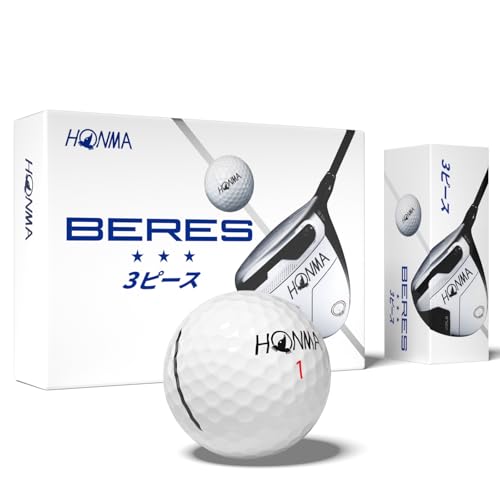
Honma BERES 3S Distance differs from the D1 through its BERES 3S line and three-layer construction. Its white dozen is described as having a soft feel, a durable Surlyn cover and a 368-dimple pattern. Honma says its design targets ball speed, carry and stable flight. This is a related distance-ball alternative for someone who wants the layered construction called out in its name. It is not the D1, and the product features describe it for men; golfers comparing only the D1 model should keep that distinction in mind.
Bottom line: Choose this if a three-layer Honma distance ball is your priority.
Amazon Basics Core Soft, Yellow

Amazon Basics Core Soft, Yellow is the only option here that calls out a side-stamp alignment aid and yellow color, rather than a Honma model. It comes in a 24-pack and is described as a low-compression ball for distance, straight flight and short-game control. The maker says it conforms to USGA rules. This may suit golfers who value a visible alignment mark for putting or want yellow balls for tracking. It is not a Honma D1, so golfers specifically comparing that model should treat it as a separate alternative.
Bottom line: Pick this if yellow visibility and a putting alignment mark matter more than the Honma name.
How to choose a Honma D1 golf ball
Start with whether you want the D1 itself or a related ball with a different build or pack size. Honma D1 Distance, White is the only option explicitly named D1; Honma 48-Pack Bulk Golf Balls is a bulk Honma ball, while Honma BERES 3S Distance is a BERES 3S model. Low compression and low spin are useful descriptors, but neither alone guarantees a particular launch or feel for every swing. Golf ball fit depends on how a player delivers the club, especially speed and impact, so use the design claims as a starting point rather than a promise. For a named-model purchase, choose Honma D1 Distance, White; if the package quantity or three-layer structure is the deciding factor, compare those alternatives instead.
Golf ball construction and cover types
Golf balls commonly use a core, one or more mantle layers, and an outer cover; this comparison includes a low-compression core and a named three-layer design. Surlyn and ionomer are related cover materials commonly used in distance-oriented recreational balls, while urethane covers are often selected for more greenside spin. The products here do not present a urethane option. A softer compression label is not a direct measure of cover softness, so consider core and cover as separate features. Honma 48-Pack Bulk Golf Balls uses conflicting ionomer and Surlyn cover descriptions, so confirm the cover material if that difference will decide your choice.
| Design clue | What it helps compare | Option here |
|---|---|---|
| Low-compression core | Core design | Honma D1 Distance, White and Amazon Basics Core Soft, Yellow |
| Three-layer construction | Ball structure | Honma BERES 3S Distance |
| Alignment stamp | Putting setup aid | Amazon Basics Core Soft, Yellow |
Golf ball rules and size
For competition, conforming golf balls must weigh no more than 1.620 ounces and measure at least 1.680 inches in diameter under the Rules of Golf. Those limits are useful when checking a ball’s legality; a product’s distance claims do not establish conformity by themselves. Amazon Basics Core Soft, Yellow is specifically described as USGA conforming, while the other options do not make that claim in the specifications. Casual golfers can still use nonconforming balls, but should not assume they are eligible for a rules-governed round. Check the ball’s markings or governing-body status when tournament eligibility matters, and choose by model and construction for ordinary recreational use.
Choosing ball color and quantity
Pack size matters most when you lose balls often or practice frequently: a dozen is a standard purchase quantity, while Honma 48-Pack Bulk Golf Balls contains 48 balls and Amazon Basics Core Soft, Yellow contains 24. Color can also affect how easily a ball stands out against the course; yellow is the only color specifically offered in this group besides white. The alignment stamp on Amazon Basics Core Soft, Yellow provides a visual reference when setting the ball on a putting line, but it does not correct aim or stroke mechanics. Choose quantity based on how quickly you go through balls, and choose color based on visibility against the course and playing conditions.
Frequently Asked Questions
What does low compression mean in a golf ball?
Low compression refers to how readily the ball’s core deforms under impact. The feel and flight depend on the whole ball and a golfer’s swing, so compression alone does not determine distance.
How often should golf balls be replaced?
Replace a ball when a cut, deep scuff or other damage is visible, since damage can affect flight. Surface dirt and grass marks can usually be cleaned rather than treated as a reason to discard it.
What is the difference between Surlyn and urethane golf balls?
Surlyn is a durable ionomer cover material commonly used on distance-focused recreational balls; urethane is often chosen for more greenside spin. Cover material is only one part of ball performance, alongside core design and construction.
Are yellow golf balls easier to see?
Yellow balls can stand out more clearly against some backgrounds, but visibility depends on light, grass and foliage. Choose a color you can track consistently across the conditions where you play.
Can a golf ball be too old to use?
A ball without cuts or deep damage can generally remain playable for recreational use. Replace balls with visible damage, and keep spare balls away from prolonged heat or direct sunlight to protect their materials.