
Best AC Drain Line Cleaner: 4 Options Compared

AC Drain Line Cleaner, 4-Pack is the best AC drain line cleaner for routine upkeep because its four-bottle package is presented as a 12-month supply and supports monthly use. Choose Instant Power A/C Condensate Cleaner, 32 oz instead if you want a single 32-ounce product whose maker says it clears sludge and debris; buyers facing a full clog should first confirm whether a liquid maintainer suits the blockage.
We earn a commission if you buy through links on this page. As an Amazon Associate I earn from qualifying purchases. Products are compared on manufacturer specifications, not hands-on testing.
- Best overall: AC Drain Line Cleaner, 4-Pack – Four bottles are presented as a 12-month supply for monthly preventive use.
- Best for sludge buildup: Instant Power A/C Condensate Cleaner, 32 oz – Its maker says the 32-ounce formula clears sludge and debris in condensate lines.
- Best for a smaller package: AC Drain Line Cleaner, 2-Pack – Two 8-ounce bottles provide a six-month supply, according to the product name.
| Product | Best for | Package size | Supply claim | Intended uses | Shop |
|---|---|---|---|---|---|
| AC Drain Line Cleaner, 4-Pack | Monthly maintenance | 4 bottles | 12-month supply | HVAC drains, pans, pumps, traps | Check Price on Amazon |
| Instant Power A/C Condensate Cleaner, 32 oz | Sludge buildup | 32 oz (1 liter) | — | Residential and commercial HVAC | Check Price on Amazon |
| AC Drain Line Cleaner, 2-Pack | Shorter supply | 2 bottles, 8 oz each | 6-month supply | HVAC drains, pans, pumps, traps | Check Price on Amazon |
| Uncle Todd’s HVAC Drain Line Cleaner, 16 oz | Fast-action claim | 16 oz | — | HVAC drains, fountains, pumps | Check Price on Amazon |
AC Drain Line Cleaners Compared
Compare the package formats and intended uses to match a cleaner to routine maintenance or a buildup concern.
AC Drain Line Cleaner, 4-Pack

For recurring upkeep, AC Drain Line Cleaner, 4-Pack is packaged as four bottles and identified as a 12-month supply. Its maker says the heavy-duty formula reduces buildup in condenser drain lines, drip pans, pump reservoirs and P-traps, and recommends monthly preventive use. The maker also names central AC, portable AC, humidifiers and dehumidifiers as applications, with soda fountain and ice maker lines among additional uses.
The four-bottle format suits someone who wants a longer maintenance supply. The specifications do not establish a dose or application method, so confirm both before using it in a particular system.
Bottom line: Choose this for planned monthly maintenance across condensate equipment.
Instant Power A/C Condensate Cleaner, 32 oz
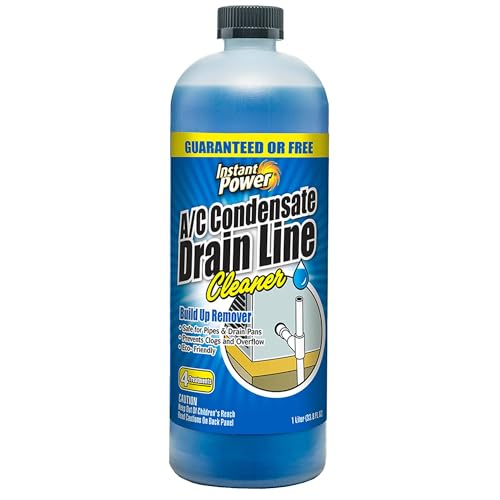
Instant Power A/C Condensate Cleaner, 32 oz is the only option here whose maker specifically says it clears sludge and debris from clogged condensate lines. The 32-ounce container is intended for residential and commercial HVAC, and the maker says the formula is non-corrosive and safe for PVC plumbing and septic systems. The maker also says regular use helps prevent pan overflow and reduce odors tied to stagnant water.
This is a fit for buyers prioritizing a sludge-clearing purpose rather than a multi-bottle annual supply. The specifications do not explain how to apply it or its dose, so confirm those directions before use.
Bottom line: Pick this when sludge removal is the priority.
AC Drain Line Cleaner, 2-Pack

AC Drain Line Cleaner, 2-Pack offers the same named monthly-maintenance approach as the four-pack, but in two 8-ounce bottles and a six-month supply. Its maker says the formula reduces buildup in condenser drain lines, drip pans, pump reservoirs and P-traps. Intended applications include central and portable AC, humidifiers, dehumidifiers and condensate pump reservoirs; fountain drink and ice maker lines are also named.
The smaller package is suited to buyers who want a shorter supply commitment.
Bottom line: Choose this for a shorter supply of the monthly-maintenance formula.
Uncle Todd’s HVAC Drain Line Cleaner, 16 oz

Uncle Todd’s HVAC Drain Line Cleaner, 16 oz stands apart by identifying its solution as bleach-free and describing it as fast-acting and long-lasting. Its maker says it clears tough AC drain line clogs and provides lasting protection, with ice makers, soda fountains, drinking fountains and pumps also named as uses. The single 16-ounce bottle makes this a one-container option rather than a multi-bottle supply.
This may suit someone prioritizing those specific formulation and performance claims.
Bottom line: Pick this if a bleach-free formula claim matters to your choice.
How to choose an AC drain line cleaner
Choose by the problem and the dosing instructions, not by bottle count alone. Condensate drain lines carry water from the indoor coil to a drain; a cleaner or maintainer is generally intended to reduce buildup, while a standing-water backup can signal a clog that needs physical clearing. Liquid treatments do not replace clearing a blocked line.
For a recurring maintenance routine, compare how many applications a package supports and the maker’s recommended interval. If the product does not give a dose or method in its directions, verify those before using it; never pour a chemical into an energized HVAC unit. Do not mix drain treatments with bleach or other cleaners, since chemical combinations can release hazardous gases.
Where AC drain line cleaner goes
AC condensate forms at the indoor evaporator coil and flows through a drain pan and outlet line; some systems route it through a condensate pump. The access point varies by equipment, so identify the pan or cleanout rather than pouring blindly into the cabinet.
Many residential condensate lines use PVC, but fittings, pumps and coatings can differ. A useful decision rule is to use a product only when its compatibility and application instructions cover the system’s materials; if a pump is involved, confirm the product is appropriate for its reservoir. Keep chemicals away from electrical components, and stop if water is near wiring or the furnace control area.
Maintenance versus a blocked drain
A maintainer is best treated as preventive care, not a guaranteed fix for a fully blocked condensate line. A typical residential AC drain needs seasonal inspection, especially before heavy cooling use; algae, dust and biofilm can accumulate where water stays warm and stagnant.
When water is already backing up, turn off cooling to limit overflow and inspect the drain pan and accessible outlet. A wet/dry vacuum at the exterior termination can sometimes pull loose debris, but avoid using compressed air that may separate a joint or force water into the air handler. Persistent backups, leaks near wiring, or a recurring clog call for HVAC service.
How often to maintain an AC condensate drain
Inspect a residential condensate drain at least once before the cooling season and again during heavy use; humid climates and systems that run for long periods may need more frequent attention. A monthly chemical routine is a product-specific approach, not a universal HVAC interval.
Pouring an incorrect volume can leave residue in the pan or damage a pump, while neglecting a blocked line can allow water to overflow. Clear debris from the drain outlet and check that water can flow freely after maintenance. Do not use a drain cleaner intended for household sewer lines unless its directions explicitly permit HVAC condensate equipment.
Frequently Asked Questions
Can AC drain line cleaner clear a complete clog?
Not reliably; liquid maintenance products are not a substitute for removing a solid blockage. If the drain pan is filling or water is backing up, turn cooling off and clear the line or arrange HVAC service.
How often should I clean an AC condensate drain?
Inspect the drain before the cooling season and during periods of heavy use. Monthly chemical treatment is a routine some products recommend, but the right interval depends on the system and its directions.
Where do you pour AC drain line cleaner?
Apply it only at the access point and in the amount specified for that product. HVAC systems may have a drain pan, cleanout, or pump reservoir, so identify the correct component before adding anything.
Is bleach safe for an AC condensate drain?
Avoid mixing bleach with any drain cleaner, since combining chemicals can release hazardous gases. Also check the equipment maker’s material guidance before introducing any treatment to a condensate system.
What causes an AC condensate drain to clog?
Dust, algae and biofilm can accumulate where condensate remains warm and stagnant. Seasonal inspection and keeping the outlet clear can help identify buildup before water reaches the overflow point.