
Best Ethiopian Black Seed Oil: 3 Softgels Compared

For most people comparing Ethiopian black seed oil, Ethiopian Black Seed Oil 5% TQ, 90 Softgels is the clearest pick because each 500 mg softgel is standardized to 5% thymoquinone, or about 25 mg. Choose PURELYNUTRIENT Ethiopian Oil, 4.64% TQ if you prefer its 4.64% standardization, or PURELYNUTRIENT Ethiopian Black Seed Oil, 60 if you want a simpler 60-softgel formula without a percentage.
Black seed oil is oil from Nigella sativa seeds; these products package it in softgels rather than as a pourable oil. Compare the amount of oil and thymoquinone standardization, and check the label for serving directions and other ingredients before choosing.
We earn a commission if you buy through links on this page. As an Amazon Associate I earn from qualifying purchases. Products are compared on manufacturer specifications, not hands-on testing.
- Best overall: Ethiopian Black Seed Oil 5% TQ, 90 Softgels – Each 500 mg softgel is standardized to 5% thymoquinone, about 25 mg.
- Best for 4.64% standardization: PURELYNUTRIENT Ethiopian Oil, 4.64% TQ – Specifies Ethiopian highland-sourced oil and 4.64% thymoquinone.
- Best for a simple formula: PURELYNUTRIENT Ethiopian Black Seed Oil, 60 – A 60-softgel Ethiopian black seed oil option with a straightforward ingredient focus.
| Product | Best for | Thymoquinone | Softgels | Shop |
|---|---|---|---|---|
| Ethiopian Black Seed Oil 5% TQ, 90 Softgels | Defined TQ amount | 5%; about 25 mg per softgel | 90 | Check Price on Amazon |
| PURELYNUTRIENT Ethiopian Oil, 4.64% TQ | 4.64% standardization | 4.64% | 60 | Check Price on Amazon |
| PURELYNUTRIENT Ethiopian Black Seed Oil, 60 | Simple 60-softgel option | — | 60 | Check Price on Amazon |
Ethiopian Black Seed Oil Softgels
Compare each formula’s thymoquinone standardization and capsule count before deciding which one fits your routine.
Ethiopian Black Seed Oil 5% TQ, 90 Softgels

The 500 mg oil amount and 5% thymoquinone standardization make this the most quantified option in the comparison. Each softgel is described as cold-pressed Ethiopian Nigella sativa oil, with about 25 mg thymoquinone per capsule. Its 90-count bottle also has more softgels than the 60-count alternatives. The maker says the oil retains natural omega 3-6-9 fatty acids and is intended for everyday wellness support. Choose it if you value a defined compound amount; the 5% figure alone does not tell you the serving size, so check the label directions.
Bottom line: Pick this if a 500 mg oil amount and about 25 mg thymoquinone per softgel are priorities.
PURELYNUTRIENT Ethiopian Oil, 4.64% TQ
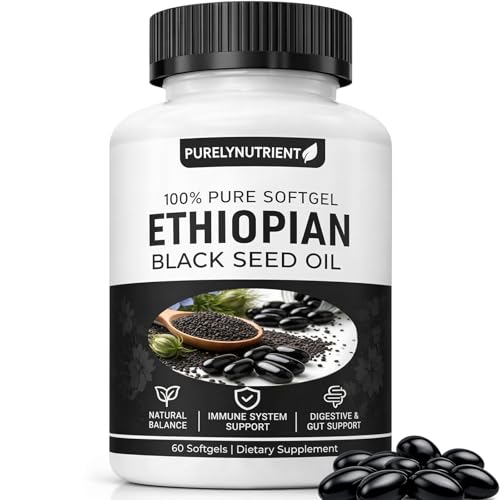
The 4.64% thymoquinone standardization sets this formula apart from the 5% option. The maker identifies the cold-pressed Nigella sativa oil as coming from seeds grown in the Ethiopian Highlands and presents the product as a softgel, avoiding liquid-oil measuring. The 60-count bottle is a smaller count than the 90-softgel alternative. The maker also describes it as supporting antioxidant and immune health; those are the maker’s claims, not a substitute for medical advice. Choose this option if the 4.64% concentration and Ethiopian Highlands sourcing are the deciding factors.
Bottom line: Choose this if you want Ethiopian Highlands sourcing and a 4.64% thymoquinone standardization.
PURELYNUTRIENT Ethiopian Black Seed Oil, 60

The simpler formula description is the main distinction here: this 60-softgel product focuses on Ethiopian black seed oil and naturally occurring thymoquinone without giving a percentage. The maker describes the capsules as organic, cold-pressed, non-GMO, and gluten-free, and frames them for daily wellness support. It shares the 60-count size with PURELYNUTRIENT Ethiopian Oil, 4.64% TQ, but PURELYNUTRIENT Ethiopian Oil, 4.64% TQ gives a thymoquinone percentage while this product does not. Choose it if you prefer the ingredient and attribute focus over a quantified thymoquinone level; it is less useful for comparing the amount of that compound per capsule.
Bottom line: Pick this if a 60-count, ingredient-focused option matters more than a thymoquinone percentage.
How to Choose Ethiopian Black Seed Oil
Start with the amount of oil per softgel and whether the formula gives a thymoquinone percentage. Thymoquinone is a naturally occurring compound in Nigella sativa oil, and standardization expresses its share of the oil by weight. For example, 5% of a 500 mg oil softgel equals about 25 mg; percentages alone cannot be compared as milligrams unless the oil amount is also known. A useful decision rule is to choose a formula with both figures when a defined per-capsule amount matters to you. Also compare count and the label’s serving directions, since bottle count is not the same as number of daily servings.
| What you need | Useful comparison point |
|---|---|
| Defined compound amount | Oil weight plus thymoquinone percentage |
| Concentration preference | Compare percentages, while noting oil weight |
| Simple formula focus | Check the ingredient and attribute statements |
Understanding Thymoquinone Percentages
A thymoquinone percentage describes concentration, not the total amount in a capsule. Multiply the oil weight by the percentage to estimate the compound amount: 500 mg at 5% works out to 25 mg. The calculation only applies when the oil weight and percentage refer to the same softgel; a percentage without capsule oil weight cannot establish milligrams. These products include both a 5% and a 4.64% figure, while one does not give a percentage. Do not assume a higher percentage automatically means a better fit: consider whether you want a quantified amount, which concentration you prefer, and what serving directions the label provides.
Softgels, Serving Size, and Safe Use
Softgels contain oil in a capsule, so they avoid measuring a liquid dose but still require attention to serving size. A 60-count bottle can represent fewer days than a 90-count bottle if the daily serving uses multiple softgels; count alone does not establish duration. Use the serving directions on the product label rather than treating one capsule as a universal dose. Supplements can interact with medicines, and safety considerations vary by person; consult a clinician or pharmacist before starting black seed oil if you take prescription medication, are pregnant, or are nursing. Stop and seek medical advice if you experience a concerning reaction.
What to Check Before Choosing
Check the full supplement label for serving size, other ingredients, and directions before ordering, because those specifics affect how a softgel fits your routine. “Cold-pressed” describes an oil extraction method; it does not by itself establish a thymoquinone amount, which is why percentage and oil weight are separate comparison points. Organic, non-GMO, and gluten-free terms address different product attributes and should not be treated as interchangeable. A practical rule is to favor a product that states both oil weight and thymoquinone percentage when you want to calculate compound amount, and verify any attribute important to you on the package label. Keep supplements away from children and store them as directed on the package.
Frequently Asked Questions
What is Ethiopian black seed oil made from?
Ethiopian black seed oil is oil from Nigella sativa seeds grown in Ethiopia. The products here are softgels, so they provide the oil in capsule form rather than as a pourable liquid.
How much thymoquinone is in a 5% softgel?
A 500 mg oil softgel at 5% contains about 25 mg thymoquinone by calculation. The oil amount is essential for converting a percentage into milligrams.
Is 4.64% thymoquinone stronger than 5%?
No; 4.64% is a lower concentration than 5% when comparing the same weight of oil. Total milligrams per capsule also depend on how much oil each softgel contains.
Can black seed oil interact with prescription medicine?
Potential interactions are possible with supplements, including black seed oil. Ask a clinician or pharmacist before use if you take prescription medication, particularly when starting a new daily supplement.
Should I take black seed oil while pregnant?
Consult a healthcare professional before using black seed oil during pregnancy or while nursing. Do not infer a safe dose from the capsule count or thymoquinone percentage.