
One Person Ground Blinds: 4 Models Compared by Fit

For a one-person ground blind with room to stand, the 75-inch height of 75-Inch Four-Side Window Blind is the deciding feature. Choose a more compact shelter if portability or a seated hunting position matters more than standing room.
We earn a commission if you buy through links on this page. As an Amazon Associate I earn from qualifying purchases. Products are compared on manufacturer specifications, not hands-on testing.
- Best overall: 75-Inch Four-Side Window Blind – Its 75-inch height and zippered windows on all four sides suit hunters who want standing room and broad visibility.
- Best for compact setup: VEVOR Single-Person Blind – Its 44-by-36-inch footprint is smaller than the other blinds with dimensions.
- Best for quick setup: Ameristep Tent Chair Blind – The maker says the chair-style blind sets up in 30 seconds.
- Best for standing room: Ameristep Outhouse Spring Blind – The maker gives it a 78-inch height for standing, sitting, or kneeling.
| Product | Best for | Footprint (in) | Height (in) | Weight (lb) | Shop |
|---|---|---|---|---|---|
| 75-Inch Four-Side Window Blind | Standing room | 47 × 47 | 75 | 4.6 | Check Price on Amazon |
| VEVOR Single-Person Blind | Compact footprint | 44 × 36 | 53 | 9.5 | Check Price on Amazon |
| Ameristep Tent Chair Blind | Chair-style hunting | — | — | 12.9 | Check Price on Amazon |
| Ameristep Outhouse Spring Blind | Standing or kneeling | — | 78 | — | Check Price on Amazon |
One Person Ground Blinds Compared
Compare the dimensions, window access, and setup style that affect how each shelter fits your hunt.
75-Inch Four-Side Window Blind

At 75 inches tall, this blind gives a solo hunter more vertical room than the other models with dimensions. Its 47-by-47-inch footprint and polyester shell form a square shelter, with two zipper viewing windows on one side and low zipper windows on the other three. The layout lets a seated hunter scan multiple directions without relying on a single front opening. This option suits hunters who value visibility and room to stand; the tradeoff is a wider footprint than the 44-by-36-inch shelter, which matters in tight brush or a narrow setup spot.
Bottom line: Pick this if standing room and windows facing several directions matter most.
VEVOR Single-Person Blind

The 44-by-36-inch footprint is the smallest footprint among these blinds, making this a fit for a narrow opening or compact setup. Its 53-inch height and half-zipper front door suit a seated position better than a standing one. A mesh-covered front window provides a view, and the blind has an internal sewn steel-bar structure with all-aluminum hubs. The maker says the door is designed to reduce noise. This compact shape limits vertical room compared with taller shelters, so choose it only if the intended position and seat fit within its dimensions.
Bottom line: Choose this for a tighter setup where seated use is practical.
Ameristep Tent Chair Blind

This is the chair-style option, unlike the freestanding tent-shaped shelters, and its features identify it for firearm and crossbow hunters. ShadowGuard coating is also designed to reduce shadows and silhouettes and block scents. It suits a hunter who wants a chair-oriented blind rather than a roomy standing shelter. The size fields do not establish its usable footprint or height, so confirm those measurements if space or posture is a deciding factor.
Bottom line: Pick this for a chair-style setup and fast assembly.
Ameristep Outhouse Spring Blind
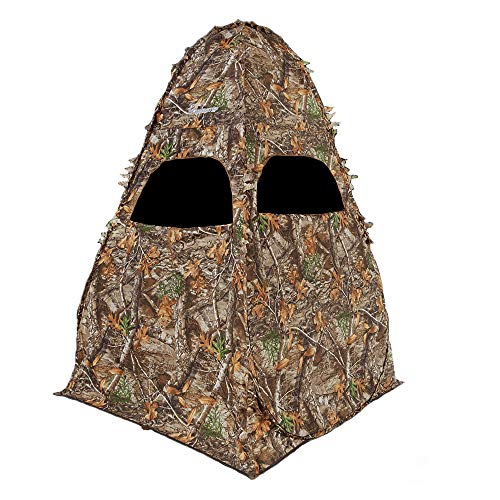
The 78-inch height is its distinguishing feature, and the maker says the spring blind accommodates standing, sitting, or kneeling. Four zippered windows provide multiple viewing positions. This model suits a solo hunter who wants the option to change posture during a hunt. The maker gives a height, but not a dependable footprint, so confirm the space it needs if the setup site is confined.
Bottom line: Choose this if standing room and four zippered windows are priorities.
How to Choose a One Person Ground Blind
Start with the hunting position: a seated hunter can use a shorter shelter, while standing requires enough interior height for the hunter and any raised bow or firearm. Footprint matters just as much; measure the clear ground and leave room to open the door and move safely around the blind. Window count alone does not guarantee a useful view, so compare window placement with the directions you expect to watch. Ground blinds generally use either flexible spring-steel frames or hub-and-pole structures; both need a clear setup area and secure anchoring against wind. Choose the smallest footprint that still accommodates your seat, posture, and safe movement rather than assuming a larger shelter is automatically better.
Ground Blind Dimensions and Hunting Position
Height and footprint determine whether a blind fits the hunter, seat, and terrain. Measure your seated eye height and your standing height before choosing; then compare those measurements with the blind’s interior dimensions, not just its exterior profile. A 47-inch square footprint needs a roughly square patch, while a 44-by-36-inch footprint fits a narrower space. One-person labels do not account for every chair or equipment setup. On uneven ground, check that the frame can sit level and that the door and windows remain accessible. If the site has less than 36 inches of clear width, none of the models here with footprints will fit as measured; confirm the actual setup dimensions for models without a usable footprint figure.
Ground Blind Window and Concealment Choices
Window placement should match your expected view and keep the hunter’s outline concealed. A mesh panel can allow visibility, but never assume a closed mesh window is safe to shoot through; open the window fully and keep the muzzle or bow clear of fabric before taking a shot. Matte, patterned outer fabric helps break up hard edges, while dark interiors are intended to reduce visible shadows. Neither feature makes a blind invisible, so brush it in with natural cover without blocking exits or windows. The table compares common styles and the position they tend to suit.
| Blind style | Useful for | Tradeoff |
|---|---|---|
| Tall, multi-window shelter | Standing or scanning several directions | Needs more vertical clearance |
| Compact front-window shelter | Seated use in a narrow site | Less room to stand |
| Chair-style blind | Chair-oriented position | Confirm footprint and height first |
Safe Setup and Ground Blind Mistakes
Set up with a clear field of view and a safe shooting direction; never shoot through a closed window or fabric. Check local hunting rules for required fluorescent orange or other visibility gear, since requirements vary by jurisdiction and season. Anchor the blind as its frame design allows, because wind can shift lightweight shelters, and keep stakes or tie-downs from becoming trip hazards. Avoid blocking the entrance with gear, and do not place the blind where another hunter could mistake movement behind a window for game. Before the hunt, open and close each zipper quietly and confirm the windows provide the intended view without exposing the hunter’s silhouette.
Frequently Asked Questions
Can you shoot through a ground blind window?
Do not shoot through a closed mesh panel or fabric. Open the window fully and verify that the muzzle or bow is clear of the blind before taking a shot.
How tall should a one person ground blind be?
Choose a height that exceeds your standing height if you plan to stand inside; seated hunters need clearance for their head, seat, and equipment. A 53-inch shelter is suited to a more compact seated position than a 75- or 78-inch shelter.
Do ground blinds need to be brushed in?
Breaking up the blind’s outline with nearby natural cover can help it blend with the setting. Keep all windows and the exit clear, and avoid adding cover that could interfere with a safe shot.
Do hunters need blaze orange near a ground blind?
Fluorescent orange rules depend on the state, season, and hunting method. Check the current local requirement before hunting, and wear the required visibility gear even when concealed inside a blind.
How do you keep a ground blind stable in wind?
Use the blind’s anchoring points and secure it with suitable stakes or tie-downs where the ground allows. Keep lines out of walking paths, and avoid setting up in exposed areas where gusts can catch the shelter.