
Otoscopes for Home Use: 4 Models Compared by Fit

For home ear checks, Doctor Mom 4th Generation Pocket Pro is the named model to consider because it includes adult and pediatric disposable specula tips, a battery and a protective case. Choose EMI Basic Student LED Otoscope EOM-950 instead for basic practice with a reusable speculum; these tools can help view the ear canal but cannot confirm an infection, so seek a clinician’s advice for symptoms.
We earn a commission if you buy through links on this page. As an Amazon Associate I earn from qualifying purchases. Products are compared on manufacturer specifications, not hands-on testing.
- Best overall: Doctor Mom 4th Generation Pocket Pro – Includes adult and pediatric disposable specula tips, a battery and a hard protective case.
- Best for portability: Zyrev ZetaLife Pocket Otoscope – Pocket-size design and a nylon case support storage and carrying; requires two AA batteries.
- Best for practice: EMI Basic Student LED Otoscope EOM-950 – A basic student model includes a reusable speculum and two AAA batteries.
| Product | Best for | Tip setup | Power | Case | Shop |
|---|---|---|---|---|---|
| Doctor Mom 4th Generation Pocket Pro | Family ear checks | Adult and pediatric disposable tips | Battery included | Protective hard plastic case | Check Price on Amazon |
| Doctor Mom Original Pocket Otoscope | Simple home checks | — | — | Clamshell packaging | Check Price on Amazon |
| Zyrev ZetaLife Pocket Otoscope | Portable storage | — | 2 AA batteries, not included | Nylon case | Check Price on Amazon |
| EMI Basic Student LED Otoscope EOM-950 | Basic practice | Reusable speculum | 2 AAA batteries included | — | Check Price on Amazon |
Otoscopes for Home Use
Compare the included tips, power and carrying options to find a model suited to home checks or practice.
Doctor Mom 4th Generation Pocket Pro

For a household that needs tips in two sizes, this pocket otoscope includes adult and pediatric disposable specula, a battery and a protective hard plastic case. Its body is anodized aluminum, and the maker says the optical-quality lens provides a clear image. That combination suits caregivers who want separate disposable tips for different ear sizes and a case for storage.
The included tips do not replace clinical judgment: an otoscope view alone cannot establish the cause of ear pain or fever. Ask a clinician about symptoms rather than relying on a home view to diagnose an infection.
Bottom line: Choose this if you want adult and pediatric disposable tips in one kit.
Doctor Mom Original Pocket Otoscope

The Original Pocket Otoscope is the simpler Doctor Mom option, with bright white LED technology and clamshell packaging rather than the newer model’s dual-size disposable tips and hard case. The maker says it was designed for home use by an emergency physician. It may suit a caregiver seeking that straightforward pocket format, provided the tip setup and power arrangement match what is needed.
Because the specifications do not identify included tips or batteries, confirm those essentials before buying. For any ear exam, do not insert a speculum deeply or force it against resistance; stop if the person is uncomfortable.
Bottom line: Pick this if you want the Original model and can confirm its tip and power needs.
Zyrev ZetaLife Pocket Otoscope

The Zyrev ZetaLife stands out for its included nylon case and explicit power requirement: it uses two AA batteries, which are not included. The maker describes it as a compact, lightweight ear scope for home use as well as student or professional practice. That makes it a fit for someone prioritizing a portable storage setup and who already has AA batteries on hand.
Ear canals are delicate; use only a tip designed for the device, keep the instrument at the opening, and stop at pain or resistance.
Bottom line: Choose this if portability and a nylon case matter and you can supply AA batteries.
EMI Basic Student LED Otoscope EOM-950
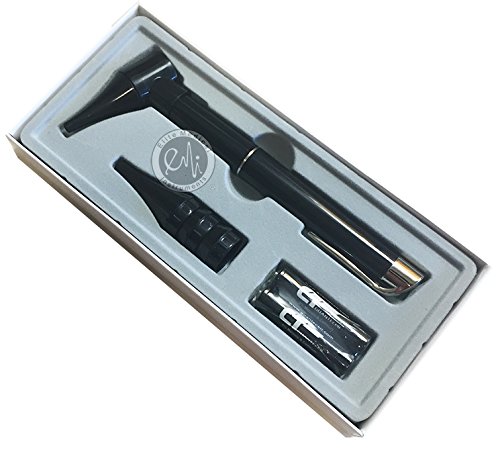
The EMI Basic Student LED Otoscope is the only model here explicitly described as a starter tool for training, and it includes a reusable speculum plus two AAA batteries. A clip trigger activates its LED, making the control simple for practice and basic at-home checks. The reusable tip differs from disposable-tip kits and requires cleaning between users according to its care instructions.
The maker positions this as a basic learning model, so it may not suit someone who needs multiple disposable tip sizes for a household. Avoid sharing a reusable speculum without proper cleaning, and never push it into the ear canal.
Bottom line: Choose this for introductory practice with an included reusable speculum and batteries.
How to choose an otoscope for home use
Choose by tip arrangement, power and the intended user before comparing appearance. Disposable specula should be changed between people; reusable tips need cleaning between users, and the material and cleaning method must be compatible with the maker’s instructions. A light and lens help illuminate and view the canal, but a home otoscope cannot diagnose the cause of pain, drainage or fever. For children, select a tip intended for pediatric use and keep the tip at the canal entrance rather than advancing it. A practical rule: if a model’s included tips or battery type are unclear, verify those before purchase; without the correct tip or power source, the device is not ready for an exam.
Disposable and reusable ear specula
Disposable specula reduce the need to clean a tip between users, while reusable specula require cleaning after each person’s exam. Tip diameter matters because an oversized tip can cause discomfort and an undersized view may be limited; never force a tip that does not fit comfortably at the ear opening. For a household with adults and children, choose a kit that explicitly includes both adult and pediatric sizes, such as Doctor Mom 4th Generation Pocket Pro. Keep tips clean, dry and stored so they do not collect debris.
Safe home ear checks
Keep home viewing limited to looking at the outer canal entrance; do not use an otoscope to dig out wax or insert it deeply. A speculum can injure the canal or eardrum if pushed, especially when a child moves, so stop immediately at pain, resistance, bleeding or sudden discomfort. Ear pain, drainage, hearing change or fever warrants clinical advice because seeing redness or wax does not establish an infection. For young children, have another adult help keep the child still and use only a pediatric-sized tip when the device provides one. Never share a reusable tip unless it has been cleaned according to its care instructions.
Battery and storage planning
Check the battery format before the first use: the Zyrev unit uses two AA batteries not included, while the EMI kit includes two AAA batteries. Store the otoscope dry with its tips protected; the Doctor Mom 4th Generation model includes a hard plastic case and the Zyrev includes a nylon case. Remove batteries for long-term storage if the device’s manual recommends it, since batteries left in equipment can leak. Keep loose disposable tips away from young children, and replace damaged or contaminated tips rather than using them for another exam.
Frequently Asked Questions
Can a home otoscope tell if an ear is infected?
No, viewing the ear canal at home cannot confirm an infection or its cause. Ear pain, drainage, fever or a hearing change should be discussed with a clinician.
How often should I change an otoscope speculum?
Use a fresh disposable speculum for each person, and replace a tip that becomes dirty or damaged. Reusable tips need cleaning between users according to the manufacturer’s care directions.
Which batteries does the Zyrev otoscope use?
The Zyrev ZetaLife uses two AA batteries, which are not included. Keep spares available if you plan to use it away from home.
Can I use an otoscope to remove earwax?
No, an otoscope is for viewing, not digging or scraping wax from the canal. Inserting tools deeply can injure the ear; consult a clinician about blocked ears or wax concerns.