
Advent RV Air Conditioning: Models Compared by Fit

For a conventional rooftop replacement, choose ASA Electronics ACM135 Advent Air 13,500 BTU if its 13,500-BTU capacity and 14.25-by-14.25-inch vent-opening fit match your RV. Choose a different option if you need a built-in heat pump, 12-volt operation, or a vent channel foam kit rather than a complete air conditioner.
We earn a commission if you buy through links on this page. As an Amazon Associate I earn from qualifying purchases. Products are compared on manufacturer specifications, not hands-on testing.
- Best overall: ASA Electronics ACM135 Advent Air 13,500 BTU – Its 13,500-BTU capacity and standard 14.25-by-14.25-inch vent-opening fit suit a conventional rooftop replacement.
- Best for heat pump heating: TOSOT 16,000 BTU RV Air Conditioner – It combines 16,000 BTU cooling with 12,500 BTU heat-pump heating.
- Best for 12-volt power: 12V RV Air Conditioner with Heat – Its name identifies it as a 12-volt rooftop air conditioner for off-grid use.
| Product | Best for | Cooling capacity | Heating | Weight | Shop |
|---|---|---|---|---|---|
| ASA Electronics ACM135 Advent Air 13,500 BTU | Standard rooftop replacement | 13,500 BTU | Optional heat strip | 68.4 lb | Check Price on Amazon |
| TOSOT 16,000 BTU RV Air Conditioner | Heat-pump heating | 16,000 BTU | 12,500 BTU heat pump | 131 lb | Check Price on Amazon |
| 12V RV Air Conditioner with Heat | 12-volt off-grid use | 11,000 BTU | 3,500 BTU | 59 lb | Check Price on Amazon |
| VEVOR 13,500 BTU Non-Ducted RV AC | Non-ducted cooling | 13,500 BTU | — | 77.6 lb | Check Price on Amazon |
| SeDeplacer RV A/C Vent Channel Foam Kit | Vent channel airflow | — | — | 1 lb | Check Price on Amazon |
Advent RV Air Conditioning Options
Compare the complete rooftop units with the related power, heating and vent channel options before choosing a fit.
ASA Electronics ACM135 Advent Air 13,500 BTU
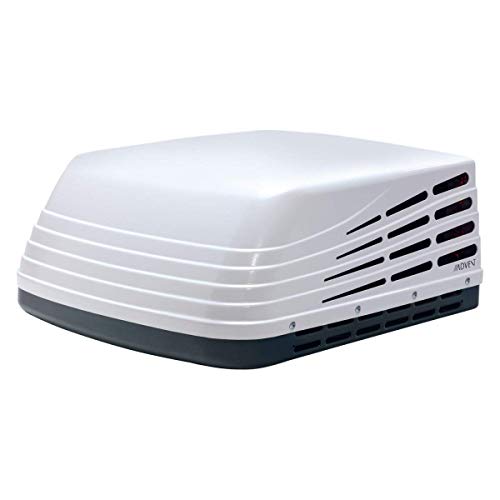
For a standard rooftop opening, the ACM135 is a 13,500-BTU Advent unit designed to install in a 14.25-by-14.25-inch vent opening. Its metal base pan, watertight gasket and six foam support pads are useful details when comparing roof-mounted replacements. The unit has three fan speeds and uses 115-volt AC power. ASA Electronics says an optional plug-in heat strip is available; it is not part of the cooling capacity. The 68.4-pound weight matters when planning a roof lift. Confirm the opening and electrical compatibility before ordering.
Bottom line: Choose it for a 13,500-BTU rooftop replacement that fits the specified opening.
TOSOT 16,000 BTU RV Air Conditioner

For buyers prioritizing integrated heating, this TOSOT rooftop unit pairs 16,000 BTU cooling with a 12,500-BTU heat pump, unlike the Advent unit’s optional heat-strip approach. TOSOT says it operates from 23°F to 115°F ambient temperature and is intended for RVs 16 to 24 feet long. Its weight is 131 pounds, substantially more than the ACM135, so roof loading and installation logistics deserve attention. It is a non-ducted design with Wi-Fi and remote control. Choose it for built-in heat-pump functionality, not as a like-for-like fit until the opening and electrical requirements are confirmed.
Bottom line: Choose it if built-in heat-pump heating matters more than minimizing unit weight.
12V RV Air Conditioner with Heat

For a 12-volt power setup, this rooftop unit differs from the 115-volt Advent by using a 12-volt system and combining 11,000-BTU cooling with 3,500-BTU heating. Its dimensions are 29 inches long, 26 inches wide and 8 inches high, and its weight is 59 pounds. The manufacturer claims 45-dB operation, but sound readings depend on distance and operating conditions, so that figure is not a direct comparison unless measured alike. Solar and battery use are named as intended contexts, but the specifications do not give a battery-capacity requirement. Choose it only after confirming power-system compatibility.
Bottom line: Choose it when a 12-volt rooftop unit is the priority and the power system is compatible.
VEVOR 13,500 BTU Non-Ducted RV AC

For a non-ducted installation, this VEVOR unit includes an air distribution box, operation panel and installation hardware, unlike the ACM135, whose features focus on the rooftop unit. The VEVOR has a 13,500-BTU cooling capacity and weighs 77.6 pounds. Its maker says the unit is intended for spaces up to 107.6 square feet and offers Auto, Cooling and three-speed Fan modes. It also names a timer function. Those controls and included components make it a distinct option, but the described capacity does not establish that it fits a particular RV or roof opening; confirm compatibility before choosing it.
Bottom line: Choose it for a non-ducted setup when its included distribution components suit the RV.
SeDeplacer RV A/C Vent Channel Foam Kit

Unlike the rooftop units, this SeDeplacer item is a vent channel foam board kit, not an air conditioner. It names Dometic Brisk Air 2, EVO and Blizzard models as compatible and says Advent models may fit with minor modifications. The maker says the channel shape directs airflow through ducts and may allow the fan to run at a lower speed for similar results. Its dimensions are 1 inch by 1 inch by 1 inch, so those figures do not establish the installed channel size. Treat it as a possible accessory, not a replacement AC; verify model compatibility before purchase.
Bottom line: Choose it only if you need a vent channel accessory and have confirmed model compatibility.
How to choose an RV rooftop air conditioner
Start with power, roof opening and cooling capacity; a BTU figure alone does not establish fit. A common RV rooftop opening is about 14.25 inches square, but roof thickness, mounting hardware and duct configuration can differ by model. Cooling capacity is measured in BTU per hour: 13,500 BTU is a common RV rooftop class, while higher capacity may call for more electrical capacity. Compare the existing unit’s voltage and circuit requirements before selecting a replacement. If you need electric heating, distinguish a heat pump from a heat strip: a heat pump provides heating and cooling, while a strip is an electric resistance element. Confirm the unit’s physical and electrical fit before ordering.
RV AC capacity and vehicle fit
Match the AC to the RV’s interior, insulation, window exposure and climate rather than choosing by vehicle length alone. As a rough selection rule, a 13,500-BTU unit is a common starting point for many single-AC RVs; larger or poorly insulated interiors and hot, sunny conditions can need more capacity. The TOSOT’s 16-to-24-foot range is a maker recommendation, not a universal sizing formula. Roof weight is another fit constraint: compare the unit weight with the RV manufacturer’s roof limits and plan safe lifting. A rooftop AC is a heavy load handled above ground; use suitable lifting help and avoid climbing or working on a wet or unstable roof.
This table separates complete cooling units from the related accessory.
| Need | Relevant option | Key distinction |
|---|---|---|
| 115-volt rooftop cooling | ASA Electronics ACM135 Advent Air 13,500 BTU | 13,500 BTU and 14.25-inch-square opening |
| Heat-pump heating | TOSOT 16,000 BTU RV Air Conditioner | 12,500-BTU heat pump |
| 12-volt power | 12V RV Air Conditioner with Heat | 11,000-BTU cooling |
| Duct airflow accessory | SeDeplacer RV A/C Vent Channel Foam Kit | Foam vent channel kit, not an AC |
Rooftop AC installation and electrical checks
Disconnect shore power and the generator before working on RV air-conditioning wiring; rooftop units use electrical circuits that can cause shock or damage if energized during installation. Verify the replacement’s voltage, breaker and wiring requirements against the RV system, and check the seal and mounting hardware around the roof opening for water intrusion. Roof openings near 14.25 inches square are common, but a nominal size does not guarantee the gasket or duct will align. A poor seal can admit water, while an incompatible distribution box can prevent proper airflow. Use a qualified RV technician if the roof structure, electrical circuit or duct arrangement is uncertain.
Frequently Asked Questions
What size roof opening does an RV air conditioner use?
Many RV rooftop units use an opening about 14.25 inches square. Measure the existing cutout and check the replacement’s mounting and duct arrangement, because nominal dimensions alone do not confirm compatibility.
Is 13,500 BTU enough for an RV?
A 13,500-BTU unit is a common class for many single-AC RVs, but sun exposure, insulation and interior volume change the cooling load. For a long or poorly insulated RV in hot weather, compare a higher-capacity option and the RV maker’s guidance.
Can an RV heat pump work in freezing weather?
Heat pumps lose heating effectiveness as outdoor temperatures fall, and many are intended mainly for mild conditions. The TOSOT model’s lower operating limit is 23°F; use another heat source below that limit.
Can a 12-volt RV air conditioner run from a battery?
A 12-volt unit can be paired with a compatible battery system, but runtime depends on battery capacity, inverter or wiring setup, and the AC’s current draw. Confirm current draw and required battery capacity before planning off-grid use.
How heavy is a rooftop RV air conditioner?
The units here range from 59 to 131 pounds, which shows why roof limits and safe lifting matter. Check the RV’s roof load guidance and use appropriate help rather than lifting a rooftop unit alone.