
Eureka 6 Person Tent: 4 Alternatives Compared by Fit

The Eureka 6 person tent is not among these options; UNP 6-Person Family Tent is the closest match by capacity, with room for six and a 78-inch center height. The other choices are Coleman six-person tents, including two Skydome models; choose a different size if you need a dark-room tent, since that option sleeps four.
We earn a commission if you buy through links on this page. As an Amazon Associate I earn from qualifying purchases. Products are compared on manufacturer specifications, not hands-on testing.
- Best overall: UNP 6-Person Family Tent – It is a six-person family tent with a 10-by-9-foot floor and 78-inch center height.
- Best for covered storage: Coleman Skydome Full-Fly Vestibule – Its 10-by-4-foot full-fly vestibule adds a protected entry and storage area.
- Best for quick setup: Coleman Skydome 6-Person Tent – Pre-attached poles are designed to set up in under five minutes.
| Product | Best for | Floor dimensions | Center height | Shop |
|---|---|---|---|---|
| UNP 6-Person Family Tent | Family car camping | 10 × 9 ft | 78 in | Check Price on Amazon |
| Coleman Sundome 6-Person Tent | Two airbeds | — | 6 ft | Check Price on Amazon |
| Coleman Skydome Full-Fly Vestibule | Covered gear storage | — | — | Check Price on Amazon |
| Coleman Skydome 6-Person Tent | Fast setup | 10 × 8 ft | 6 ft | Check Price on Amazon |
Six-Person Camping Tents
Compare these alternatives by sleeping capacity, interior dimensions and features that affect entry, storage and setup.
UNP 6-Person Family Tent
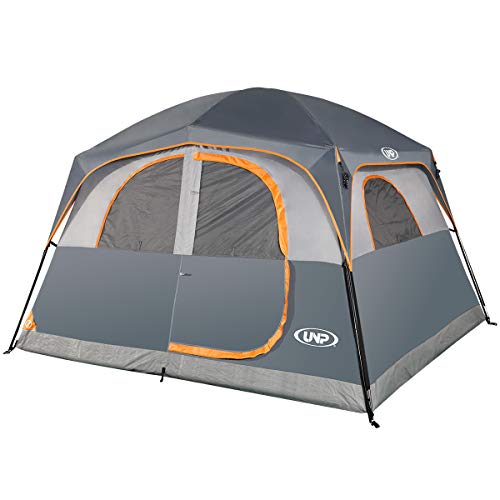
Among these alternatives, this tent gives a six-person family cabin layout and a 90-square-foot floor, with the 78-inch center height allowing most adults to stand while changing. The maker says two air mattresses or six sleeping bags fit inside. Five mesh windows, a mesh door and mesh top support airflow, while a rainfly provides an added weather layer. Setup is advertised at five minutes for two people, or 10 minutes for one. Its cabin shape and size suit car camping better than a compact backpacking setup.
Bottom line: Choose this for a roomy six-person tent with standing-height space.
Coleman Sundome 6-Person Tent
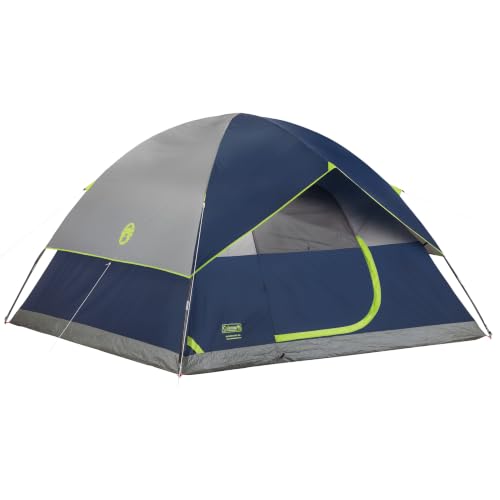
The Sundome is the only option here whose maker says it fits two queen-size airbeds, making that stated sleeping layout its main distinction. The 6-foot center height provides room to move upright, and large windows plus a ground vent are intended to improve airflow in warm weather. Coleman says welded corners and inverted seams help keep water out. The dimensions do not give a clear floor length and width, so buyers comparing tent footprints should verify usable interior space before choosing it for a particular campsite.
Bottom line: Pick this when two queen-size airbeds are central to your layout.
Coleman Skydome Full-Fly Vestibule

The full-fly vestibule sets this Skydome apart: its 10-by-4-foot covered area creates a protected entrance and extra gear storage outside the sleeping area. The tent itself fits two queen-size airbeds, and pre-attached poles are designed for setup in under five minutes. Coleman says the frame was tested to withstand winds up to 35 mph; taped rainfly seams, welded corners and inverted seams also support weather protection. Roof vents and a mesh back wall help airflow. Its separate vestibule footprint is useful if muddy boots or bags need space beyond the sleeping floor.
Bottom line: Choose this when sheltered entry and gear storage matter most.
Coleman Skydome 6-Person Tent

The standard Skydome offers a clear 10-by-8-foot footprint and a 6-foot center height, with pre-attached poles designed to make setup take under five minutes. Coleman says its nearly vertical walls provide 20% more headroom than traditional Coleman dome tents. A wider door eases moving bedding and gear, while mesh pockets and a gear loft organize small items. The maker says one queen airbed fits, so this layout is less suited to groups wanting two queen beds than the Sundome or vestibule Skydome.
Bottom line: Pick this for a defined footprint and a one-queen-bed layout.
How to Choose a Six-Person Tent
Start with sleeping layout, not the advertised head count: six people sharing a tent have limited space for bags and movement. A common planning allowance is about 20 square feet per person for sleeping, or roughly 120 square feet for six before gear; mattress layouts often require more. Floor shape and door placement also matter because two queen beds can occupy most of a family tent floor. If six adults need room for gear inside, compare actual floor dimensions and consider sizing up rather than treating the maximum capacity as a comfort rating.
Ventilation and weather protection are separate considerations. Mesh panels and vents encourage airflow, while a rainfly covers the tent against rain; damp clothing and wet gear can still raise interior humidity. In wind, pitch with the narrow end facing the prevailing gusts and stake every guyline point provided. Choose a tent with an exterior vestibule when muddy footwear or bags should stay outside the sleeping area.
Six-Person Tent Space and Sleeping Layout
For six campers, estimate floor needs from their actual bedding: six sleeping bags take less floor width than three wide air mattresses, and gear adds another constraint. A queen mattress is about 60 by 80 inches, so two need at least 80 inches of floor length and 60 inches of combined width before allowing any aisle or storage. A 10-by-8-foot floor is 80 square feet, while a 10-by-9-foot floor is 90 square feet; neither dimension alone guarantees a workable arrangement because doors, sloped walls and poles affect usable space.
Center height measures the tallest point, not the full ceiling. Dome walls curve downward toward the edges, so plan to sit or sleep near the perimeter and reserve the center for standing or changing. If standing room matters, look for a center height around 6 feet or more and verify the floor dimensions separately.
Setup and Weather Features for Family Tents
Pre-attached poles reduce the number of pole-to-sleeve steps, but a setup-time claim usually assumes an uncluttered site and a second person when specified. Clear sharp sticks and rocks, lay the floor flat, and stake corners before raising the tent to reduce strain on the frame. Practice pitching once at home so the correct pole orientation and rainfly position are familiar.
A rainfly and sealed seams help limit water entry, but no tent should be treated as safe shelter during lightning or severe weather. Wind resistance depends on staking, soil, guyline use and exposure, not just a frame claim. Keep a tent well away from campfires and cooking flames; synthetic tent fabrics can melt or ignite, and enclosed tents must never be used with fuel-burning heaters or stoves because carbon monoxide can build up.
Six-Person Tent Comparison by Sleeping Need
Match the tent to bedding and gear before prioritizing extra features. The table separates listed sleeping layouts from footprint size, which matters when planning a campsite or deciding whether gear can stay inside.
| Need | Relevant choice | Planning point |
|---|---|---|
| Two queen airbeds | Coleman Sundome 6-Person Tent or Coleman Skydome Full-Fly Vestibule | Allow room for an aisle and bags |
| Defined 10-by-8-foot floor | Coleman Skydome 6-Person Tent | Maker says it fits one queen bed |
| Covered entrance and storage | Coleman Skydome Full-Fly Vestibule | Vestibule measures 10 by 4 feet |
| Six-person cabin space | UNP 6-Person Family Tent | Floor measures 10 by 9 feet |
A campsite also needs room beyond the tent footprint for stakes, guylines and the entrance. Check campground pad dimensions and keep clear of fire rings; do not force a larger tent onto a smaller pad by leaving stakes unsecured.
Frequently Asked Questions
How much floor space does six people need in a tent?
A practical sleeping estimate is about 20 square feet per person, or around 120 square feet for six, before gear. Families using air mattresses should map their mattress dimensions and an aisle because bed layouts consume space quickly.
Will two queen air mattresses fit in a six-person tent?
A queen mattress is about 60 by 80 inches, so two need at least 80 inches of floor length and 60 inches of combined width before adding walking space. Confirm the exact floor layout and account for sloping walls, poles and gear.
What does a tent vestibule do for campers?
A vestibule is a covered area outside the main sleeping compartment for entry and gear. Keeping muddy boots there helps separate wet or dirty items, but cooking and fuel-burning appliances should remain outside the tent.
Are six-person tents safe during thunderstorms?
No tent is safe shelter from lightning; move to a substantial building or hard-topped vehicle when thunder is heard. Keep tents away from trees that may drop limbs and avoid exposed ridges during storms.
How should I reduce condensation inside a family tent?
Open rainfly vents and opposing mesh openings when conditions allow, since airflow helps moisture escape. Keep wet clothing outside the sleeping area when possible, and avoid breathing or cooking inside the tent to limit added moisture and carbon monoxide risk.