
Thunderbolt 4 External SSDs: 5 Drives Compared

For a Thunderbolt 4 external SSD, choose Oyen Digital U34 Bolt 8TB: it supports USB4 at 40 Gbps and is described as compatible with Thunderbolt 3, 4 and 5 hosts. The other options use USB 3.2, so they suit buyers who need portable storage but not a Thunderbolt-class connection.
These drives use solid-state storage rather than spinning platters; choose by the host port, capacity and workload, not by USB-C connector shape alone.
We earn a commission if you buy through links on this page. As an Amazon Associate I earn from qualifying purchases. Products are compared on manufacturer specifications, not hands-on testing.
- Best overall: Oyen Digital U34 Bolt 8TB – Its USB4 40 Gbps interface and stated compatibility with Thunderbolt 4 hosts match the search.
- Best for rugged 4TB storage: SanDisk Extreme Portable SSD 4TB – It pairs a 4TB capacity with an IP65 rating and up to 3-meter drop protection.
- Best for sustained transfers: Samsung T9 Portable SSD 4TB – The maker specifies read and write speeds up to 2,000 MB/s and thermal management.
| Product | Best for | Interface | Capacity | Maximum speed | Shop |
|---|---|---|---|---|---|
| Oyen Digital U34 Bolt 8TB | Thunderbolt 4 hosts | USB4; Thunderbolt 3/4/5 compatible | 8TB | Up to 2,800 MB/s | Check Price on Amazon |
| SanDisk Extreme Portable SSD 4TB | Rugged 4TB storage | USB 3.2 Gen 2 | 4TB | Up to 2,000 MB/s | Check Price on Amazon |
| Samsung T9 Portable SSD 4TB | Long transfers | USB 3.2 Gen 2×2 | 4TB | Up to 2,000 MB/s | Check Price on Amazon |
| SSK Portable SSD 4TB | Dual USB cables | USB 3.2 Gen 2; USB-C and USB-A | 4TB | Read up to 1,050 MB/s | Check Price on Amazon |
| SanDisk Portable SSD 2TB | Compact 2TB storage | USB-C; up to USB 3.2 speeds | 2TB | Read up to 1,000 MB/s | Check Price on Amazon |
Thunderbolt 4 External SSDs Compared
Check the connection type first, then compare capacity and the maker’s speed figures.
Oyen Digital U34 Bolt 8TB

Oyen Digital U34 Bolt 8TB is the only drive here identified as Thunderbolt-compatible, with USB4 40 Gbps connectivity and compatibility with Thunderbolt 3, 4 and 5 hosts. The maker says transfer rates reach 2,800 MB/s; actual performance can vary with the computer, connection and files being moved. Its 8TB capacity is the largest in this group, and the aluminum core is designed for cooling. It is formatted for Mac OS and carries a MIL-Standard 810 protection rating. The Mac formatting may require attention for buyers who plan to use it with a different operating system.
Bottom line: Choose this when Thunderbolt compatibility and 8TB capacity are the priorities.
SanDisk Extreme Portable SSD 4TB

SanDisk Extreme Portable SSD 4TB stands out for its IP65 rating and up to 3-meter drop protection, not for Thunderbolt connectivity. The maker says it reaches transfer speeds up to 2,000 MB/s, and it includes 256-bit AES encryption with password protection. Its 4TB capacity fits a large portable library, while the pocket-size body measures 3.35 by 2 by 0.39 inches. Buyers who specifically need Thunderbolt 4 should choose a compatible interface instead; USB-C connector shape alone does not establish Thunderbolt support.
Bottom line: Choose this for 4TB of portable storage with dust, water and drop protection.
Samsung T9 Portable SSD 4TB
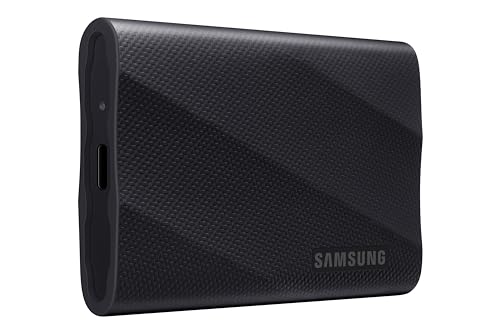
Samsung T9 Portable SSD 4TB differentiates itself with a thermal management feature intended to control heat during heavy use. The maker states read and write speeds up to 2,000 MB/s, including sustained speeds during longer processes. Its USB 3.2 Gen 2×2 interface is not the Thunderbolt 4 connection asked for here, even though the drive is marketed for desktops, cameras and gaming consoles. The 4TB unit measures about 3.46 by 2.36 by 0.55 inches and weighs 0.27 pound, so it is larger and heavier than the smallest options in this group.
Bottom line: Choose this for long USB transfers where the thermal feature matters more than Thunderbolt support.
SSK Portable SSD 4TB

SSK Portable SSD 4TB comes with both USB-C and USB-A cables, a useful difference for moving files between devices with different ports. Its USB 3.2 Gen 2 interface is not Thunderbolt 4, and the maker gives read speeds up to 1,050 MB/s and write speeds up to 1,000 MB/s. The 4TB drive has an aluminum body and measures 2.6 by 1.5 by 0.5 inches. Its smaller dimensions may appeal to buyers focused on portability, but the maximum read speed is lower than the faster alternatives here.
Bottom line: Choose this if you need included USB-C and USB-A cables for mixed-port devices.
SanDisk Portable SSD 2TB
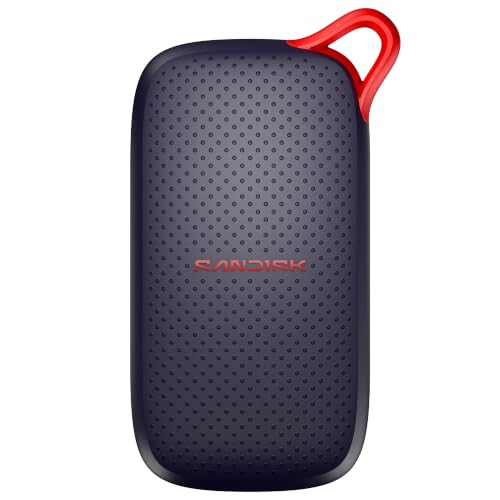
SanDisk Portable SSD 2TB is the 2TB choice in this group and emphasizes a slim, lightweight body, with a weight of 0.07 pound. The maker gives read speeds up to 1,000 MB/s and drop protection up to 2 meters. It uses USB-C, but the maker does not identify it as Thunderbolt 4, so it is a partial match for this search rather than a Thunderbolt drive. The 2TB capacity is half that of the 4TB portable alternatives, which matters for buyers keeping large video or project archives on one drive.
Bottom line: Choose this for a lighter 2TB USB-C drive when Thunderbolt is not required.
How to choose a Thunderbolt 4 external SSD
Start with the interface printed in the drive’s specifications: a USB-C plug does not guarantee Thunderbolt support. Thunderbolt 4 uses a 40 Gbps connection, while USB 3.2 Gen 2 has a 10 Gbps signaling rate and Gen 2×2 has 20 Gbps; these are interface rates, not guaranteed file-transfer speeds. For a Thunderbolt 4 computer, choose a drive explicitly identified as Thunderbolt-compatible or USB4-compatible with the host. Then size capacity for the files you keep locally: 2TB or 4TB suits smaller libraries than 8TB. If a drive’s peak speed exceeds what your host port supports, the connection can limit transfers. The Oyen model is the only option in this group explicitly specified for Thunderbolt hosts.
USB4, Thunderbolt and USB 3.2 differences
USB4 and Thunderbolt 4 are related but are not interchangeable labels: USB4 devices may have different capabilities, so verify the specific drive’s compatibility and required host connection. Thunderbolt 4 has a 40 Gbps link rate; USB 3.2 Gen 2×2 has 20 Gbps, and Gen 2 has 10 Gbps. Those figures describe signaling bandwidth, not the speed a file copy will reach. The comparison table separates the drive interfaces from their maker-specified speed figures; do not compare an interface’s Gbps directly with an SSD’s MB/s claim as though they were the same measurement. A USB 3.2 drive can work for ordinary external storage, but it does not satisfy a requirement for Thunderbolt 4.
| Connection type | Typical interface rate | Selection rule |
|---|---|---|
| Thunderbolt 4 | 40 Gbps | Choose when the host specifically needs Thunderbolt |
| USB 3.2 Gen 2×2 | 20 Gbps | Use with compatible USB equipment, not as a Thunderbolt substitute |
| USB 3.2 Gen 2 | 10 Gbps | Suitable when a USB connection is sufficient |
Capacity, file sizes and host limits
Choose storage capacity by the files that must stay on the drive and how often you can archive or delete them. A 4TB drive offers twice the nominal capacity of a 2TB model, while an 8TB drive offers four times the capacity of 2TB. Usable space will be lower than the advertised decimal capacity after formatting and filesystem overhead; the exact amount depends on the computer and format. Large video projects can benefit from more capacity, but a faster interface does not make a full drive larger. Check that the computer has the necessary port and that the operating system can read the drive’s format before moving a working archive. For the Mac-formatted Oyen model, verify formatting compatibility if you intend to use another operating system.
Portable SSD care and safe handling
Portable SSDs have no spinning disk, but their connectors and enclosures still need protection from impact, moisture and heat. Protection ratings are specific: IP65 is a dust and water-ingress rating, while a drop height applies only to the product condition and test basis specified by its maker; neither should be treated as permission to submerge or mishandle a drive. Disconnect storage safely through the computer’s eject function before unplugging during writes, since interruption can corrupt files. Keep a second copy of irreplaceable work; a portable drive is one storage device, not a backup strategy by itself. Sustained transfers can also produce heat, so avoid covering a drive during long sessions and allow airflow around an aluminum enclosure.
Frequently Asked Questions
Does a USB-C SSD work with Thunderbolt 4?
A USB-C connector can carry different protocols, so the connector alone does not confirm Thunderbolt support. Choose a drive explicitly compatible with Thunderbolt 4 if that is a requirement, and confirm the computer has a Thunderbolt 4 port.
Is 40 Gbps the same as 2,800 MB/s?
No. Gbps describes interface signaling bandwidth and MB/s describes data throughput; protocol overhead and the host, drive and workload affect transfer results. Treat 40 Gbps as the interface class, not a promise of a file-copy speed.
How much external SSD capacity should I choose?
Choose 2TB for a smaller working library, 4TB for more room, or 8TB when a large archive needs to travel on one drive. Leave headroom for future files because formatted usable capacity is below the nominal decimal figure.
Can a USB 3.2 SSD replace a Thunderbolt 4 drive?
A USB 3.2 SSD can store and transfer files, but it does not meet a requirement for Thunderbolt 4 connectivity. USB 3.2 Gen 2 is 10 Gbps and Gen 2×2 is 20 Gbps, compared with Thunderbolt 4’s 40 Gbps link rate.
Should I use one portable SSD as my only backup?
No; keep a second copy of important files on another device or in a separate backup system. A single portable drive can be lost, damaged or fail, regardless of its capacity or protective enclosure.