
Bendix Brake Shoes: 3 Options Compared by Fit

Bendix 723 Rear Brake Shoe is the broadest match among these Bendix brake shoes because it is identified as a rear brake shoe without a named vehicle restriction. Choose Bendix Premium 859 Rear Parking Brake Shoe for a vehicle that needs a rear parking-brake shoe, or Bendix Premium 984 Rear Brake Shoe for a 2011–2019 Ford Fiesta or 2016–2021 Figo application.
Brake shoes press friction material against the inside of a drum; exact vehicle and brake-system fit matters. Confirm the application and whether the vehicle needs a service-brake shoe or a parking-brake shoe before ordering.
We earn a commission if you buy through links on this page. As an Amazon Associate I earn from qualifying purchases. Products are compared on manufacturer specifications, not hands-on testing.
- Best overall: Bendix 723 Rear Brake Shoe – A rear brake shoe without a named vehicle restriction in its product name.
- Best for parking brakes: Bendix Premium 859 Rear Parking Brake Shoe – Identified specifically as a rear parking-brake shoe for select models.
- Best for select Ford models: Bendix Premium 984 Rear Brake Shoe – Names Ford Fiesta and Figo applications with model-year ranges.
| Product | Best for | Brake role | Vehicle fit | Shop |
|---|---|---|---|---|
| Bendix 723 Rear Brake Shoe | General rear replacement | Rear brake shoe | — | Check Price on Amazon |
| Bendix Premium 859 Rear Parking Brake Shoe | Select parking brakes | Rear parking-brake shoe | Select Lexus, Mazda, Toyota | Check Price on Amazon |
| Bendix Premium 984 Rear Brake Shoe | Select Ford applications | Rear brake shoe | Ford Fiesta 2011–2019; Figo 2016–2021 | Check Price on Amazon |
Bendix brake shoes by fit and brake role
Compare the intended brake role and vehicle application before choosing a replacement shoe.
Bendix 723 Rear Brake Shoe

Bendix 723 Rear Brake Shoe is the general rear brake shoe option here, unlike the parking-brake-specific and vehicle-named alternatives. Bendix says the powder-coated shoe resists rust and provides durability, and that the shoe is designed for correct contact with the drum. The product also claims easy installation and includes a limited warranty.
This option may suit a buyer already matching a rear shoe by part number. Its name does not identify a vehicle application, so confirm compatibility with the vehicle’s year, make, model and brake configuration before purchase.
Bottom line: Choose this if you have confirmed the 723 part number matches your rear drum-brake application.
Bendix Premium 859 Rear Parking Brake Shoe

Bendix Premium 859 Rear Parking Brake Shoe is the only option explicitly identified as a rear parking-brake shoe, so it differs from the rear brake shoe choices intended for service-brake replacement. Its named applications include select Lexus ES and RX models, Mazda 808 and GLC, and Toyota Avalon, Camry, Celica, Highlander and Solara.
Bendix says the shoe is designed to match original-equipment fit, form and function, reduce noise and vibration, and uses new steel with a powder-coated backing plate. The broad model list makes exact year and configuration verification essential; the name alone does not establish fit for every trim or model year.
Bottom line: Choose this for a confirmed listed vehicle when replacing its rear parking-brake shoe.
Bendix Premium 984 Rear Brake Shoe
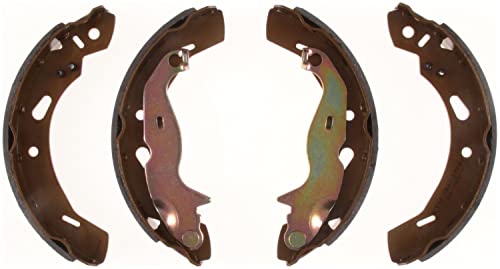
Bendix Premium 984 Rear Brake Shoe stands apart with a narrower named application: Ford Fiesta models from 2011 through 2019 and Figo models from 2016 through 2021. It is identified as a rear brake shoe, not a parking-brake shoe, which makes the brake role an important distinction from Bendix Premium 859 Rear Parking Brake Shoe.
Bendix says this shoe matches original-equipment fit, form and function, is intended for daily driving, and is made with new steel. The powder-coated backing plate is intended to protect against rust and corrosion. Its model-year ranges do not guarantee fit across every trim or brake configuration, so verify the exact vehicle application.
Bottom line: Choose this for a verified Fiesta or Figo service-brake application within its named years.
How to choose Bendix brake shoes
Start with brake role and vehicle fit, not the brand name alone. A service-brake shoe slows the vehicle when the brake pedal is pressed; a parking-brake shoe holds a parked vehicle and may be a separate part. Match the year, make, model, trim and rear brake configuration to the replacement part. Drum brakes use curved shoes that press outward against the drum’s inner surface, so shoe shape and hardware must match the assembly.
When replacing shoes, technicians commonly replace them as a pair on the same axle so braking is balanced side to side. Inspect the drum for scoring, heat damage or wear at the same time; a new shoe cannot correct a damaged or out-of-spec drum. If the part number or application is uncertain, verify the fit before ordering.
Rear service shoes versus parking-brake shoes
Service-brake shoes and parking-brake shoes do different jobs, even when both sit at the rear wheels. A service-brake shoe works with the hydraulic brake system and drum to slow a moving vehicle. A parking-brake shoe is used by the parking-brake mechanism to keep a stationary vehicle from rolling. Some vehicles use a drum-in-hat parking brake inside a rotor, while others use drum brakes for service braking; the design depends on the vehicle.
The distinction changes which part to choose and how it is installed. Use the vehicle’s parts application to confirm the brake role and hardware, rather than assuming every rear shoe is interchangeable. After any brake repair, verify normal pedal feel and parking-brake engagement in a safe, controlled setting before regular driving.
Brake shoe fit and replacement checks
Correct fit depends on more than a model name: model year, trim, axle, and brake configuration can change the required shoe. Confirm the exact application against the vehicle identification number or the vehicle’s parts catalog, especially when a product names several models across multiple generations. Also check whether the replacement is for service braking or parking-brake use.
Drum-brake work involves springs and retainers that can release forcefully. Use a proper brake-spring tool, support the vehicle on rated jack stands on a firm, level surface, and never rely on a jack alone. Brake dust should not be blown into the air; avoid inhaling it and clean components with an appropriate brake-cleaning method. If the drum will not come off or the hardware arrangement is unclear, stop and get qualified help.
What to inspect with new brake shoes
Inspect the drums, return springs, hold-down hardware, adjusters and wheel-cylinder area whenever shoes are replaced. Grooves, cracks, leaks, seized adjusters or damaged springs can undermine a shoe replacement and may call for additional service. Brake shoes need correct contact with the drum; the drum surface and adjustment mechanism are part of that system.
After assembly, the shoes generally need adjustment so they sit close to the drum without binding; excessive clearance can increase pedal travel, while too little clearance can cause drag and heat. Follow the vehicle-specific procedure because adjuster design differs. Test the brakes at low speed in a clear area after repair, and do not drive if the pedal feels abnormal, braking pulls, or a wheel remains hot.
Frequently Asked Questions
Are parking-brake shoes the same as rear brake shoes?
No. Service-brake shoes slow the vehicle through the brake pedal, while parking-brake shoes hold a stationary vehicle. Confirm the brake role and vehicle fit before selecting a replacement.
Should brake shoes be replaced on both rear wheels?
Brake shoes are commonly replaced as a pair on the same axle to maintain balanced braking. Inspect both drums and related hardware during the job.
What should be checked when replacing drum brake shoes?
Inspect the drum surface, springs, retainers, adjuster and wheel-cylinder area along with the shoes. Cracks, leaks, damaged hardware or a drum outside its service limit require attention before driving.
How can I confirm the right brake shoe for my car?
Match the exact year, make, model, trim and brake configuration, and distinguish a service-brake shoe from a parking-brake shoe. Model names alone may not cover every configuration.
Is brake dust safe to blow away with compressed air?
No; do not blow brake dust into the air or inhale it. Use an appropriate brake-cleaning method and avoid disturbing dust unnecessarily.