
Smart Auto Focus Glasses: 5 Options Compared

Auto Focus Smart Glasses, 3-Pack is the broadest match for shoppers seeking smart auto focus glasses, with a claimed 100°–700° range and a three-pair set. Choose another option if photochromic lenses or a frameless design matters more than that stated range.
These products claim to adjust focus between near and far viewing; their product names and features do not establish that they can replace a prescription from an eye-care professional.
We earn a commission if you buy through links on this page. As an Amazon Associate I earn from qualifying purchases. Products are compared on manufacturer specifications, not hands-on testing.
- Best overall: Auto Focus Smart Glasses, 3-Pack – It claims a 100°–700° adaptive range and comes as a three-pair set.
- Best for photochromic lenses: Lkdgii Photochromic Smart Readers, 2-Pack – The features claim automatic darkening outdoors and clearing indoors.
- Best for a rimless style: ZOXVYL Rimless Photochromic Readers – Its name identifies a rimless frame and a photochromic lens.
| Product | Best for | Pack count | Blue-light claim | Added lens feature | Shop |
|---|---|---|---|---|---|
| Auto Focus Smart Glasses, 3-Pack | Claimed focus range | 3 pairs | Up to 95% | 100°–700° adaptive range | Check Price on Amazon |
| Lkdgii Photochromic Smart Readers, 2-Pack | Outdoor transitions | 2 pairs | Up to 95% | Photochromic | Check Price on Amazon |
| Lkdgii Diamond-Cut Smart Glasses, 2-Pack | Diamond-cut style | 2 pairs | Up to 95% | Photochromic | Check Price on Amazon |
| ZOXVYL Rimless Photochromic Readers | Rimless frame | 1 pair | — | Photochromic | Check Price on Amazon |
| Auto Focus Smart Reading Glasses, 2-Pack | Silver two-pack | 2 pairs | Up to 95% | Near-to-far focus claim | Check Price on Amazon |
Smart Auto Focus Glasses Compared
Compare the lens features and pack sizes, then weigh those claims against the vision correction you actually need.
Auto Focus Smart Glasses, 3-Pack
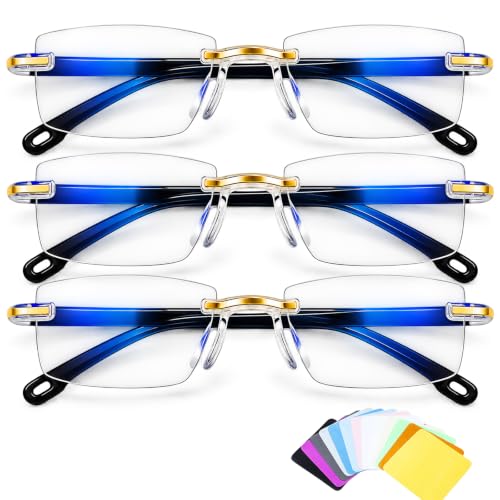
The 100°–700° figure is the distinguishing claim for this three-pair set. The maker says its lenses adjust from near to far without manual tuning and claims up to 95% blue-light blocking. That combination may appeal to someone seeking one style of glasses for reading, screens and distance viewing. The range alone does not tell you whether the lenses correct your prescription or suit your eyes; buyers who need corrective lenses should not treat the range as a prescription measurement. The pack quantity is a practical difference if you want more than one pair.
Bottom line: Choose this if the claimed adaptive range and three-pair set are your priorities.
Lkdgii Photochromic Smart Readers, 2-Pack

Photochromic light control is the main differentiator here: the maker says the lenses darken in outdoor sunlight and clear indoors. The two-pair set also claims near-to-far adjustment and up to 95% blue-light filtering, and the features identify a frameless design. This option suits a buyer who values an advertised light transition alongside screen and reading use.
Bottom line: Choose this if you want the photochromic feature in a two-pair set.
Lkdgii Diamond-Cut Smart Glasses, 2-Pack

The diamond-cut styling distinguishes this two-pair Lkdgii option from the other Lkdgii set. Its features also claim near-to-far adjustment, photochromic darkening outdoors and up to 95% blue-light filtering. It may fit shoppers who want those stated lens functions with the named cut. The feature claims do not give a prescription range, a measured transition time or a UV rating, so the choice is less suitable when those are required buying criteria. Compare the frame style and verify the needed vision correction with an eye-care professional.
Bottom line: Choose this if the diamond-cut style is the deciding feature.
ZOXVYL Rimless Photochromic Readers

A rimless rectangular frame and a photochromic lens are the clearest distinguishing features of this single-pair option. The name identifies it as non-prescription, while the features claim smart zoom for near and far viewing and blue-light filtering without giving a percentage. This may suit someone prioritizing a rimless look and a claimed light-adaptive lens over a multi-pair bundle. The missing percentage makes a numerical comparison of blue-light filtering impossible, and the claims do not establish suitability as corrective eyewear. Buyers needing a prescription should choose lenses based on an eye exam.
Bottom line: Choose this if a rimless, photochromic non-prescription style suits your needs.
Auto Focus Smart Reading Glasses, 2-Pack

The silver two-pair set stands out for its specified color and quantity. The maker claims an automatic near-to-far focus shift and up to 95% blue-light blocking, with intended use spanning reading, computer work and distance viewing. This may suit someone looking for two matching pairs with those advertised functions. The product name’s upgrade wording does not establish a measurable improvement; base the choice on the concrete features and your vision needs.
Bottom line: Choose this if you want a silver pair set with the focus and filtering claims.
How to Choose Smart Auto Focus Glasses
Start with the vision task, not the word “auto focus”: these products make lens-adjustment claims, but the features do not establish an individual prescription. Standard single-vision lenses correct one focal distance; bifocals and progressives provide distinct viewing zones, with progressives changing gradually from distance to near. If you need correction, an eye exam determines prescription and whether astigmatism correction is needed. Use a measurable rule: if you need a prescription or have astigmatism, choose professionally prescribed lenses rather than relying on a generic near-to-far claim. Then compare only concrete differences such as pack count, an adaptive range, photochromic function or frame style. A blue-light-blocking percentage by itself does not show that lenses correct vision.
What Near-to-Far Focus Claims Mean
Near-to-far adjustment describes a claimed change in lens focus, but the figure 100°–700° here is not enough to determine a prescription or reading strength. Reading prescriptions are commonly expressed in diopters, and a complete prescription can include sphere, cylinder, axis and pupillary distance. Those values address different vision needs and should not be inferred from a product’s “smart zoom” language. Ask an optometrist or ophthalmologist to explain your prescription, especially if close print remains blurred or distance vision is unclear. A practical decision rule is to avoid glasses that claim to suit every distance when you need a specific correction: select lenses made to that prescription. Do not drive or perform safety-critical tasks in eyewear that leaves vision unclear.
Photochromic Lenses and Blue-Light Claims
Photochromic lenses darken in response to ultraviolet light and lighten when the UV exposure falls; they are distinct from polarized lenses, which reduce reflected glare. Many car windshields filter much of the UV that activates conventional photochromic lenses, so the darkening may be limited behind glass. For driving in bright conditions, use eyewear specifically rated for that use rather than assuming a photochromic claim guarantees sufficient darkness. Blue-light filtering is another separate feature: a percentage claim describes filtering, not prescription strength or a guarantee against eye strain. If outdoor protection is important, verify the actual UV rating and lens category before relying on a pair, because those specifications are not established by a general photochromic claim.
Compare Lens Types by the Need
Lens type determines which viewing problem eyewear can address; “auto focus” language is not a substitute for identifying that need. Single-vision lenses provide one correction, bifocals divide near and distance zones, and progressives transition between zones without a visible line. Photochromic describes light-responsive tint, not a focal design, so it can be combined with different prescriptions. Use this guide to direct the next choice, then match any corrective lenses to an eye-care professional’s prescription.
| Need | Lens approach | What to verify |
|---|---|---|
| One main distance | Single vision | Prescription for that distance |
| Near and distance zones | Bifocal or progressive | Prescription and fitting |
| Changing outdoor light | Photochromic | UV rating and driving suitability |
When more than one need applies, such as correction plus outdoor tint, ask for a lens that addresses both rather than assuming one feature covers the other.
Frequently Asked Questions
Can auto focus glasses replace prescription glasses?
Not on the basis of an auto focus claim alone. A prescription may include sphere, cylinder and axis values, and only an eye exam can establish what correction you need.
What does 100°–700° mean on glasses?
Prescription power is expressed in diopters, so do not use the figure to choose corrective strength.
Do photochromic glasses darken inside a car?
They may darken less behind a windshield because many windshields block much of the UV that activates conventional photochromic lenses. Check that a pair is specifically suitable for driving if you need reliable glare or sun protection.
Are blue light glasses the same as prescription readers?
No. Blue-light filtering is a lens feature, while readers provide near-vision magnification or correction. A filtering percentage does not tell you the prescription strength.
When should I replace my eyeglass prescription?
Get an eye exam if vision changes, headaches occur with eyewear, or existing lenses no longer provide clear vision. Adults commonly have routine comprehensive exams every one to two years, with timing adjusted for age, health and clinician advice.