
Best Height Increasing Insoles: 5 Lift Options Compared

4-Layer Air Height Increase Insoles suits most people who want adjustable height, with lift settings from 1.2 to 2.95 inches and a size range of US 4–9. Choose a different option if you need a men’s size 10–12.5 fit or want a shorter, ¾-length insert.
Height-increasing insoles are heel lifts worn inside a shoe; adding height also takes up shoe space and changes how the foot sits. Start with the lowest comfortable setting, and choose a shoe with enough room and a secure heel.
We earn a commission if you buy through links on this page. As an Amazon Associate I earn from qualifying purchases. Products are compared on manufacturer specifications, not hands-on testing.
- Best overall: 4-Layer Air Height Increase Insoles – Adjustable from 1.2 to 2.95 inches, with a US size range of 4–9.
- Best for ¾-length fit: Mendez ¾-Length Height Increase Insole – The ¾-length design uses less shoe space and includes a 1-inch base with a stacker.
- Best for larger men’s sizes: benoo Men’s Adjustable 3-Layer Lift – Designed for men’s sizes 10–12.5, with three layers for a 1–3-inch lift.
| Product | Best for | Lift range | Size fit | Construction | Shop |
|---|---|---|---|---|---|
| 4-Layer Air Height Increase Insoles | Adjustable lift | 1.2–2.95 in | US 4–9 | 4-layer; airflow design | Check Price on Amazon |
| benoo Men’s 1-Inch Gel Lift | Single-inch lift | 1 in | Men’s 8–9.5; trim-to-fit | Gel and padded foam | Check Price on Amazon |
| Mendez ¾-Length Height Increase Insole | Less shoe coverage | 1–1.5 in | Sizes 7–12 | ¾-length; dual-density foam | Check Price on Amazon |
| 4-Layer Air Taller Cushion Lift | Higher lift range | 1.2–3.5 in | US 4.5–9 | 4-layer; airflow design | Check Price on Amazon |
| benoo Men’s Adjustable 3-Layer Lift | Larger men’s sizes | 1–3 in | Men’s 10–12.5; trim-to-fit | 3 adjustable layers | Check Price on Amazon |
Best height increasing insoles compared
Compare lift height, fit range and insert design before choosing a pair for your shoes.
4-Layer Air Height Increase Insoles
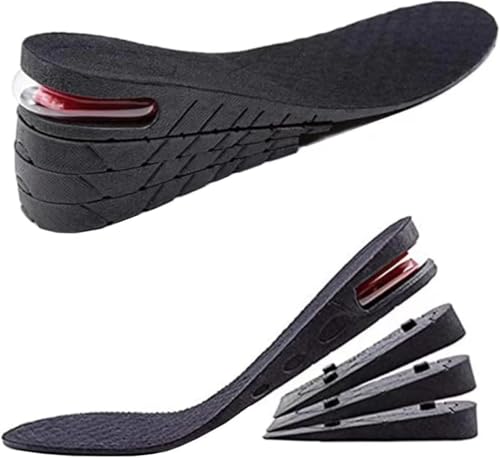
4-Layer Air Height Increase Insoles combines a four-layer design with a 1.2–2.95-inch adjustable lift, making it the broadest fit for shoppers who want more than one height setting. The size range is US 4–9; the maker says it can fit larger shoes, though less snugly. Its airflow design is intended to circulate air between the insert and shoe and draw moisture away. The limitation is the size range: buyers outside US 4–9 may have a less secure fit, and the highest setting needs substantial room inside the shoe.
Bottom line: Choose this if you want multiple lift settings and wear a shoe near the US 4–9 range.
benoo Men’s 1-Inch Gel Lift

benoo Men’s 1-Inch Gel Lift is the straightforward choice for a one-inch boost rather than a stackable lift. The men’s 8–9.5 version uses shock-absorbing gel and padded foam; the maker says the combination supports the foot from heel to toe and is breathable. It is trim-to-fit and intended for most sneakers and shoes. Its fixed one-inch rise is the key limitation: buyers who want to adjust height by adding layers should consider a layered model instead. Make sure the shoe has enough vertical room for the wedge before wearing it for a long stretch.
Bottom line: Pick this for a simple one-inch men’s lift in the size range.
Mendez ¾-Length Height Increase Insole
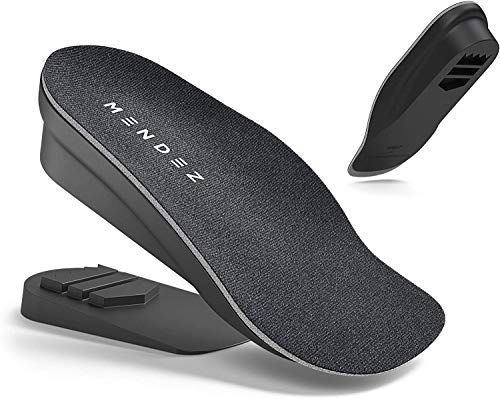
Mendez ¾-Length Height Increase Insole differs from the full-length and layered options with a ¾-length shape, which occupies less room in the shoe. Its dual-density foam has a soft cushioning layer and a firmer foundation, and the insert can be used as a one-inch base with a stacker to reach 1.5 inches. The maker recommends beginning with the base and adding the stacker as you adjust. Fit is listed for sizes 7–12, but the maker notes that fit varies by foot. This shorter design may not suit someone who wants full-length coverage under the foot.
Bottom line: Choose this if less shoe coverage matters and a 1–1.5-inch lift is enough.
4-Layer Air Taller Cushion Lift
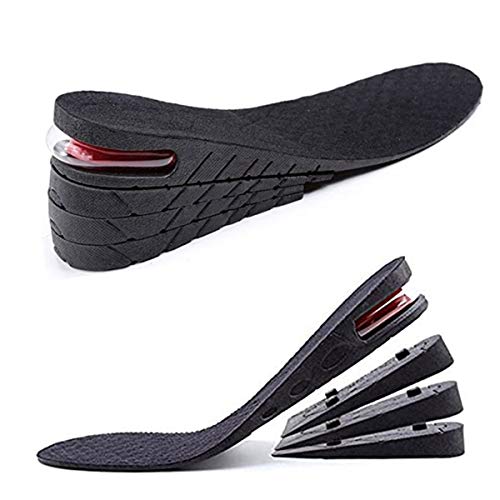
4-Layer Air Taller Cushion Lift offers the highest maximum lift in this group at 3.5 inches, with settings beginning at 1.2 inches. The four-layer heel-lift kit is listed for US 4.5–9, and its maker says the design allows air to circulate and helps draw moisture away. That maximum height is also the main trade-off: a large lift needs a shoe with ample internal space and a heel that remains secure. The size range is narrower than some shoppers may need, so this is a poor match if your shoe size falls well outside it.
Bottom line: Pick this only if you need the higher stated lift and your shoe can accommodate it.
benoo Men’s Adjustable 3-Layer Lift

benoo Men’s Adjustable 3-Layer Lift is the men’s larger-size option, designed for sizes 10–12.5 and adjustable from one to three inches by stacking one, two or three layers. The insert is trim-to-fit, and the maker says its breathable material is intended to keep feet cool and dry. This makes it a more size-specific alternative to the smaller-size benoo one-inch wedge. The trade-off is the shoe space required as layers are added: a three-inch setting may not work well in a low-volume shoe. Start with fewer layers and check that the heel stays seated.
Bottom line: Choose this for a men’s size 10–12.5 shoe when you want a layered lift.
How to choose height increasing insoles
Choose height increasing insoles by the smallest lift that meets your goal and still fits securely in your shoe. More lift means a steeper heel-to-toe position and less room above the foot, so a shoe that feels fine without an insert may become tight or unstable with one. Begin with a lower layer or setting before increasing height; the layered models here support that approach. A snug heel counter and closed-back shoe help keep the foot from sliding upward or out. Avoid choosing by maximum height alone: check the shoe-size range first, then consider whether the lift is fixed, adjustable or stackable.
Use this quick rule: if the shoe’s heel begins to lift out while walking, reduce the insert height or use a different shoe.
| Need | Useful feature | Trade-off |
|---|---|---|
| One modest lift | Fixed 1-inch wedge | No height adjustment |
| Several lift settings | Removable layers | Higher settings take more shoe room |
| Less coverage underfoot | ¾-length insert | Does not cover the full foot length |
How much lift can a shoe handle
A shoe’s fit, not just its size label, determines how much lift it can accommodate comfortably. A taller heel insert raises the foot inside the shoe, reducing space over the instep and changing the shoe’s effective heel-to-toe angle. Low-cut sneakers and shoes with shallow heel counters can let the foot slide or lift out sooner than deeper, secure-fitting footwear. If your toes feel cramped, your instep presses against the upper, or the heel slips, lower the setting rather than forcing the fit. Do not assume that a shoe sized up will solve the problem; excess length can also make the foot move around.
For a first try, use the lowest available setting and walk indoors briefly on a level surface. Increase the height only if the foot remains secure and comfortable.
Layered, fixed and ¾-length lifts compared
Layered lifts let you change the rise by adding or removing sections; a fixed wedge keeps the same height every time. A ¾-length insert ends before the toes and takes up less shoe length than a full-length insole, but it does not provide full-length coverage. These designs address different constraints, so there is no single format that fits every shoe. Choose adjustable layers if you want to ease into a taller setting, a fixed wedge if one height is enough, and a shorter insert when full-length coverage crowds the shoe. The shoe’s heel shape and available interior volume still decide whether any format sits securely.
For everyday walking, prioritize a stable fit over the largest advertised lift. A heel that shifts during a few indoor steps is a signal to lower the lift or change shoes.
Safe fit and common mistakes
Height lifts are not a substitute for a shoe that fits securely. A raised heel can change balance and increase pressure around the forefoot, especially when the lift is too tall for the shoe. Test a new setting on a level surface before using it on stairs, uneven ground or during prolonged walking. Stop using the insert if it causes pain, numbness or persistent rubbing. Keep the heel seated inside the shoe rather than relying on a loose open-back style to hold the lift in place.
Common mistakes include stacking to the maximum immediately, trimming beyond the intended shape, and ignoring the shoe-size range. Follow any cut guides on trim-to-fit inserts, and confirm the insert remains flat and stable after trimming.
Frequently Asked Questions
Can height increasing insoles fit in any shoe?
No, shoe depth and heel security limit fit. A closed-back shoe with room above the foot is a better starting point than a shallow or open-back style.
Should I start with the tallest insole setting?
No, start with the lowest setting and increase only if the shoe still holds the heel securely. If your heel slips or your toes feel cramped, reduce the lift.
Do taller heel lifts make walking less stable?
They can, because raising the heel changes the foot’s position and reduces room inside the shoe. Test a new height on a level surface before walking on stairs or uneven ground.
Can I trim height increasing insoles?
Only trim an insert that is designed to be cut, and use its guide lines. Cutting beyond the intended shape can leave the insert uneven or unstable.
How do I know if my shoes have enough room?
The upper should not press tightly over your instep, and your heel should remain seated while walking. If either condition fails at the chosen height, use a lower setting or a roomier, secure-fitting shoe.