
Varathane Gel Stain Colors: Kona vs Dark Walnut

For a thick gel stain on vertical surfaces, Varathane Total Control Dark Walnut Gel Stain offers Dark Walnut color in a half-pint container. Choose Varathane Premium Kona Gel Stain instead for Kona in a quart; Varathane Less Mess Golden Oak Stain & Applicator is a small-project stain applicator, not a gel stain.
Gel stains are thicker than many penetrating stains and can be useful on vertical work, but the right color depends on the wood and the finish already on it.
We earn a commission if you buy through links on this page. As an Amazon Associate I earn from qualifying purchases. Products are compared on manufacturer specifications, not hands-on testing.
- Best overall: Varathane Total Control Dark Walnut Gel Stain – Dark Walnut comes in a half pint and the formula is described for vertical surfaces.
- Best for larger projects: Varathane Premium Kona Gel Stain – Kona is supplied in a quart and is designed for doors, trim and furniture.
- Best for touch-ups: Varathane Less Mess Golden Oak Stain & Applicator – The built-in sponge applicator suits small projects and touch-ups.
| Product | Best for | Color | Size | Application | Shop |
|---|---|---|---|---|---|
| Varathane Total Control Dark Walnut Gel Stain | Vertical surfaces | Dark Walnut | Half pint | Wood, metal, fiberglass | Check Price on Amazon |
| Varathane Premium Kona Gel Stain | Larger projects | Kona | Quart | Wood, metal, fiberglass | Check Price on Amazon |
| Varathane Less Mess Golden Oak Stain & Applicator | Small touch-ups | Golden Oak | 4 ounces | Wood; sponge tip | Check Price on Amazon |
Varathane gel stain colors
Compare the two gel stains by shade and container size, then consider the separate applicator stain for small projects.
Varathane Total Control Dark Walnut Gel Stain

Varathane Total Control Dark Walnut Gel Stain is the smaller-container option for buyers choosing a dark brown stain for vertical work. Its water-based formula is described as low odor, thick and suitable for wood, metal and fiberglass, and it dries on wood in 1 hour. The maker gives coverage of up to 250 square feet per quart. It is intended for interior and exterior projects, including furniture, doors, trim and banisters.
The half-pint size is better suited to a limited project than broad coverage; do not choose it for floors, decks or siding.
Bottom line: Choose it for a small vertical-surface project in Dark Walnut.
Varathane Premium Kona Gel Stain

Varathane Premium Kona Gel Stain pairs the Kona shade with a quart container, making it the larger-size choice among the gel stains here. It is designed for vertical surfaces such as doors, window trim and furniture, and can create a natural wood look on fiberglass and composite doors. The maker says it dries to the touch in 1 hour, covers up to 250 square feet per quart, and calls for 2 hours between coats.
Choose it when Kona is the color you want and the larger container suits the project. It is not recommended for floors, decks or siding.
Bottom line: Choose it for a larger vertical project in Kona.
Varathane Less Mess Golden Oak Stain & Applicator
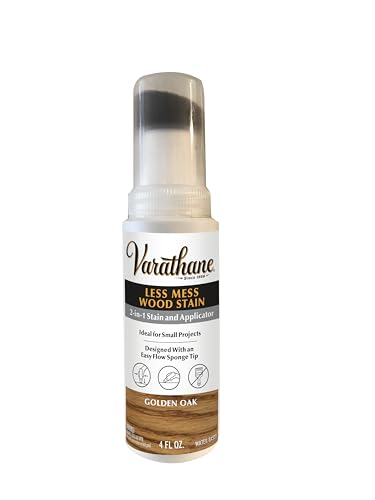
Varathane Less Mess Golden Oak Stain & Applicator is the outlier: a Golden Oak wood stain with a built-in sponge tip, rather than a gel stain. The 4-ounce container and flow-control applicator are aimed at crafts, touch-ups and small projects on furniture, cabinets, doors and trim. Its water-based formula cleans up with soap and water, and the semi-transparent color can be built with multiple coats.
This is a practical format when precise small-area application matters more than choosing a gel formula. It is not the match for someone specifically seeking a thick gel stain for vertical surfaces.
Bottom line: Choose it for controlled Golden Oak touch-ups, not gel-stain work.
How to choose a Varathane gel stain color
Choose between Dark Walnut and Kona by testing the shade on the actual surface, because wood species, existing color and finish affect the result. Gel stain sits more on the surface than a penetrating stain, so the finished color can differ from a sample viewed in a can. Sanding and surface prep also change how evenly color takes.
Make a test patch in an inconspicuous area and let it dry before deciding. Apply thin, even coats rather than assuming one coat will match the color shown on the container. For the two gel options here, container size is another decision point: one is a half pint and the other a quart.
Where gel stain works best
Gel stain is often chosen for doors, trim and furniture because its thicker consistency can reduce runs on vertical surfaces. It is not a substitute for every exterior coating or floor finish; the two gel stains here specifically exclude floors, decks and siding.
Fiberglass and composite doors can also be stained for a wood-like appearance when the product is intended for those surfaces. Confirm that the surface is compatible and properly prepared before applying stain. For a project with broad, exposed surfaces, consider whether the intended stain and its coverage suit the job; coverage varies with surface and application.
Prepare wood and apply stain evenly
Clean, dry, bare wood generally accepts stain more evenly than a dirty or sealed surface. Existing clear coats, paint, wax or grease can prevent stain from bonding as intended, so remove incompatible finishes and test a small spot before treating the full piece. Sanding with the grain helps reduce visible scratches.
Stir stain thoroughly so colorant is distributed, then work in manageable sections and keep a wet edge to limit lap marks. A lint-free cloth or applicator helps spread gel stain consistently. Follow the product’s coat and drying directions; one stain here calls for a 2-hour wait between coats.
Gel stain versus a stain applicator
Gel stain and a sponge-tip stain solve different application problems. Gel is thicker and suited to vertical work, while a small applicator bottle makes controlled touch-ups easier. Choose by the job size and the surface, not just by shade.
| Project need | Suitable format | Reason |
|---|---|---|
| Vertical door or trim | Gel stain | Thick consistency is intended to help limit drips. |
| Small craft or touch-up | Sponge-tip stain | Built-in applicator offers more control in a small area. |
| Floor, deck or siding | Neither gel option here | Both gel stains are not recommended for those uses. |
Frequently Asked Questions
Do gel stains need a topcoat?
A clear topcoat is commonly used over stained furniture and trim to protect the surface, but compatibility matters. Let stain dry as directed and check that the topcoat is suitable for the stain and intended use.
How many coats of gel stain should I use?
The number of coats depends on the color depth and surface, so test a hidden area first. Allow the interval between coats; one of these gel stains calls for 2 hours between coats.
Can gel stain go over an existing finish?
Gel stain can sometimes be applied over a sound existing finish after proper cleaning and preparation, but results vary by finish type. Test a small hidden area first, since wax, grease or a failing clear coat can interfere.
How long should stain dry before handling?
Drying time depends on the product, temperature, humidity and coat thickness. One gel stain here is described as drying on wood in 1 hour, but wait longer before handling if the surface remains tacky.
Can I use gel stain on a deck?
These two gel stains are not recommended for decks, floors or siding. Use a coating specifically intended for deck exposure, since exterior walking surfaces need weather and wear resistance.