
Desk Drawer Lock Replacement: 5 Fits Compared

For a direct desk drawer lock replacement, HOWDIA 16 mm Desk Lock, Keyed Different is the clearest fit if your panel is 18–20 mm thick, has a 16 mm mounting hole, and leaves no more than 40 mm to the rod. Choose a different option if your panel is thinner or needs a cam lock with a different reach.
We earn a commission if you buy through links on this page. As an Amazon Associate I earn from qualifying purchases. Products are compared on manufacturer specifications, not hands-on testing.
- Best overall: HOWDIA 16 mm Desk Lock, Keyed Different – Its fit requirements specify an 18–20 mm panel, 16 mm hole, and 40 mm rod length.
- Best for thicker panels: U 9947 Diecast Drawer Lock, Yale Keyway – It is designed for panels up to 7/8 inch thick.
- Best for matching keys: TBWHL 16 mm Drawer Locks, Same Key – All four locks are described as sharing keys.
| Product | Best for | Panel thickness | Mounting hole | Keying | Shop |
|---|---|---|---|---|---|
| HOWDIA 16 mm Desk Lock, Keyed Different | Measured desk panels | 0.71–0.79 in | 0.63 in | Keyed different | Check Price on Amazon |
| U 9947 Diecast Drawer Lock, Yale Keyway | Thicker panels | Up to 0.88 in | — | Yale keyway | Check Price on Amazon |
| TBWHL 16 mm Drawer Locks, Same Key | Shared-key pairs | — | 0.63 in | Same key | Check Price on Amazon |
| inBovoga 1-1/2 in Cam Locks, Keyed Alike | Thick door panels | Up to 1.39 in | About 0.71 in | Keyed alike | Check Price on Amazon |
| 5/8 in Keyed-Alike Cabinet Cam Locks | Thin panels | Up to 0.48 in | About 0.7 in | Keyed alike | Check Price on Amazon |
Desk Drawer Lock Replacements
Match the panel thickness and mounting hole before choosing a lock based on keying or quantity.
HOWDIA 16 mm Desk Lock, Keyed Different

HOWDIA 16 mm Desk Lock, Keyed Different is the most precisely dimensioned option here: its cylinder is 16 mm in diameter, 20 mm long, and paired with a 40 mm locking rod. The set contains two zinc-alloy locks, steel components, and M4 × 16 mm screws. It suits a desk with an 18–20 mm panel and 30 mm mounting-hole spacing, provided the panel-to-rod distance is 40 mm or less. The main limitation is the narrow fit window; measure all three dimensions before ordering, especially if replacing a lock in an older desk.
Bottom line: Choose this when your desk matches its 16 mm hole and 18–20 mm panel requirements.
U 9947 Diecast Drawer Lock, Yale Keyway
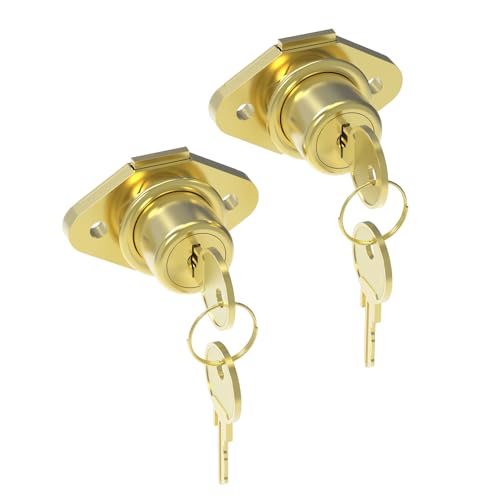
U 9947 Diecast Drawer Lock, Yale Keyway is the thicker-panel alternative, with a capacity of up to 7/8 inch and a beveled bolt intended for drawer or cabinet use. The package is a two-lock set with four keys and a Yale keyway. That makes it a possibility when a desk panel exceeds the 20 mm limit of a narrowly sized replacement, or when matching the Yale keyway matters. Its panel capacity alone does not establish the mounting-hole diameter, cylinder length, or bolt reach, so verify those measurements against the old lock before selecting it.
Bottom line: Pick this for a thicker desk panel after confirming its hole and bolt geometry.
TBWHL 16 mm Drawer Locks, Same Key
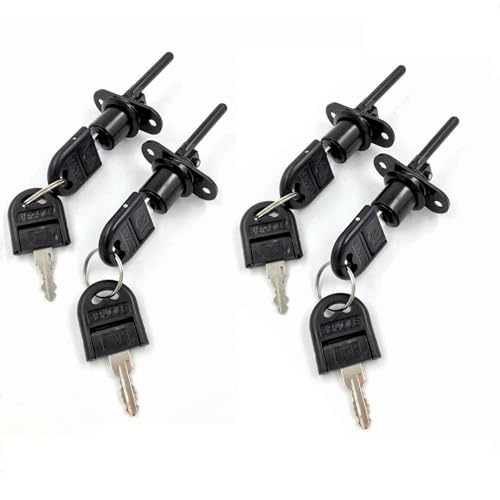
TBWHL 16 mm Drawer Locks, Same Key stands out for shared access: all four locks are intended to use the same key, unlike a keyed different set. Each has a 16 mm size, zinc-alloy construction, and a folding key, and the maker describes installation on metal or wood surfaces. This can suit a desk with several drawers when one key should operate each replacement lock. The panel thickness and rod reach are not established by its dimensions, so compare those against the removed lock; a 16 mm hole by itself does not guarantee a fit.
Bottom line: Choose this for multiple drawers that should share a key, after checking panel fit.
inBovoga 1-1/2 in Cam Locks, Keyed Alike

inBovoga 1-1/2 in Cam Locks, Keyed Alike is a cam-lock option for substantially thicker panels: its body is 1-1/2 inches long and its maximum panel thickness is 1.39 inches. The three zinc-alloy locks are keyed alike, and the product includes several locking-tab lengths, from 1.41 to 2.20 inches. This range can help where the replacement needs to reach behind a thick drawer or cabinet face. It is not a direct match for a 16 mm desk lock opening, since its mounting hole is about 0.71 inch; check both hole size and tab orientation.
Bottom line: Pick this for a thick panel with a roughly 0.71-inch mounting hole.
5/8 in Keyed-Alike Cabinet Cam Locks

5/8 in Keyed-Alike Cabinet Cam Locks is the thin-panel cam-lock choice, with a 5/8-inch body and a maximum panel thickness of 0.48 inch. Its roughly 0.7-inch mounting hole and 1.83-inch locking plate put it in a different size class from the 16 mm desk lock option. The two locks share a key and the applications include desk drawers as well as toolboxes, mailboxes, and RV storage. The large hole and short body make this unsuitable for a panel drilled for a 16 mm cylinder; measure the opening before treating it as a replacement.
Bottom line: Choose this for a thin panel already drilled for an approximately 0.7-inch hole.
How to Choose a Desk Drawer Lock Replacement
Measure the panel, mounting hole, and lock reach before choosing a replacement. Desk locks use a cylinder through the drawer face and a cam or rod behind it; the lock must clear the face and engage the frame when turned. A 16 mm hole is about 5/8 inch, while a 0.7-inch hole is about 18 mm, so the two are not interchangeable without changing the opening. For a panel measuring 18–20 mm with a 16 mm hole, use a lock sized for that combination; if the panel is under 1/2 inch thick, consider only products with a thin-panel limit that covers it. Also measure mounting-hole spacing when a face plate or retaining plate uses separate fasteners.
Desk Lock Sizes and Panel Fit
Panel thickness and cylinder length are separate measurements: a cylinder that is too short may not secure behind the drawer face, while excess body length can interfere inside the drawer. Standard fractional dimensions can look close but still require different holes: 5/8 inch is 15.9 mm, and 0.7 inch is 17.8 mm. Match the old opening rather than relying on the product’s general “desk” or “cabinet” label. Measure from the drawer face to the point where the bolt must catch; for a rod-style lock with a 40 mm reach, a panel-to-rod distance over 40 mm is beyond its fit. A difference of 1–2 mm can matter when a cylinder passes through a close-fitting hole.
Use this size guide to narrow the fit before comparing key arrangements.
| Measured need | Relevant fit | What to verify |
|---|---|---|
| 18–20 mm panel, 16 mm hole | 16 mm cylinder lock | Rod distance and hole spacing |
| Up to 7/8 inch panel | Thicker-panel drawer lock | Hole size and bolt reach |
| Up to 0.48 inch panel | 5/8 inch cam lock | Approximately 0.7-inch hole |
Keyed Different Versus Keyed Alike
Keying determines whether each lock needs its own key or several locks share one. A keyed different set is useful when drawers should remain independently keyed; a keyed alike set reduces the number of keys for several locks. Confirm whether every lock in a multi-pack uses the same key, since “two locks” does not imply identical keying. A Yale keyway describes the key profile, not the lock’s cylinder dimensions or compatibility with an existing desk key. If keeping an old key is essential, the replacement must match that keyway and lock coding, not merely fit the mounting hole. Cam length and orientation still determine whether the lock actually catches the drawer frame.
Installing a Replacement Drawer Lock
Installation starts with removing the drawer and recording the old lock’s dimensions and cam orientation. Keep the drawer open during the first test so you can watch the bolt clear the frame; close it only after confirming that the lock turns and engages without binding. Avoid enlarging a hole until you confirm that the drawer face can support the larger cylinder and that hidden hardware will not be hit. A cam that points the wrong way can turn normally while failing to secure the drawer, so compare its resting position with the old mechanism. Keep small keys away from children, and do not treat a furniture lock as a substitute for a secure barrier for hazardous contents.
Frequently Asked Questions
How do I measure a desk drawer lock hole?
Measure the hole diameter across its widest point after removing the lock. A 16 mm opening is about 5/8 inch, while a 0.7-inch opening is about 18 mm; those sizes may require different cylinders.
How thick can a replacement drawer lock panel be?
The allowable thickness is specific to the lock body: some models in this group cover up to 7/8 inch, while another is limited to 0.48 inch. Measure the drawer face itself, not the full drawer depth.
Can one key operate several desk drawer locks?
Yes, if the locks are keyed alike or explicitly share the same key. Check the keying description for the whole set; keyed different locks are not intended to use one key across the set.
What is the difference between a cam lock and a rod lock?
A cam lock turns a short plate behind the panel, while a rod-style lock moves a longer bar to catch the cabinet frame. Measure the required reach and clearance, since a short cam may not engage where a rod lock did.
Should I enlarge a drawer hole for a new lock?
Only if the panel has enough material and clearance for the larger cylinder. A jump from 16 mm to about 18 mm removes additional wood or metal, and the new lock still must align with the drawer frame.