
Honda Rebel 300 Aftermarket Exhausts Compared

For most Honda Rebel 300 owners, NHTYGD Rebel 300/500 Slip-On Muffler is the most complete upgrade because it is a muffler assembly listed for Rebel 300 models from 2017 through 2022. Choose a different option if you need only a connection pipe or exhaust tip, or if your model year falls outside that range.
Aftermarket exhaust parts replace or modify sections of the stock exhaust; a muffler is not the same as a mid-link adapter or a tip.
We earn a commission if you buy through links on this page. As an Amazon Associate I earn from qualifying purchases. Products are compared on manufacturer specifications, not hands-on testing.
- Best overall: NHTYGD Rebel 300/500 Slip-On Muffler – A muffler assembly is listed for Rebel 300 models from 2017–2022.
- Best for dual outlets: Dual-Outlet CMX300/500 Tail Pipe – The product is a dual-outlet tail pipe, though its fit description is universal or adjustable.
- Best for a link-pipe adapter: XIDAODIT Rebel Mid-Link Pipe – The mid-link pipe is listed for Rebel 300 models through 2024.
| Product | Best for | Part type | Material | Rebel 300 fit range | Shop |
|---|---|---|---|---|---|
| NHTYGD Rebel 300/500 Slip-On Muffler | Muffler replacement | Slip-on muffler | Stainless steel, carbon fiber | 2017–2022 | Check Price on Amazon |
| Dual-Outlet CMX300/500 Tail Pipe | Dual-outlet style | Dual-outlet tail pipe | — | CMX300 named; year unspecified | Check Price on Amazon |
| XIDAODIT Rebel Mid-Link Pipe | Adapter installation | Mid-link pipe / adapter | Stainless steel | 2017–2024 | Check Price on Amazon |
| Rebel Exhaust Muffler Tip | Tip modification | Muffler tip only | Stainless steel | 2017–2025 | Check Price on Amazon |
Honda Rebel 300 aftermarket exhaust options
Start by matching the part type and model year to the change you want to make.
NHTYGD Rebel 300/500 Slip-On Muffler

Unlike a connection pipe or tip, this option is a slip-on muffler assembly listed for Honda Rebel 300 and 500 models. It combines stainless steel and carbon fiber and includes a DB killer. The maker says it produces a deep sound and can improve power and efficiency; those performance claims are not quantified in the specifications. It may suit riders seeking a muffler change rather than a small exhaust component. Its Rebel 300 range ends at 2022, so owners of later model years should verify year compatibility before buying.
Bottom line: Choose this if you want a muffler assembly and your Rebel 300 falls within the year range.
Dual-Outlet CMX300/500 Tail Pipe
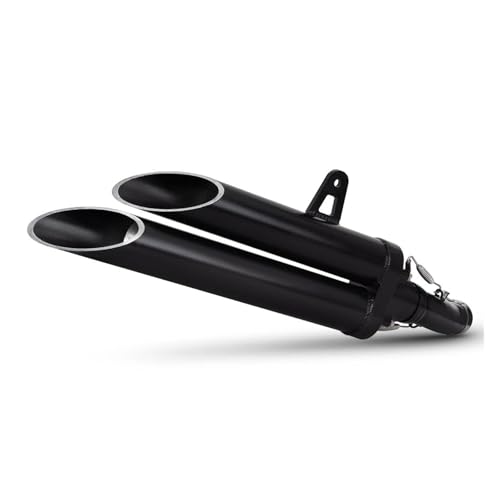
The defining feature here is a dual-outlet tail pipe, rather than a muffler assembly with a material or year range. The product name identifies the CMX300 and CMX500 Rebel family, while its fit description calls the design universal or adjustable across multiple motorcycle models. That combination may appeal to a DIY owner prioritizing the dual-outlet configuration. The fit wording is broad, however, and the specifications do not give a Rebel 300 model-year span or a material; confirm that the connection and clearance suit your particular bike before choosing it.
Bottom line: Pick this if a dual-outlet tail pipe style is your priority and you can confirm the fit.
XIDAODIT Rebel Mid-Link Pipe

Unlike a complete muffler, this is a mid-link pipe intended as an adapter for slip-on muffler installation. It is stainless steel with a black baked-enamel finish and is listed for Rebel 300 and 500 models from 2017 through 2024. The maker describes it as corrosion- and heat-resistant and says installation takes a few minutes. It suits an owner who already has a compatible slip-on muffler and needs a connecting section. Because the package wording also mentions a muffler, verify what components are included before relying on it as a complete exhaust replacement.
Bottom line: Choose this when you need a mid-link adapter for a compatible slip-on muffler.
Rebel Exhaust Muffler Tip
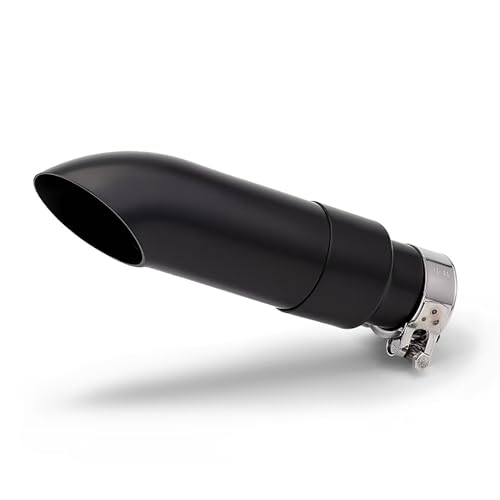
This part is a muffler tip only, not a full exhaust or direct slip-on cover, and the maker says the OEM exhaust must be removed for installation. It is stainless steel and is listed for Rebel 300, 500, and 1100 models from 2017 through 2025. The maker describes a deep, loud rumble and recommends professional installation. It may suit someone specifically seeking a tip modification, but it is not the right choice for a straightforward muffler swap. The OEM-removal requirement makes installation scope an important consideration.
Bottom line: Pick this only if you want a tip modification and are prepared for OEM exhaust removal.
How to choose a Rebel 300 aftermarket exhaust
Choose by the section you want to change: a muffler assembly, a mid-link adapter, and a tip are different parts, not interchangeable descriptions of a complete exhaust. Model year is another deciding factor: the ranges here run through 2022, 2024, and 2025, so a match for one year span does not establish fit for another. Before buying, match the part name to the work planned and check whether the stock exhaust must be removed. A useful decision rule is to avoid treating a tip or adapter as a complete muffler replacement; select a muffler assembly when the goal is to replace the muffler itself. Motorcycle exhausts become very hot in use, so allow the system to cool fully before handling or working near it.
Exhaust part types and fit
A slip-on muffler changes the muffler section, while a mid-link pipe bridges sections of the exhaust and a tip changes only the end component. The distinction matters because a connector may be needed for one muffler but not another; part names alone do not establish that the joints align. The product fit spans here also differ, so match your Rebel 300’s model year to the specific component rather than assuming that a Rebel 500 fit statement proves the same fit. This table separates the product types from their year coverage.
| Need | Part type | Listed Rebel 300 years |
|---|---|---|
| Muffler change | Slip-on muffler | 2017–2022 |
| Slip-on connection | Mid-link pipe / adapter | 2017–2024 |
| Tip modification | Muffler tip only | 2017–2025 |
| Dual-outlet tail pipe style | Tail pipe | Year span unspecified |
Installation and exhaust safety
Plan the installation around the exact part: a tip that requires OEM exhaust removal is a different job from fitting a slip-on muffler or an adapter pipe. Exhaust components can remain hot after the engine is switched off, so wait until they are cool before touching clamps, fasteners, or pipes. After any exhaust work, check that parts are secure and clear of nearby bodywork through the full range of movement; loose or misaligned components can vibrate or contact other parts. Exhaust changes can also affect noise and emissions compliance, which may depend on local rules and the motorcycle’s original equipment. Confirm applicable requirements before changing the stock system.
Frequently Asked Questions
Does a Rebel 300 slip-on exhaust replace the whole system?
A slip-on muffler replaces a section, not automatically the entire exhaust system. A mid-link adapter may be needed to connect a particular muffler, so match the parts and model year before installation.
Can I use a Rebel 500 exhaust on a Rebel 300?
Some parts here name both Rebel 300 and Rebel 500 models, but that does not prove every exhaust component fits both. Check the exact component’s fit range and connection requirements for your model year.
How long should a motorcycle exhaust cool before handling?
There is no single safe wait time because exhaust temperature depends on riding and ambient conditions. Do not handle the pipes or muffler until they are fully cool to the touch, and keep skin and flammable materials away while hot.
Do aftermarket exhausts need a link pipe?
A link pipe is needed when the chosen muffler and the motorcycle’s exhaust connection require one. A mid-link adapter is a separate component, so confirm the muffler’s connection design and the bike’s fit before assembly.
Can a louder exhaust be illegal on a Honda Rebel?
Exhaust noise and emissions requirements vary by jurisdiction, so a louder sound does not establish that a modification is legal. Check the rules that apply where the motorcycle is registered and used before removing or changing stock exhaust components.