
Epoxy Grout in a Tube: Compare 4 Tile Repair Options

For a white epoxy grout in a dual-tube package, choose White Dual-Tube Epoxy Grout, 3-Pack; its 3-pack format is the deciding difference. Choose NADAMOO Black Dual-Tube Epoxy Grout instead for black grout, while Red Devil 0425 Premixed Tile Grout is premixed tile grout rather than epoxy and Warm Gray Ready-to-Use Epoxy Grout Kit is a ready-to-use epoxy grout kit.
Dual-tube epoxy grout dispenses two components together and requires a compatible gun; verify the gun and joint compatibility before buying.
We earn a commission if you buy through links on this page. As an Amazon Associate I earn from qualifying purchases. Products are compared on manufacturer specifications, not hands-on testing.
- Best overall: White Dual-Tube Epoxy Grout, 3-Pack – A white, 3-pack dual-tube epoxy grout option for tile repair.
- Best for black grout lines: NADAMOO Black Dual-Tube Epoxy Grout – The dual-tube epoxy grout is black and comes in a 400 mL size.
- Best for included tools: Warm Gray Ready-to-Use Epoxy Grout Kit – The ready-to-use warm gray epoxy grout is sold with TK1N.
| Product | Best for | Color | Package | Application | Shop |
|---|---|---|---|---|---|
| White Dual-Tube Epoxy Grout, 3-Pack | White tile repairs | White | 3-pack; 400 mL stated | Dual-tube; gun not included | Check Price on Amazon |
| NADAMOO Black Dual-Tube Epoxy Grout | Black grout lines | Black | 400 mL | Dual-tube; gun not included | Check Price on Amazon |
| Warm Gray Ready-to-Use Epoxy Grout Kit | Ready-to-use repairs | Warm gray | With TK1N; quantity unclear | Ready to use; no mixing | Check Price on Amazon |
| Red Devil 0425 Premixed Tile Grout | Small premixed jobs | White | 5.5 fl oz | Premixed; squeeze package | Check Price on Amazon |
Epoxy Grout in a Tube Compared
Compare the grout type, color and dispensing setup before choosing a repair option.
White Dual-Tube Epoxy Grout, 3-Pack

For a white grout line, this three-pack is the only white dual-tube epoxy option here. The maker describes it as a two-component epoxy grout that dispenses without premixing and claims a waterproof, heat-resistant finish after curing. Application requires a dual-tube caulking gun, which is not included, so confirm that your gun fits the cartridge before starting. The pack format may suit several repair areas, but the total grout volume across the pack is unclear; check the package quantity if you need to calculate coverage.
Bottom line: Choose this if you need white epoxy grout and already have a compatible dual-tube gun.
NADAMOO Black Dual-Tube Epoxy Grout

Black color sets this epoxy grout apart from the white dual-tube alternative. The 400 mL cartridge uses a dual-tube format, so the components dispense together without separate premixing; a compatible dual-tube caulking gun is needed and is not included. The maker claims the cured surface is glossy, water-resistant and resistant to discoloration. Those claims make color choice and dispensing-tool compatibility the key considerations, while black grout may not suit a repair where the existing grout is a lighter shade.
Bottom line: Pick this when black grout matches the existing joint and you have the required gun.
Warm Gray Ready-to-Use Epoxy Grout Kit

Unlike the cartridge options, this warm gray epoxy grout is presented as ready to use, with TK1N included. The maker claims it resists water, stains, mold, mildew, cracks and chemicals, and says it needs no extra sealing. Its unsanded finish may matter for narrow joints, but joint width compatibility should be confirmed before buying. The kit is a different format from a dual-tube cartridge, so it is a better match for someone seeking a ready-to-apply option than someone specifically needing a tube.
Bottom line: Choose this for a ready-to-use warm gray epoxy option rather than a dual-tube cartridge.
Red Devil 0425 Premixed Tile Grout
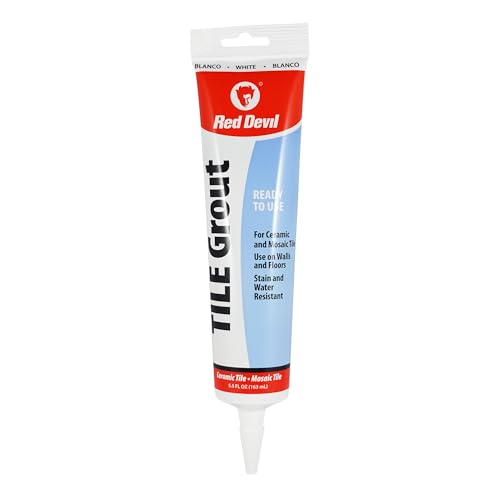
Red Devil 0425 is the only premixed non-epoxy grout in this comparison, making it a different choice from the epoxy repair products. Its 5.5 fl oz white package is intended for ceramic and mosaic tile, and the maker says it can be used on walls and floors as well as masonry, wood and wallboard. Soap-and-water cleanup is another practical distinction. Because it is not epoxy grout, choose it only when premixed conventional grout suits the repair rather than when you specifically need an epoxy formulation.
Bottom line: Pick this for a small white repair when premixed non-epoxy grout is acceptable.
How to choose epoxy grout in a tube
Choose by grout color first, then confirm the dispensing gun and joint fit. Dual-component epoxy grout combines resin and hardener as it is dispensed; unlike cement grout, it does not rely on water to hydrate. A separate compatible gun is required for the dual-tube choices here, and the gun is not included for either cartridge option. Epoxy grout is often selected for stain and chemical resistance, but only use those properties as a buying criterion when the product maker identifies them. ANSI A118.3 is the standard for chemical-resistant, water-cleanable epoxy grout; do not assume a product meets it unless compliance is stated. If your repair crosses different tile colors, match the existing grout shade before deciding on a formulation.
Check grout joint width and tile fit
Joint width determines whether a grout is suitable, so measure the gap before selecting unsanded or other grout. Unsanded grout is generally used for narrow joints around 1/8 inch or less; sanded grout is generally used for wider joints, though tile finish and product directions can change the choice. Epoxy formulations may have their own approved joint-width range, so confirm that range for the exact product before ordering. This matters especially for textured tile, where residue can be harder to remove, and for polished or soft surfaces that may scratch. A narrow nozzle does not mean the grout itself is appropriate for every narrow joint.
| Repair need | Product format | Key check |
|---|---|---|
| White epoxy line | Dual-tube cartridge | Compatible gun and joint range |
| Black epoxy line | Dual-tube cartridge | Compatible gun and joint range |
| Warm gray, ready-to-use grout | Kit with TK1N | Joint-width compatibility |
| Small white non-epoxy repair | Premixed grout | Confirm epoxy is not required |
Epoxy and premixed grout are different materials
Epoxy grout hardens through a resin-and-hardener reaction, while premixed conventional grout uses a different binder and is not interchangeable by name alone. Epoxy grout is commonly chosen for wet areas or stain exposure because its cured surface is less porous than cement grout; conventional cement grout usually needs sealing, while epoxy often does not. Those are category-level tendencies, not a guarantee that every product has the same performance. Check the product’s use, cure directions and joint-width limits. For repairs exposed to water or cleaners, do not rely on a generic “waterproof” claim alone; confirm compatibility with the specific tile and installation.
Apply and clean epoxy grout safely
Prepare only the amount you can place and clean within the product’s working window; epoxy residue becomes harder to remove after it cures. Many epoxy grout products have a short cleanup window, but the exact timing depends on formulation and room temperature, so use the package timing for the chosen product. Protect skin and eyes, wear gloves, and ventilate the work area while handling epoxy components. Remove excess grout from the tile face before it hardens, taking care not to pull material out of the joint. Avoid adding water to a dual-tube epoxy mix, and do not start until the correct gun and cleanup supplies are ready.
Frequently Asked Questions
Do dual-tube epoxy grout cartridges need a special gun?
Yes, these cartridges require a compatible dual-tube caulking gun to dispense both components together. The guns are not included with the white or black cartridge options here.
Can epoxy grout go in shower tile joints?
Epoxy grout is commonly used in wet areas because cured epoxy is less porous than cement grout. Confirm the selected product is approved for the tile and joint width; grout alone does not replace a waterproofing membrane behind shower tile.
Does epoxy grout need a sealer after curing?
Many epoxy grouts do not need a separate sealer because the cured material is less porous than cement grout. Confirm the specific product’s cure and care directions, since formulas and intended uses differ.
How wide can tile grout joints be?
The allowed width depends on the exact grout and tile. Unsanded grout is generally intended for joints around 1/8 inch or narrower, but check the epoxy product’s range before applying it.
How soon should epoxy grout residue be cleaned?
Clean residue within the working window on the product instructions, before it hardens on the tile surface. Temperature and formula affect that window, so have cleanup materials ready before dispensing.