
Sow Right Seeds: 5 Garden Seed Options Compared

Sow Right Seeds Classic Vegetable Collection suits gardeners who want a broad vegetable mix, with 10 packets spanning crops such as tomato, cucumber, broccoli, and peppers. Choose a narrower collection if you want leafy greens or herbs, or a single-crop packet if you already know what you plan to grow.
We earn a commission if you buy through links on this page. As an Amazon Associate I earn from qualifying purchases. Products are compared on manufacturer specifications, not hands-on testing.
- Best overall: Sow Right Seeds Classic Vegetable Collection – Ten vegetable varieties make this the broadest classic vegetable assortment in the group.
- Best for herb variety: Sow Right Seeds 15 Herb Collection – The collection contains 15 culinary herbs and is intended for indoor or outdoor starting.
- Best for leafy greens: Sow Right Seeds Large Greens Collection – Ten named greens include spinach, kale, lettuce, pak choi, and Swiss chard.
- Best for loofah gourds: Sow Right Seeds Luffa Gourd – The packet has about 30 luffa seeds and gives a 150–200-day maturation window.
| Product | Best for | Seed assortment | Growing setting | Packet count or quantity | Shop |
|---|---|---|---|---|---|
| Sow Right Seeds Classic Vegetable Collection | Mixed vegetables | 10 vegetable varieties | Outdoor or indoor hydroponics | 10 packets | Check Price on Amazon |
| Sow Right Seeds Large Greens Collection | Leafy greens | 10 leafy greens | Outdoor; indoor with sufficient light | 10 varieties | Check Price on Amazon |
| Sow Right Seeds 15 Herb Collection | Culinary herbs | 15 culinary herbs | Indoor or outdoor | 15 packets | Check Price on Amazon |
| Sow Right Seeds Honeynut Winter Squash | Honeynut squash | Honeynut squash | Outdoor; warm soil | About 22 seeds; 3 g | Check Price on Amazon |
| Sow Right Seeds Luffa Gourd | Luffa gourds | Luffa gourd | Outdoor; full sun | About 30 seeds; at least 2 g | Check Price on Amazon |
Sow Right Seeds collections and packets
Compare these assortments by the crops they include and the growing conditions each one calls for.
Sow Right Seeds Classic Vegetable Collection

Sow Right Seeds Classic Vegetable Collection offers the widest classic vegetable mix here: 10 large packets covering broccoli, cabbage, carrot, cucumber, kale, lettuce, tomato, bell pepper, jalapeño, and zucchini. It suits gardeners who want to try several familiar crops rather than devote a bed to one variety. The assortment is described as suitable for outdoor gardening or indoor hydroponics, but the seed fields do not give crop-by-crop light, spacing, or harvest timing; check those packet instructions before planting. Ten crops also need different room and care, so this set is less convenient when you want a uniform planting schedule.
Bottom line: Pick this if you want a broad mix of classic vegetables in one set.
Sow Right Seeds Large Greens Collection

Sow Right Seeds Large Greens Collection focuses on greens rather than the fruiting vegetables in the classic mix, with spinach, arugula, kale, several lettuces, tat soi, pak choi, mustard greens, corn salad, and Swiss chard. The collection is intended for outdoor spring or fall planting and can also be grown indoors with sufficient light. It suits cooks who want a varied leafy harvest, but it is not the right assortment for someone looking primarily for tomatoes, squash, or other fruiting crops. Its broad mix includes crops with different growth habits, so use each packet’s sowing guidance instead of treating the entire collection as one crop.
Bottom line: Choose this for a garden centered on edible leafy greens.
Sow Right Seeds 15 Herb Collection

Sow Right Seeds 15 Herb Collection is the largest named collection by packet count, with 15 herbs including basil, chamomile, chives, cilantro, dill, lavender, mint, parsley, sage, and thyme. The packets are intended for indoor or outdoor starting, making this a fit for someone building a kitchen herb garden rather than a vegetable bed. The assortment includes annual and perennial herbs, so the plants will not all have the same lifespan or growing rhythm. Packet-level instructions are included, and they matter for choices such as whether a herb needs a dedicated container or can share a planting area.
Bottom line: Pick this to grow a broad range of culinary and aromatic herbs.
Sow Right Seeds Honeynut Winter Squash

Sow Right Seeds Honeynut Winter Squash is a single-crop option for gardeners who specifically want Honeynut winter squash, not a mixed seed collection. Its packet contains 3 grams, about 22 seeds, and the growing guidance calls for outdoor sowing 1 inch deep in soil at 65–75°F. The compact-fruited squash is described as suited to small backyards and container planting.
Bottom line: Choose this when Honeynut squash is the specific crop you want.
Sow Right Seeds Luffa Gourd
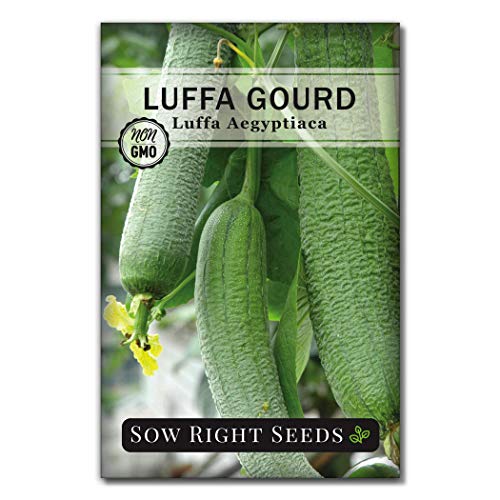
Sow Right Seeds Luffa Gourd is a specialty gourd packet for gardeners interested in mature luffa fruits that can be peeled and used as bath sponges; young fruit is also described as edible. It contains at least 2 grams, about 30 seeds, and calls for full sun, 1-inch sowing depth, and soil temperatures of 70–85°F for germination. The maturation window is 150–200 days, so this crop is a poor match for a short growing season unless local conditions allow it to mature. Its spreading vines also make it less suited to gardeners seeking compact greens or herbs.
Bottom line: Pick this if you have a long, sunny season and want to grow luffa.
How to choose a seed assortment
Choose by the crops you actually plan to plant, then match the set to your available space and season. Mixed collections are useful for trying several crops, while single-crop packets avoid buying varieties you will not sow. Seed packets commonly report planting depth, spacing, and days to maturity; use those figures to estimate bed space and whether a crop can finish before frost. Cool-season greens such as spinach and lettuce are generally planted in spring or fall, while warm-season crops such as squash need warmer soil. A simple rule: if you have less than one full growing season before frost, avoid crops whose maturity window approaches or exceeds that time. For indoor growing, assess light and container space before choosing a large assortment.
Seed starting temperatures and timing
Soil temperature matters more than a calendar date for many vegetables. Cool-season crops often germinate in roughly 45–75°F soil, while warm-season crops such as squash and gourds generally need soil around 65°F or warmer; the luffa packet here specifies 70–85°F. A soil thermometer helps avoid sowing heat-loving seeds into cold ground, where germination can be slow or uneven. Direct-sow crops that dislike root disturbance, including many cucurbits, or start them in biodegradable pots if an earlier start is needed. Seed depth is commonly about two to three times the seed’s diameter, but the packet’s crop-specific depth takes priority. Keep the seed zone evenly moist until emergence, not waterlogged.
Space, containers, and indoor light
Container growing works best when the pot can hold enough root-zone volume and has drainage holes; large vining vegetables need substantially more space than herbs or loose-leaf greens. A container that is too small dries quickly and restricts roots, while a pot without drainage can leave roots waterlogged. Indoors, a bright windowsill may not provide enough intensity for sturdy vegetable seedlings; a grow light positioned close to seedlings and run about 12–16 hours daily is a common approach. Rotate window-grown plants to reduce leaning. Before planting a mixed assortment, check the mature spacing for each crop: a squash or luffa vine can occupy far more room than a pot of basil or a row of lettuce.
Compare the seed types by growing goal
The right format follows the garden’s purpose: a large assortment gives crop variety, while a single packet concentrates space on one crop. Use this guide to narrow the choice by intended harvest and growing constraint.
| Garden goal | Seed type | Key constraint |
|---|---|---|
| Several familiar vegetables | Mixed vegetable collection | Different crops need different spacing and timing |
| Repeated leafy harvests | Greens collection | Plan spring or fall sowing for cool-season crops |
| Kitchen flavors and herbs | Herb collection | Annual and perennial plants have different lifespans |
| One specialty crop | Single-crop packet | Match the crop’s season length and space needs |
Leave enough room between crops for airflow and access; crowded foliage stays damp longer and is harder to inspect. A garden plan that groups crops by season and mature size is more useful than planting every packet at once.
Frequently Asked Questions
How long do vegetable seeds usually remain viable?
Many vegetable seeds remain usable for about 1–5 years when kept cool, dry, and dark, but onions and parsnips often lose viability sooner. Store opened packets in a sealed container away from heat and humidity.
Should seeds be started indoors or sown outside?
Direct-sow crops that grow quickly or resent root disturbance, while starting frost-sensitive crops indoors can extend the season. For many vegetables, indoor starts begin about 4–8 weeks before the last expected frost, adjusted for the crop’s transplanting guidance.
How deep should garden seeds be planted?
A common rule is to sow seeds about two to three times as deep as their diameter, but tiny seeds may need light or only a thin covering. Follow the crop-specific packet depth; sowing too deeply can prevent small seedlings from reaching the surface.
What soil temperature helps squash seeds germinate?
Squash generally germinates best in warm soil, commonly around 70–95°F, and cold wet soil can cause poor emergence.
How much light do indoor seedlings need?
Most vegetable seedlings do well with about 12–16 hours of bright light daily, followed by a dark period. Keep grow lights close enough to prevent stretched stems, adjusting the distance to the lamp’s instructions and seedling response.