
50/50 Cotton Acrylic Yarn: 4 Blends Compared

For a true 50/50 cotton acrylic yarn, choose Estako Cotton Life Sport Yarn: its even fiber blend and sport weight suit projects where you want a substantial 100 g skein. Choose a different blend if you need a multi-color beginner kit or finer fingering yarn, since the other options have different fiber ratios and formats.
We earn a commission if you buy through links on this page. As an Amazon Associate I earn from qualifying purchases. Products are compared on manufacturer specifications, not hands-on testing.
- Best overall: Estako Cotton Life Sport Yarn – The only exact 50/50 blend, in sport weight with 361 yards per 100 g skein.
- Best for starter sets: Katech Cotton Yarn, 20-Skein Set – The 20-skein set uses 55% cotton and 45% acrylic.
- Best for fingering weight: QKHEE Fingering Yarn, 12-Ball Kit – The 12-ball kit is labeled fingering weight and contains 60% cotton.
| Product | Best for | Fiber blend | Yarn weight | Yardage | Shop |
|---|---|---|---|---|---|
| Estako Cotton Life Sport Yarn | Even cotton blend | 50% cotton / 50% acrylic | Sport, size 2 | 361 yd / 100 g | Check Price on Amazon |
| Katech Cotton Yarn, 20-Skein Set | Colorful starter kit | 55% cotton / 45% acrylic | DK, size 3 | — | Check Price on Amazon |
| YarnArt Genius Soft Cotton Blend | Amigurumi projects | 55% cotton / 45% acrylic | Fine, size 2 | 174 yd / 50 g | Check Price on Amazon |
| QKHEE Fingering Yarn, 12-Ball Kit | Fingering-weight makes | 60% cotton / 40% acrylic | Fingering, size 1 | 195 yd / 50 g | Check Price on Amazon |
50/50 Cotton Acrylic Yarn and Similar Blends
Compare the exact-match blend with nearby cotton-acrylic ratios and different yarn weights.
Estako Cotton Life Sport Yarn
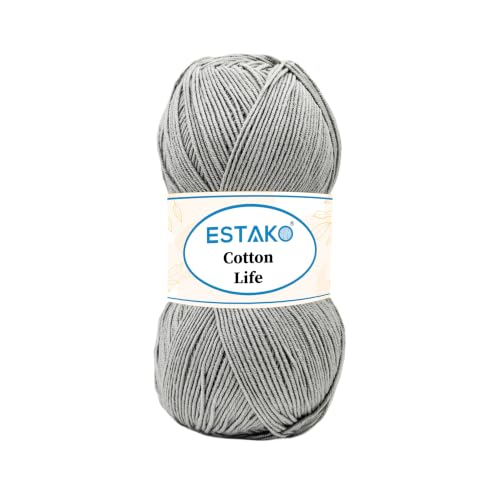
Estako Cotton Life Sport Yarn is the only even 50/50 cotton-acrylic blend in this group, and its sport weight gives you 361 yards in a 100 g skein. The maker identifies it as OEKO-TEX Standard 100 certified and suggests uses including amigurumi, blankets, cardigans, hats and granny squares. Its size 2 designation makes it a lighter option than DK yarn, so check your pattern’s gauge before substituting it for a heavier yarn. The product is sold as one skein; larger projects may require multiple skeins, depending on the pattern and finished size.
Bottom line: Pick this if you want the exact 50/50 ratio in sport weight.
Katech Cotton Yarn, 20-Skein Set

Katech Cotton Yarn, 20-Skein Set is the set-format option, with 20 skeins rather than a single larger skein; its fiber blend is 55% cotton and 45% acrylic, not an even split. It is labeled #3 DK (light) and positioned for learning crochet or knitting, as well as colorful craft projects. The set may suit a beginner who wants multiple skeins on hand, but the specifications do not provide yardage per skein, making it harder to estimate total project coverage. Compare the yarn weight and gauge with your pattern before choosing it as a substitute.
Bottom line: Choose this for a multi-skein learning or colorwork set, not an exact 50/50 ratio.
YarnArt Genius Soft Cotton Blend
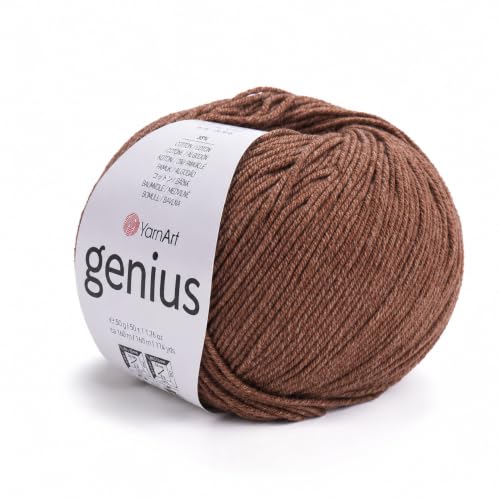
YarnArt Genius Soft Cotton Blend combines a fine size 2 yarn with 174 yards in a 50 g skein, making its documented yardage useful when calculating how many skeins a pattern needs. Its blend is 55% cotton and 45% acrylic, so it is close to—but not—the requested 50/50 ratio. The maker suggests amigurumi, baby items, garments and home décor, and says the yarn can be machine washed while maintaining shape. It comes as a single skein, so larger makes require planning for additional matching skeins.
Bottom line: Pick this for fine-weight crochet when per-skein yardage matters.
QKHEE Fingering Yarn, 12-Ball Kit

QKHEE Fingering Yarn, 12-Ball Kit is the finest-weight option here: it is labeled fingering weight, size 1, and each 50 g ball is described as 195 yards. Its 60% cotton and 40% acrylic blend differs more from a 50/50 ratio than the two 55/45 choices. The 12-ball kit is aimed at projects such as granny squares, amigurumi, coasters and small home items, and includes crochet accessories according to the maker. The maker gives two slightly different yardage figures, so verify the ball’s actual yardage if your pattern depends on a precise total.
Bottom line: Choose this for fine fingering yarn and a multi-ball craft kit.
How to choose cotton acrylic yarn
Start with the fiber ratio and the pattern’s yarn weight, then compare yardage per skein. A 50/50 blend has equal cotton and acrylic by fiber content; blends such as 55/45 or 60/40 are related options, but they are not the same ratio. Cotton is a plant fiber and acrylic is synthetic, so the proportions affect the yarn’s feel and behavior; a higher cotton share does not automatically make a yarn interchangeable with another weight. For crochet or knitting, make a gauge swatch in the stitch pattern and compare its measurements with the pattern gauge. If the swatch is too large or small, adjust hook or needle size, then recheck gauge before making the full project.
Yarn weight and gauge for crochet
Yarn weight labels help narrow substitutes, but matching the number alone does not guarantee the same fabric. The Craft Yarn Council’s standard weight system distinguishes size 1 fingering, size 2 fine and size 3 light categories; these labels are useful starting points when comparing the options here. For a measurable decision, use size 2 when your pattern calls for fine yarn, and do not replace size 1 or size 3 yarn without a swatch that matches the pattern gauge. Hook size, stitch choice and personal tension all change the result. A project that needs firm amigurumi fabric may call for a tighter gauge than a drapey garment, even when both use similarly labeled yarn.
Use this table to narrow the choice by the yarn weight and blend you need.
| Need | Choice |
|---|---|
| Even cotton-acrylic ratio | Estako Cotton Life Sport Yarn |
| Size 2 fine yarn with per-skein yardage | YarnArt Genius Soft Cotton Blend |
| Size 1 fingering kit | QKHEE Fingering Yarn, 12-Ball Kit |
| Multi-skein DK starter set | Katech Cotton Yarn, 20-Skein Set |
Estimating skeins and project yardage
Estimate yarn quantity by total pattern yardage divided by the skein yardage, then round up to a whole skein. For instance, a project requiring 700 yards would take five 174-yard skeins before allowing for swatching or extra yarn. This calculation is only reliable when the pattern and yarn use comparable weight and gauge; a different stitch or larger finished dimensions can increase consumption. If a pattern gives only a skein count, convert its original yarn’s total yardage first rather than buying the same number of skeins in a different product. Keep the same dye lot for a project when available, because small color differences between lots can show across larger pieces.
Care and safe use for cotton acrylic projects
Care instructions depend on the yarn and finished item, so use the care label or pattern guidance rather than assuming every cotton-acrylic blend can be washed the same way. One option here is described by its maker as machine washable, but that does not establish the care method for the others. Swatch and wash a sample before committing to a garment or blanket, then check for changes in size, texture or drape. Avoid high heat unless the yarn’s care directions allow it: acrylic is a thermoplastic fiber and can be damaged by excessive heat. For baby items, avoid loose ties, long loops or detachable decorations that could create a snag or entanglement hazard.
Frequently Asked Questions
What does a 50/50 cotton acrylic blend mean?
A 50/50 cotton acrylic blend contains equal proportions of cotton and acrylic fiber. Fiber ratio does not determine yarn weight, so also match the pattern’s size and gauge.
Can I substitute 55/45 yarn for 50/50?
A 55/45 cotton-acrylic yarn is a close blend, but it is not an exact fiber match. Check that the yarn weight is the same and swatch to compare gauge before substituting.
How many yards do I need for a crochet project?
Divide the pattern’s total yardage by the yards in each skein, then round up to a whole skein. For example, 700 yards at 174 yards per skein requires five skeins before extra yarn for swatches or changes.
What is the difference between fingering and sport yarn?
Fingering is size 1 and sport is size 2 in the standard yarn-weight system, so fingering is the finer category. Match the pattern gauge with a swatch rather than substituting by label alone.
Can cotton acrylic yarn go in the washing machine?
Some blends are machine washable, but care depends on the specific yarn and finished item. Test a swatch first and avoid high heat unless the care directions explicitly allow it.