
Best Boat Canvas Cleaner: 3 Options Compared by Use

STAR BRITE Sail & Canvas Cleaner is the best boat canvas cleaner for most boat owners because its concentrate is made for natural and synthetic sail fabrics and makes 64 ounces of cleaner. Choose Boater’s Edge Fabric Clean for a bleach-free fabric formula or 303 Marine Multi-Surface Cleaner if you also want to clean vinyl and other water-safe surfaces.
We earn a commission if you buy through links on this page. As an Amazon Associate I earn from qualifying purchases. Products are compared on manufacturer specifications, not hands-on testing.
- Best overall: STAR BRITE Sail & Canvas Cleaner – The concentrate targets natural and synthetic sail fabrics and makes 64 ounces of cleaner.
- Best for bleach-free cleaning: Boater’s Edge Fabric Clean – Its bleach-free formula is designed to clean marine canvas and outdoor fabrics while protecting color.
- Best for mixed surfaces: 303 Marine Multi-Surface Cleaner – The multi-surface spray is intended for canvas, vinyl, upholstery and other marine surfaces.
| Product | Best for | Size | Fabric or surface focus | Formula type | Shop |
|---|---|---|---|---|---|
| STAR BRITE Sail & Canvas Cleaner | Sail and cover care | 16 fl oz concentrate | Natural and synthetic fabrics | Concentrate; makes 64 oz | Check Price on Amazon |
| Boater’s Edge Fabric Clean | Bleach-free fabric care | 32 oz | Marine canvas and outdoor fabrics | Bleach-free liquid | Check Price on Amazon |
| 303 Marine Multi-Surface Cleaner | Mixed marine surfaces | 32 oz | Canvas, vinyl and water-safe surfaces | Alcohol-free spray | Check Price on Amazon |
Boat Canvas Cleaners
Match the cleaner to your fabric and whether you need a focused canvas formula or a multi-surface product.
STAR BRITE Sail & Canvas Cleaner
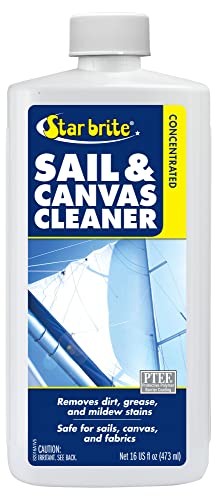
For sail and cover care, STAR BRITE Sail & Canvas Cleaner is the only concentrate among these options: its 16-ounce container makes 64 ounces of cleaner. The maker says the formula is designed for natural and synthetic sail fabrics, including canvas, boat covers, bimini tops and tarps, and includes UV protectants. Dilution is part of the process, so this option suits someone willing to mix a working batch rather than use a ready-to-use spray. Use a fabric-compatible brush and rinse thoroughly; a concentrate is not the same as applying the product undiluted.
Bottom line: Choose this if you clean sails or covers and want a fabric-focused concentrate.
Boater’s Edge Fabric Clean

For a bleach-free approach to marine fabric stains, Boater’s Edge Fabric Clean cleans marine-grade canvas, patio cushions and outdoor fabrics with a formula described as color-protecting. The maker also says its odor-encapsulating technology addresses unpleasant smells, giving it a broader fabric-care role than a basic dirt rinse. The 32-ounce bottle is a ready-use-sized option rather than a concentrate. Its focus is fabric cleaning; boat owners looking for a product explicitly formulated for sails and UV protection may prefer a different type of cleaner.
Bottom line: Pick this for general outdoor-fabric cleaning with a bleach-free formula.
303 Marine Multi-Surface Cleaner

303 Marine Multi-Surface Cleaner stands out when a boat has both canvas and hard or upholstered surfaces to clean: its range includes vinyl, upholstery, plastic, metal, rubber and other water-safe materials. The maker describes it as alcohol-free and residue-free, with spray-and-wipe use for dust and dirt. The 32-ounce bottle offers a broad marine-cleaning role rather than the sail-specific focus of a fabric concentrate. Because the formula is intended for water-safe surfaces, confirm that the surface can be safely wetted before applying it.
Bottom line: Choose this when one cleaner needs to cover canvas plus other water-safe boat surfaces.
How to choose a boat canvas cleaner
Start with the fabric and the kind of soil: a sail-and-cover formula, a bleach-free fabric cleaner and a multi-surface spray serve different jobs. Woven acrylic canvas and polyester fabrics are not interchangeable with vinyl-coated materials, so check the fabric maker’s care guidance before selecting a cleaner. For ordinary dirt, begin with a soft brush, fresh water and mild soap; use a dedicated cleaner when grime remains. A useful decision rule is to choose a fabric-specific product when most of the job is sails or covers, and a multi-surface cleaner only when you also need to clean compatible vinyl or hard surfaces. Always test a hidden area first, especially on colored fabric, and keep the fabric wet only as long as the cleaner directions require.
Canvas fabric and cleaner compatibility
Boat covers commonly use woven acrylic, solution-dyed polyester or vinyl-coated polyester, and each surface can have different care limits. Woven fabrics allow more water and air through than vinyl-coated fabrics, while coatings and seam treatments can be sensitive to abrasion or harsh chemicals. Read the fabric label or care guide and check for colorfastness in an inconspicuous spot before cleaning a large panel. Use a soft-bristle brush rather than a stiff deck brush, which can abrade a weave or coating. Rinse until runoff is clear, then allow the cover to dry completely before folding or storing it; trapped moisture encourages mildew growth even after visible dirt has been removed.
Cleaning boat canvas without damaging it
Remove loose grit before applying cleaner, since scrubbing grit into fabric can wear the surface. Work in manageable sections and use a soft brush with light pressure; heavy pressure washing can force water through seams and stress stitching. Follow the cleaner’s application directions and rinse the fabric thoroughly so detergent residue does not attract fresh soil. Do not mix cleaners: products containing bleach can produce dangerous gases if combined with ammonia or acids. If the boat canvas has persistent mildew staining, treat the stain only with a product compatible with that fabric, and test first because stain removal may affect color. Dry the fabric fully before putting on a cover or storing it.
Care habits that extend canvas life
Rinse salt and loose grime from marine fabric with fresh water after exposure, then let the material dry before storage. Keep covers tensioned so water does not pool; standing water adds load to fabric and seams and can leave persistent damp areas. Inspect stitching, zippers and hardware at the start and end of the boating season, because a small seam failure can spread under wind load. Store a dry cover in a ventilated place rather than a sealed, damp bag. Reapply a water-repellent treatment only when the fabric maker recommends it and after cleaning, since detergent residue can interfere with treatment bonding.
Frequently Asked Questions
Can I use bleach on boat canvas?
Use bleach only if the fabric maker allows it and the specific cleaner is compatible with that material. Never mix bleach with ammonia or acidic cleaners, and test any permitted treatment on a hidden area because colored fabric can change.
How do I remove mildew from boat canvas?
Brush off loose growth outdoors, then clean with a fabric-compatible product and rinse thoroughly. Stubborn staining may need a stain remover approved for the canvas, but test a hidden spot first because stain treatments can affect color.
Should boat canvas be scrubbed with a stiff brush?
No; a soft-bristle brush is the safer starting point for woven fabric and coated surfaces. Use light pressure, since stiff bristles and aggressive scrubbing can abrade fibers, coatings or stitching.
How should I dry boat canvas after cleaning?
Let the canvas air-dry completely before folding or storing it. A damp, folded cover traps moisture, which encourages mildew and can leave odors even when the surface initially looks clean.
Can one cleaner work on canvas and vinyl?
Some multi-surface cleaners are made for both, but check the product’s compatibility and the vinyl or fabric care guidance first. Vinyl-coated polyester and woven canvas have different surfaces, so test an inconspicuous area before treating a full cover.