
Cellular Hog Trap Trigger: Compare 3 Options

The Hunt Supply Cellular Hog Trap Trigger is the direct match for a cellular hog trap trigger because it releases a drop gate by phone call and includes 12 months of cell service. Choose a different option if you need a solar-powered trigger without cellular control or a sensor that monitors trap movement rather than releasing a gate.
We earn a commission if you buy through links on this page. As an Amazon Associate I earn from qualifying purchases. Products are compared on manufacturer specifications, not hands-on testing.
- Best overall: The Hunt Supply Cellular Hog Trap Trigger – Phone-activated drop-gate release with a 12V battery, solar charger and 12 months of cell service.
- Best for solar power: Hog Trap Trigger with Solar Charger – Solar-charged hog trap trigger for compatible trap setups, without a phone-release function.
- Best for trap monitoring: Skyhawk Trapmate Kiwi Plus – Dual sensors detect trap movement and send alerts through an app; a subscription is required.
| Product | Best for | Control or sensing | Power | Included items | Shop |
|---|---|---|---|---|---|
| The Hunt Supply Cellular Hog Trap Trigger | Remote gate release | Phone-call release | 12V battery and solar panel | 12-month cell service; gate not included | Check Price on Amazon |
| Hog Trap Trigger with Solar Charger | Solar trigger setups | Animal-movement activation | Solar charger | — | Check Price on Amazon |
| Skyhawk Trapmate Kiwi Plus | Trap movement alerts | Reed switch and accelerometer | Three AA batteries | Sleeve and pull magnet kit | Check Price on Amazon |
| Hog Trap Trigger | Basic trigger option | — | — | — | Check Price on Amazon |
Cellular Hog Trap Triggers and Related Devices
Compare the phone-activated gate release with two related options that serve different trap needs.
The Hunt Supply Cellular Hog Trap Trigger

The Hunt Supply Cellular Hog Trap Trigger is the only phone-activated gate release among these options, so it suits a trapper who can monitor a cellular camera and wants to drop the gate remotely. The unit holds a guillotine-style gate and releases it by phone call; the package includes a 12V battery, solar panel and 12 months of cell service. The maker says it is ready to operate where the property has cell signal. This is a release mechanism, not a complete trap: the gate is not included, and cellular coverage at the exact trap site is essential.
Bottom line: Choose this if you need phone-activated release and have reliable signal at the trap.
Hog Trap Trigger with Solar Charger

Hog Trap Trigger with Solar Charger is a solar-powered trigger for existing hog trap configurations, rather than a documented cellular gate release. Its dimensions are 4 inches high, 10 inches long and 10 inches wide, and it weighs 2.5 pounds, which helps when planning mounting space and support. The maker says the trigger responds to animal movement and is built for outdoor exposure. Choose it when solar charging and a compatible trap arrangement matter more than phone control. The feature set does not establish remote cellular operation, so it is not a substitute for a phone-activated release.
Bottom line: Choose this for a solar-powered trigger when cellular control is not required.
Skyhawk Trapmate Kiwi Plus
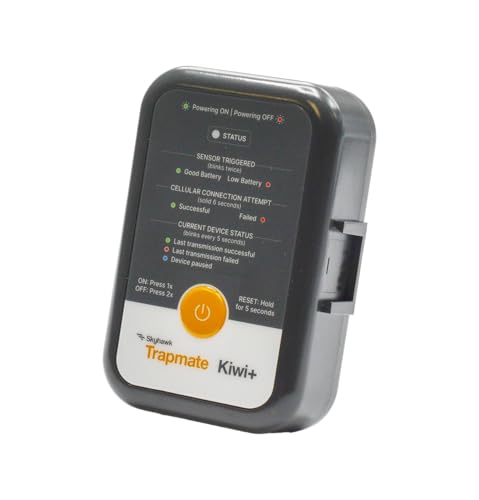
Skyhawk Trapmate Kiwi Plus monitors trap movement rather than releasing a gate, making it a different tool for someone who wants an alert when a trap changes state. It combines a magnetic reed switch with an accelerometer, has adjustable sensitivity, and uses three AA batteries. The maker says the battery set can last 3 to 5 years and specifies that a subscription is required. A protective sleeve and pull magnet kit are included. The limitation is functional: an alerting sensor does not close a hog trap, so pair it with a separate gate-release system if remote capture control is the goal.
Bottom line: Choose this for app-based trap monitoring, not gate release.
Hog Trap Trigger

Hog Trap Trigger is identified only as a hog trap trigger, so it may suit someone comparing a basic trigger category rather than a cellular release system. The product name does not establish a phone connection, power source, mounting approach or included components. That makes it a poor fit for buyers who specifically need remote gate control: those functions cannot be assumed from the word “trigger.” Before choosing a non-cellular trigger, confirm what gate style and activation method it supports and whether its power setup matches the trap location.
Bottom line: Consider this only when a basic hog trap trigger is the goal.
How a Cellular Hog Trap Trigger Works
A cellular trigger uses a mobile connection to receive a remote command, then actuates a gate release; a monitoring sensor instead reports movement or a gate state. The distinction matters because an alert alone does not physically close a trap. At the trap site, confirm cellular signal with the device installed where it will operate, not just from a nearby road or house. A failed command can leave the gate open even when a camera shows the animals inside. Before relying on remote operation, test the trigger and gate several times with the trap empty, then verify the release from the same phone and location you expect to use in the field.
Gate Fit and Trap Setup
A cellular release must match the gate it is intended to hold; a guillotine-style drop gate slides vertically, while other gate mechanisms may need a different release geometry. Measure the rail, latch point and gate travel before installation, and make sure the falling gate has a clear path without binding against the frame. Keep the electronics and wiring out of the gate’s travel path, and secure the battery and solar panel where animals cannot knock them loose. A release mechanism may not include the gate itself, so confirm the trap already has a compatible gate and a secure way to reset it before choosing a trigger.
Cell Coverage, Power and Field Checks
Cellular control requires usable coverage at the trap, while solar charging depends on the panel receiving adequate daylight and remaining connected to the battery. Tree cover, terrain and placement can weaken cellular reception; test a command at the actual mounting point before setting the trap. For a solar setup, position the panel toward open sky and inspect it periodically for shade, dirt or loose wiring. Do not treat a charged battery or a received alert as proof that the gate can move freely. A practical decision rule is to avoid relying on cellular release until repeated empty-trap tests succeed at the final site and the gate drops without obstruction.
Choosing Between a Release and a Monitor
Choose a phone-activated release when the required action is closing a drop gate remotely; choose a monitoring device when the goal is receiving an alert about trap movement. These devices solve different problems and are not interchangeable. Magnetic reed switches detect a change in magnet position, while accelerometers detect motion, so a dual-sensor monitor can observe more than one kind of event but still does not actuate a gate. Check whether an alerting device requires a subscription and what batteries it uses, then account for ongoing service and battery replacement in the field plan. A trap system may need both a release control and a separate monitoring method.
Frequently Asked Questions
Does a cellular hog trap trigger need cell service?
Yes, a phone-activated trigger needs cellular service at the trap to receive the command. Test reception and the release with the device in its final position before relying on it.
Does a cellular hog trap trigger include the gate?
Not necessarily; the phone-activated option described here excludes the gate. Confirm that the trap has a compatible drop gate and that it travels freely before installing the release.
Can a trap monitoring sensor close a hog trap gate?
A monitoring sensor reports movement or a state change; it does not close a gate unless a separate release mechanism is part of the system. The dual-sensor monitor here uses a reed switch and accelerometer for sensing.
How should I test a remote hog trap release?
Test the trigger and gate several times with the trap empty at the final installation site. Verify both the cellular command and an unobstructed gate drop before putting the trap into service.
How often should I check a solar hog trap trigger?
Inspect the panel and wiring periodically, especially after storms or animal activity, for shade, dirt and loose connections. A solar charger depends on daylight and a secure connection to the battery.