
EZ Detect Colon Test: 5 At-Home Kits Compared

EZ Detect Colon Disease Test is the named test here, and its two-minute result time is the deciding feature for shoppers seeking a quick at-home test. Choose another kit if you want an immunochemical fecal occult blood test (iFOB), a different test count, or a format that specifies collection tubes.
At-home stool blood tests are screening tools, not a diagnosis; a positive result needs medical follow-up, and a negative result does not replace recommended colorectal cancer screening.
We earn a commission if you buy through links on this page. As an Amazon Associate I earn from qualifying purchases. Products are compared on manufacturer specifications, not hands-on testing.
- Best overall: EZ Detect Colon Disease Test – EZ Detect gives a result in 2 minutes and uses five pads in one test.
- Best for iFOB format: WELLlife iFOB, 1 Test – This kit is identified as an immunochemical fecal occult blood test and specifies a 10-minute result.
- Best for two tests: FOB Test Kit, 2 Tests – The kit includes two test sets with cassettes and collection tubes.
| Product | Best for | Test type | Test count | Result time | Shop |
|---|---|---|---|---|---|
| EZ Detect Colon Disease Test | Quick pad test | EZ Detect pad test | 1 test; 5 pads | 2 minutes | Check Price on Amazon |
| EZ Detect Colon Test, 3-Pack | Multiple pad tests | EZ Detect pad test | 3 kits; 15 pads | — | Check Price on Amazon |
| WELLlife iFOB, 1 Test | iFOB test format | Immunochemical FOB | 1 test | 10 minutes | Check Price on Amazon |
| iFOB Colon Screening Test, 2-Pack | Two iFOB tests | Immunochemical FOB | 2 tests | 10 minutes | Check Price on Amazon |
| FOB Test Kit, 2 Tests | Collection tubes included | FOB stool test | 2 tests | — | Check Price on Amazon |
At-home colon tests compared
Compare the test formats and the practical differences in what each kit includes before choosing.
EZ Detect Colon Disease Test

EZ Detect is the only kit in this comparison with a two-minute result time, making it the direct choice for someone seeking that specific test. The package is one test with five pads, and the maker says it is FDA cleared, requires no stool handling or lab processing, and is intended to help detect early warning signs of colorectal disease. It suits buyers who prioritize a short wait and pad format. Its one-test quantity is a limitation for anyone who wants multiple test sets in one purchase.
Bottom line: Choose this if a two-minute result and five-pad test format are your priorities.
EZ Detect Colon Test, 3-Pack

This three-pack is the multi-kit version of EZ Detect, rather than a different test method. The name specifies three kits of five pads each, useful for someone seeking several test sets in a single pack.
Bottom line: Pick this when you want three EZ Detect kits rather than one.
WELLlife iFOB, 1 Test

WELLlife uses an immunochemical fecal occult blood (iFOB) format, unlike the EZ Detect pad test. The maker describes a three-step home process and says results appear in 10 minutes, with no professional lab test required. Its one-test quantity suits someone comparing a named iFOB kit with the single EZ Detect test.
Bottom line: Choose this if you specifically want a one-test iFOB kit.
iFOB Colon Screening Test, 2-Pack
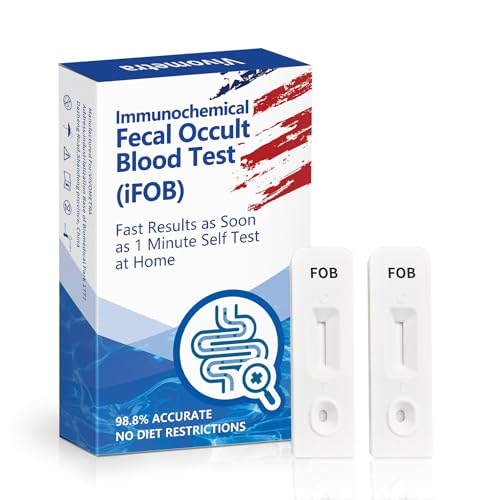
This two-pack specifies an iFOB format and a 10-minute result, distinguishing it from the single-test options. The maker claims 99% accuracy and describes the kit as a home test for detecting blood in stool; accuracy claims should not be read as a guarantee of diagnosis. Two tests may suit someone who wants more than one test set, but the fields do not explain the intended timing or interpretation of repeat testing. Discuss follow-up or screening schedules with a clinician rather than using repeat home tests to resolve a concerning result.
Bottom line: Pick this if you want two iFOB test sets in one kit.
FOB Test Kit, 2 Tests

This FOB kit is distinguished by its explicitly named collection tubes and two complete test sets. The maker says the kit includes test cassettes, collection tubes, and instructions, which may appeal to buyers who prefer a tube-based collection setup over a pad-based format. Check the test method and the instructions for result interpretation before choosing this option.
Bottom line: Choose this if collection tubes and two test sets matter most.
How to choose an at-home stool blood test
Start with the test method, then compare the quantity and stated result time. FOB tests detect blood in stool; iFOB tests use an immunochemical method, while EZ Detect is presented as a pad test. These are screening tests, not diagnostic tests for colorectal cancer. A positive result should prompt medical evaluation, and symptoms such as rectal bleeding or persistent bowel changes warrant clinician advice even after a negative result.
For adults at average risk, the U.S. Preventive Services Task Force recommends colorectal cancer screening from ages 45 through 75; adults 76 through 85 should decide with a clinician based on health and screening history. A home stool test is one screening option, but an abnormal result may require colonoscopy. Choose a kit that fits the screening plan set with your clinician rather than relying on result speed alone.
What FOB and iFOB tests measure
FOB means fecal occult blood: a test looks for blood in stool that may not be visible. FIT, also called iFOB, uses antibodies to detect human hemoglobin and generally does not require dietary restrictions, unlike older guaiac FOBT methods. These tests do not identify the cause of blood, which can include conditions other than colorectal cancer.
Test designs differ: some use a pad, while others collect a sample with a tube or cassette. Follow the specific kit’s collection and reading steps, and read results only within its time window. A negative stool test does not rule out disease; screening intervals depend on the test and clinical guidance. People with a personal or family history that raises risk may need a different screening plan.
How to read result time and test count
Result time is the wait after the sample is handled as directed, not the time required for follow-up care. In this comparison, the named EZ Detect kit gives a two-minute result, while two iFOB products specify 10 minutes. A shorter wait does not by itself mean a test is more accurate or appropriate.
Count complete test sets, not just pads or pieces. The single EZ Detect package contains five pads for one test; the three-pack is named as three kits of five pads. Two other kits identify two tests each.
| Need | What to compare | Relevant option |
|---|---|---|
| Shortest wait | Result time | Two-minute EZ Detect test |
| Immunochemical method | iFOB label | WELLlife or two-pack iFOB |
| Tube-based collection | Included components | Two-test FOB kit |
For any positive result, the next step is medical follow-up rather than repeating home tests until a negative appears.
When a home stool test is not enough
A home stool test is not a substitute for evaluation of symptoms or a diagnostic colonoscopy. Visible blood, unexplained anemia, persistent abdominal discomfort, or a sustained change in bowel habits should be discussed with a healthcare professional, even if a home result is negative. The same applies to people with a personal history of colorectal polyps or cancer, inflammatory bowel disease, or a strong family history; their screening timing and method may differ from average-risk guidance.
For average-risk adults, screening choices include stool-based tests and visual exams, with different schedules and follow-up requirements. A positive stool-based screening result generally requires colonoscopy to determine the cause. Do not delay care while waiting for another home test if symptoms are concerning.
Frequently Asked Questions
Does a positive home stool test mean cancer?
No; a positive result means the test detected blood, not that it diagnosed cancer. Blood can have other causes, and a clinician can determine the appropriate follow-up, often including colonoscopy.
Can a negative stool test rule out colorectal cancer?
No; a negative result does not rule out cancer or replace a scheduled screening plan. Contact a clinician about symptoms such as rectal bleeding or persistent bowel changes regardless of the result.
How often should adults get colorectal screening?
For average-risk adults ages 45 through 75, screening is recommended, but the interval depends on the method; annual FIT is one common stool-test schedule. Ask a clinician about the right plan if you have elevated risk or a prior abnormal result.
Do iFOB tests require dietary changes?
Immunochemical fecal occult blood tests detect human hemoglobin and generally do not require the food restrictions associated with older guaiac stool tests. Use the particular kit’s collection instructions.
What should I do if the test result is positive?
Contact a healthcare professional for follow-up rather than relying on another home test. Positive stool screening results commonly need colonoscopy to identify the source of blood.