
Aluminum-Free Baking Powder Brands: 4 Options Compared

Medley Hills Farm Baking Powder, 2 lb is the best fit for most bakers who want aluminum-free, double-acting baking powder in a 2-pound reusable container. Choose another option if you need a smaller package or a specifically corn-free or cornstarch-free formula.
Baking powder is a leavening blend that helps batters and doughs rise; these options differ mainly by package size and the dietary features each maker identifies.
We earn a commission if you buy through links on this page. As an Amazon Associate I earn from qualifying purchases. Products are compared on manufacturer specifications, not hands-on testing.
- Best overall: Medley Hills Farm Baking Powder, 2 lb – A 2-pound package combines a reusable container with a double-acting formula.
- Best for avoiding cornstarch: Gefen Baking Powder, 8 oz (2 pack) – The 1-pound total package is identified as cornstarch-free.
- Best for corn-free baking: Mom’s Place Baking Powder, 8 oz – The 8-ounce double-acting formula is identified as corn-free.
| Product | Best for | Package size (oz) | Formula | Dietary features | Shop |
|---|---|---|---|---|---|
| Medley Hills Farm Baking Powder, 2 lb | Bulk pantry supply | 32 oz | Double acting | Aluminum-free; kosher | Check Price on Amazon |
| Gefen Baking Powder, 8 oz (2 pack) | Cornstarch-free recipes | 16 oz total | — | Gluten-free; cornstarch-free | Check Price on Amazon |
| Herbaila Baking Powder, 1 lb | Non-GMO baking | 16 oz | Double acting | Gluten-free; non-GMO | Check Price on Amazon |
| Mom’s Place Baking Powder, 8 oz | Corn-free baking | 8 oz | Double acting | Corn-free; gluten-free; non-GMO | Check Price on Amazon |
Aluminum-Free Baking Powder Brands Compared
Compare package size and formula first, then check the dietary features that matter for your recipes.
Medley Hills Farm Baking Powder, 2 lb

Medley Hills Farm Baking Powder, 2 lb stands out for its 32-ounce quantity and reusable container, making it suited to households that bake often and want a larger pantry supply. The maker says the aluminum-free formula is double acting, so it releases carbon dioxide with moisture and heat. The package is made in the USA and identified as kosher. Its size is the tradeoff: occasional bakers may prefer an 8-ounce or 16-ounce package to use less pantry space and open a smaller amount at once.
Bottom line: Choose this for frequent baking and a larger reusable pantry container.
Gefen Baking Powder, 8 oz (2 pack)

Gefen Baking Powder, 8 oz (2 pack) is the clearest pick when cornstarch-free baking powder is the priority, and its two 8-ounce canisters add up to 16 ounces. The maker identifies it as gluten-free and aluminum-free and says the resealable canister helps keep the powder fresh. The product features do not identify it as double acting, so buyers whose recipe calls for that formula should verify the package before choosing it. Two smaller canisters can also be handy when you prefer not to open the full quantity at once.
Bottom line: Pick this when avoiding cornstarch matters more than a specified double-acting formula.
Herbaila Baking Powder, 1 lb

Herbaila Baking Powder, 1 lb brings a 16-ounce package and dietary attributes that distinguish it from the other options: it is identified as gluten-free and non-GMO, and the maker says it is batch tested. The maker also describes the aluminum-free powder as double acting for baking and cooking. It is made in Canada. This is a straightforward size for regular home baking, but it does not offer the corn-free or cornstarch-free positioning of Gefen Baking Powder, 8 oz (2 pack) and Mom’s Place Baking Powder, 8 oz; check ingredient suitability if corn avoidance is important.
Bottom line: Choose this for a 16-ounce double-acting option with gluten-free and non-GMO attributes.
Mom’s Place Baking Powder, 8 oz
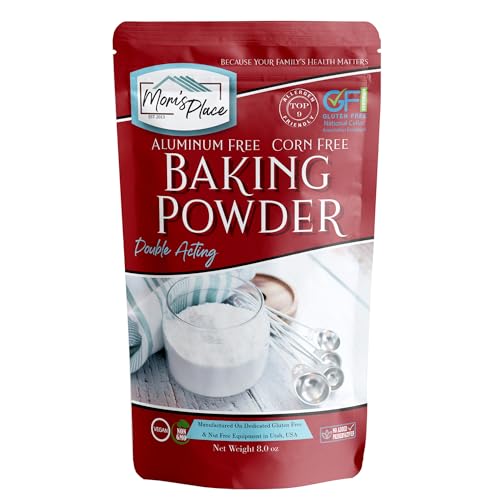
Mom’s Place Baking Powder, 8 oz is the smallest package here and specifically targets baking that needs a corn-free formula. The maker identifies it as double acting, aluminum-free, gluten-free, non-GMO, and free of dairy, nuts, and soy as well as corn. Those attributes make it a focused choice for households managing several ingredient exclusions. At 8 ounces, the package is less suited to high-volume baking than the 16- and 32-ounce options, so frequent bakers may need to restock more often.
Bottom line: Pick this for a small package with a specifically corn-free formula.
How to choose aluminum-free baking powder
Start with the recipe’s leavening instructions: baking powder includes both a base and dry acids, while baking soda needs an acidic ingredient in the recipe to react. Double-acting powder releases gas once when moistened and again as it heats, which is why it suits many batters that sit briefly before baking. Check package size against how often you bake; 8 ounces is a smaller commitment than 1 or 2 pounds. If a recipe depends on gluten-free, corn-free, or cornstarch-free ingredients, compare the package’s ingredient and allergen statements rather than assuming all aluminum-free powders share the same formula. For a corn-free need, select a product specifically identified that way.
What double-acting means in baking
Double-acting baking powder produces leavening in two stages: moisture starts the reaction, and oven heat triggers additional gas release. That timing can help batters rise during baking, but it does not make every formula interchangeable; follow the type and amount specified in a recipe. Single-acting powder reacts primarily when wet, so batters made with it generally need prompt baking. A useful rule is to mix wet and dry ingredients only when the oven is ready if the recipe calls for a quick bake. Baking powder is not a direct substitute for baking soda: their strength and required acidic ingredients differ, so a one-for-one swap can change both rise and flavor.
Package size and dietary fit
Choose package size by expected use, not just the quantity on the shelf: an 8-ounce canister may suit occasional baking, while a 1- or 2-pound package better fits frequent batches. The products here vary in dietary callouts, so those claims are not interchangeable: cornstarch-free and corn-free are distinct labels, and neither should be inferred from “aluminum-free.” For an allergy or strict avoidance, read the full ingredient and cross-contact statements on the package before use. Baking powder needs to stay dry; moisture can trigger its reaction before it reaches the batter. Keep the container tightly closed in a cool, dry cupboard, away from steam and damp utensils.
How to check baking powder freshness
Test baking powder when its age or storage history is uncertain: stir about 1 teaspoon into a few tablespoons of hot water, and look for immediate bubbling. A weak or absent fizz means the powder may not provide reliable lift, so replace it before a bake where rising matters. For a more recipe-specific check, a small test batch can reveal whether the expected texture is achievable. Store opened powder airtight and keep measuring spoons dry; clumps can signal moisture exposure, though appearance alone does not prove leavening strength. Do not confuse freshness with aluminum content: the test checks gas-producing activity, not the ingredients or dietary suitability.
Frequently Asked Questions
Can baking powder replace baking soda in a recipe?
Not as a direct one-for-one swap: baking powder contains acids, while baking soda needs acid in the recipe to react. A substitution changes the amount and balance of leavening, so use a conversion written for that recipe.
How can I test if baking powder still works?
Add about 1 teaspoon of powder to a few tablespoons of hot water; active powder should bubble promptly. If bubbling is weak or absent, replace it before relying on it for a risen bake.
Does aluminum-free baking powder mean corn-free?
No; aluminum-free and corn-free describe different ingredient concerns. Check the package for an explicit corn-free or cornstarch-free statement and review its ingredients if avoidance is important.
Why does double-acting baking powder react twice?
Its leavening blend releases gas after moisture is added and again as the mixture heats. That two-stage action helps provide lift during mixing and baking, unlike a powder designed to react mainly when wet.
How should opened baking powder be stored?
Keep the container tightly closed in a cool, dry cupboard and use a dry spoon. Moisture can start the powder reacting in storage, so avoid placing it near a steaming stove or sink.