
Best 190mm Air Shocks for E-Bikes Compared

For most riders, DNM AO-6 Air Shock, 190 × 51 mm is the clearest match because it is a 190 × 51 mm air shock with pressure adjustment up to 250 psi. Choose MEROCA Adjustable Air/Coil Shock, 190 mm if you want rebound and compression controls as well as air pressure; choose Catazer AO-6 Air Shock, 190 mm if the included DU bushings match your frame mounts.
We earn a commission if you buy through links on this page. As an Amazon Associate I earn from qualifying purchases. Products are compared on manufacturer specifications, not hands-on testing.
- Best overall: DNM AO-6 Air Shock, 190 × 51 mm – A 190 × 51 mm air shock with an adjustable air-pressure limit of 250 psi.
- Best for damping controls: MEROCA Adjustable Air/Coil Shock, 190 mm – Offers rebound, compression, preload and air-pressure adjustment.
- Best for included bushings: Catazer AO-6 Air Shock, 190 mm – Includes 8 × 24 mm DU bushings and has adjustable air pressure up to 250 psi.
| Product | Best for | Eye-to-eye length | Pressure range or limit | Mounting details | Shop |
|---|---|---|---|---|---|
| DNM AO-6 Air Shock, 190 × 51 mm | Straightforward air tuning | 190 mm | Up to 250 psi | 8 × 24 mm sleeve | Check Price on Amazon |
| MEROCA Adjustable Air/Coil Shock, 190 mm | Multiple tuning controls | 190 mm option | 200–300 psi | 12 mm mounting holes | Check Price on Amazon |
| Catazer AO-6 Air Shock, 190 mm | DU bushing fit | 190 mm | Up to 250 psi | 8 × 24 mm DU bushings | Check Price on Amazon |
190mm Air Shocks for E-Bikes
Compare mount dimensions and adjustment features, then match the shock to your frame before choosing.
DNM AO-6 Air Shock, 190 × 51 mm
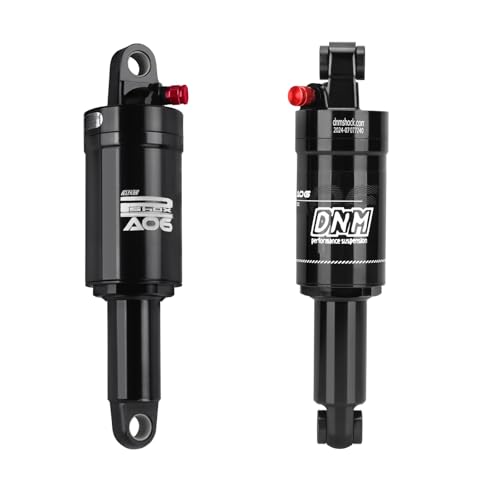
DNM AO-6 Air Shock, 190 × 51 mm is the straightforward air-pressure option in this group, with a 190 × 51 mm eye-to-eye and stroke size. Its aluminum alloy body and pressure adjustment up to 250 psi suit riders whose frame calls for this exact size and who want air tuning without a list of damping controls. DNM recommends using a pressure gauge when inflating. The fit limitation matters: the 190 mm length alone is not enough to establish compatibility, so check the required stroke and mounting hardware against your bike.
Bottom line: Choose this if your frame specifies 190 × 51 mm and air-pressure adjustment is the priority.
MEROCA Adjustable Air/Coil Shock, 190 mm
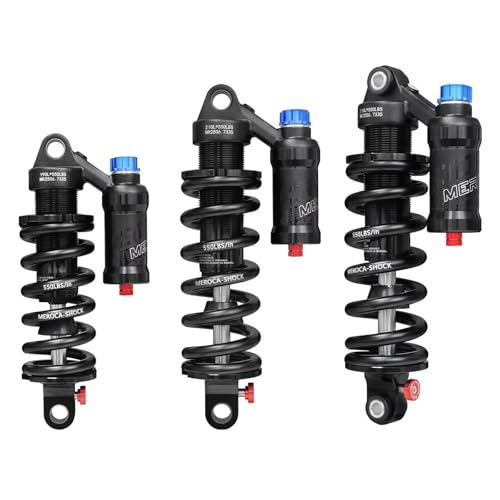
MEROCA Adjustable Air/Coil Shock, 190 mm stands apart with separate rebound, compression, preload and air-pressure adjustments, plus a 550 lb/in coil spring. The 190 mm version is aimed at riders seeking more ways to tune suspension response than a basic air-pressure adjustment offers. Its mounting-hole size is 12 mm, so compare that with the frame hardware rather than assuming the shock is a direct fit. The spec gives several eye-to-eye options but no stroke measurement for this selection; buyers whose frame requires a specific stroke should confirm it before ordering.
Bottom line: Pick this if you need multiple tuning controls and the 12 mm mounts match your frame.
Catazer AO-6 Air Shock, 190 mm
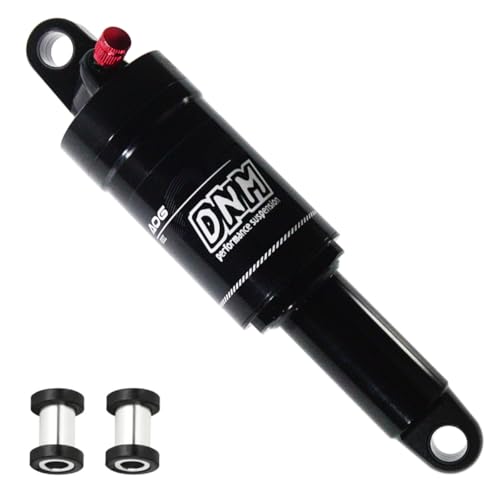
Catazer AO-6 Air Shock, 190 mm is the 190 mm air shock choice with built-in 8 × 24 mm DU bushings and a hard-anodized aluminum alloy body. Its air pressure adjusts up to 250 psi, and the maker says it arrives pre-charged at 150 psi. That starting pressure is not a substitute for setting sag to the rider and bike. This specifications supplies the eye-to-eye length but not a stroke measurement, so it suits only buyers who can verify that the existing shock’s stroke and mount dimensions match.
Bottom line: Choose this when the included 8 × 24 mm bushings match your frame and you can verify stroke.
How to choose a 190mm air shock for an e-bike
Start with the frame’s required eye-to-eye length and stroke, not the wheel size or the word “190mm.” Eye-to-eye is measured from the center of one mounting eye to the center of the other; stroke is how far the shock shaft travels. Both measurements affect suspension geometry and clearance. Match the mount width, bolt diameter and hardware as well: a length match cannot compensate for incompatible mounts. For e-bikes, also check frame and shock clearance through the suspension’s full travel, since the motor, battery or frame shape can limit space.
Air pressure sets spring support, while rebound damping controls how quickly the shock extends after compression. Compression damping resists movement into the shock; preload is primarily a coil-spring adjustment, not a substitute for correct spring rate. A sag measurement is a useful setup starting point: many mountain-bike setups target roughly 25–30% rear-shock sag, but the bike maker’s range takes precedence.
190mm air shock fit and mounting dimensions
A 190 mm eye-to-eye shock fits only a frame designed around that length and the correct stroke. Measure the installed shock eye center to eye center, then identify stroke from the frame or shock specification; do not infer stroke from eye-to-eye length. Mounting hardware must also match the frame’s eye width and bolt diameter, and bushings cannot fix a mismatch in overall shock length.
Before installation, confirm that the shock body and reservoir, if present, clear the frame throughout the linkage’s travel. The bike should be supported securely, and the suspension should not be loaded while mounting hardware is removed. If a frame’s required stroke, mount size or clearance cannot be confirmed, have a suspension shop check compatibility before riding; incorrect geometry or binding can damage parts or affect control.
Air versus coil rear shocks
Air shocks use compressed air as the spring and are adjusted by changing pressure; coil shocks use a metal spring whose rate is usually selected to suit rider and bike load. A combined air-and-coil design includes both elements, so its adjustment labels do not make it equivalent to a simple air-only shock. Coil spring rate is commonly marked in pounds per inch, while air pressure is measured in psi; the units describe different properties and cannot be compared directly.
Choose the suspension type your frame is designed for and use its setup guidance. A heavier e-bike can place different demands on the shock than a conventional mountain bike, but weight alone does not establish fit or spring suitability. Confirm the frame’s approved shock dimensions and the shock maker’s setup limits before use.
| Shock type | Spring element | Adjustment focus |
|---|---|---|
| Air | Pressurized air | Air pressure and damping, if provided |
| Coil | Metal spring | Spring rate and damping, if provided |
| Air-and-coil combination | Air and metal spring | Use model-specific setup guidance |
Setting pressure and maintaining an air shock
Use a shock pump with a pressure gauge to adjust an air shock; a standard tire pump may not provide the control needed for suspension pressure. Begin with the shock maker’s pressure guidance and set sag with the rider equipped for a normal ride. Many mountain-bike setups begin around 25–30% rear-shock sag, but linkage design and intended use change the target. Recheck sag after pressure changes rather than treating a maximum pressure rating as a setup target.
Inspect the shock for air loss, oil leakage, damaged seals and loose mounting hardware before rides. Suspension manufacturers commonly recommend periodic service based on riding hours and conditions; muddy, dusty or wet riding can require more frequent attention than clean, light use. Follow the shock’s service interval, and do not open a pressurized shock body without the appropriate service procedure and tools.
Frequently Asked Questions
How do I measure a 190mm rear shock?
Measure eye-to-eye from the center of one mounting eye to the center of the other; the result should be 190 mm for a 190 mm shock. Measure or confirm stroke separately, because matching eye-to-eye length alone does not establish fit.
What pressure should I use in an e-bike shock?
Set pressure to reach the shock maker’s sag target with the rider in normal riding gear; many mountain-bike setups start around 25–30% rear-shock sag. Maximum psi is a limit, not a recommended starting pressure.
Can any 190mm shock fit my e-bike?
No; frame compatibility also depends on stroke, mount width, bolt diameter and clearance through suspension travel. Confirm all of those dimensions against the frame’s specification before fitting a shock.
How often should an air shock be serviced?
Service intervals depend on the shock maker’s schedule and riding conditions; dusty, muddy or wet use generally calls for closer inspection than occasional clean riding. Check for pressure loss, oil leaks, seal damage and loose hardware before each ride.
Can I inflate a rear shock with a tire pump?
Use a shock pump with a gauge for controlled suspension pressure adjustments. A tire pump is designed for much higher air volume and may not allow precise adjustment at shock pressures.