
Best Adhesive for Convertible Top: 3 Repair Picks

GEAR AID Aquaseal FD Soft Top Repair Kit suits most convertible-top repairs because its flexible, waterproof adhesive and included tape address tears in fabric or coated automotive surfaces.
We earn a commission if you buy through links on this page. As an Amazon Associate I earn from qualifying purchases. Products are compared on manufacturer specifications, not hands-on testing.
- Best overall: GEAR AID Aquaseal FD Soft Top Repair Kit – Flexible waterproof adhesive and repair tape support tears in soft tops and coated automotive surfaces.
- Best for clear trim repairs: Stormsure Car Roof Repair Adhesive, 15 g – Clear glue stays flexible and is rated from -22°F to 176°F.
- Best for vinyl patches: RH Adhesives HH-66 TF Vinyl Patch Kit – The kit pairs reinforced 22-ounce PVC with HH-66 TF cement.
| Product | Best for | Repair format | Material fit | Size | Shop |
|---|---|---|---|---|---|
| GEAR AID Aquaseal FD Soft Top Repair Kit | Fabric top tears | Adhesive and tape kit | Fabric and coated surfaces | 7 × 10 in patch | Check Price on Amazon |
| Stormsure Car Roof Repair Adhesive, 15 g | Clear trim repairs | Clear glue | Fabric, rubber, plastic trim | 15 g | Check Price on Amazon |
| RH Adhesives HH-66 TF Vinyl Patch Kit | PVC patch repairs | Cement and PVC patch kit | Heavyweight PVC | 10 × 10 in patch | Check Price on Amazon |
Convertible Top Adhesives and Repair Kits
Match the adhesive and patch material to the damaged area, then choose a finish suited to the visible repair.
GEAR AID Aquaseal FD Soft Top Repair Kit
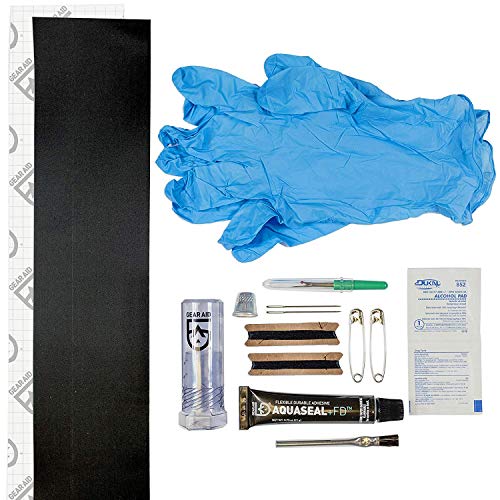
For a tear in fabric or a coated automotive surface, this kit combines Aquaseal FD with black Tenacious Tape instead of relying on glue alone. The kit includes brushes, gloves, and sewing tools, and the patch measures 7 by 10 inches. GEAR AID says the adhesive cures to a flexible, waterproof seal suited to soft tops, vinyl windows, and covers. This is the broadest repair option here for a mixed-material soft top. Its black patch is less discreet than a clear adhesive when the repair sits on a visible, light-colored area.
Bottom line: Choose this for a flexible patch-and-adhesive approach to a fabric soft top tear.
Stormsure Car Roof Repair Adhesive, 15 g

For a repair where visible residue matters, this clear glue is the only transparent-finish adhesive among the repair products here. Stormsure says it bonds fabric, rubber, and plastic trim on convertible hoods and linings, remaining flexible from -22°F to 176°F. The small 15-gram tube suits targeted seams or trim rather than a broad patch job. It is a better fit for a neat bond than for a larger tear that needs reinforcing fabric or tape; choose a patch kit when the damaged area needs material support.
Bottom line: Choose this for small, visible roof-lining or trim bonds where a clear finish matters.
RH Adhesives HH-66 TF Vinyl Patch Kit

For a heavyweight PVC top, this kit brings a material-matched patch rather than a general fabric repair. It includes a 10-by-10-inch square of reinforced 22-ounce vinyl, one ounce of HH-66 TF cement, an applicator brush, and two alcohol wipes. The maker says the cement can be applied from 35°F to 95°F and remains flexible in weather extremes. That temperature window is narrower than Stormsure’s operating range, so this kit is less suitable when the repair must be applied outside those conditions.
Bottom line: Choose this when the damaged top is heavyweight PVC and the application temperature is 35°F to 95°F.
How to choose an adhesive for a convertible top
Choose by the top material and whether the damage is a tear, a seam, or loose trim. Convertible tops commonly use canvas or acrylic fabric, vinyl-coated fabric, or PVC; a repair adhesive must be compatible with the surface, and a patch should match its flexibility. A small trim bond may call for a clear flexible glue, while a hole generally needs a patch as well as adhesive. Measure the damaged area and leave room for the patch to extend beyond the tear. If the top material is unknown, identify it before selecting a cement: vinyl cement is intended for vinyl, not every woven cloth.
A useful rule is to use a patch when a tear is longer than a small pinhole or reaches a seam, because adhesive alone has little material to bridge. For a visible dark repair, a black patch may blend better than a light one; for a visible lining seam, clear adhesive can reduce contrast.
Patch size and fit for soft top repairs
Patch dimensions determine whether a kit can cover the damage with a margin around its edges. For a simple field repair, aim for at least 1 inch of sound material beyond each edge of a small tear; larger or seam-crossing damage needs a patch shaped to cover the full stressed area. Round patch corners rather than leaving sharp corners that can catch and lift. A 7-by-10-inch patch and a 10-by-10-inch patch serve different repair footprints, so measure the tear before choosing.
Convertible fabric tops fold repeatedly, and a rigid patch can create a stress point. Keep the repaired section from being folded while the adhesive cures, and make sure the patch lies flat without wrinkles. Do not assume a kit fits every top simply because it is marketed for automotive use; material compatibility and clear space around the tear decide the fit.
Adhesive, cement, and restoration gel compared
Adhesive, vinyl cement, and restoration gel do different jobs. A flexible adhesive bonds or seals; vinyl cement bonds compatible vinyl surfaces and can secure a vinyl patch; a color-restoring gel changes appearance but does not close a hole. Matching the repair method to the defect helps avoid covering a structural problem with a cosmetic product.
The table separates the product types by the work they are intended to do.
| Repair need | Suitable product type | Key fit check |
|---|---|---|
| Fabric or coated-surface tear | Flexible adhesive with tape or patch | Surface compatibility and patch coverage |
| Heavyweight PVC damage | Vinyl cement with reinforced PVC patch | Confirm the top is PVC |
| Faded black vinyl or plastic | Color-restoring gel | Cosmetic need only, not a tear |
Preparing and curing a convertible-top repair
Clean, dry surfaces give repair adhesives a better chance to bond, and grease or dressing residue can undermine adhesion. Use the included wipes where supplied, and avoid aggressive solvents unless the top maker allows them; solvents can damage coatings and vinyl windows. Work in the cement’s application-temperature range when one is provided, since cold can slow bonding and heat can change how quickly an adhesive sets.
Keep the top stationary and unfolded through the cure period specified by the adhesive maker. A fresh repair can be weakened by folding, rain, or washing before it has cured. Convertible tops are part of a moving, weather-exposed assembly, so inspect patched edges periodically and address lifting edges before water or repeated flexing enlarges the damage.
Frequently Asked Questions
Can convertible top adhesive repair a tear without a patch?
A small surface split may seal with flexible adhesive, but a tear that opens under tension generally needs a patch to bridge the missing material. Leave sound material around the tear so the patch can grip beyond the damaged edge.
What temperature range works for vinyl cement application?
The RH HH-66 TF kit gives an application range of 35°F to 95°F. Work within that range for this cement, and avoid confusing application temperature with the temperature a cured bond can withstand.
How large should a convertible top patch be?
A patch should extend at least 1 inch beyond each edge of a small tear when space allows. Measure the damage first and use a larger patch when the split reaches a seam or crosses a high-flex area.
Can black top gel seal a hole in vinyl?
No, black top gel is a color-restoring product rather than a bonding adhesive. Use a compatible vinyl cement and patch for a hole, then use a restorer only for cosmetic fading.
Should a convertible top be folded while glue cures?
Keep the top unfolded and still until the adhesive has cured according to its maker’s directions. Folding puts the repair under flex stress, while early exposure to rain or washing can interfere with bonding.