
Rabbit Ears for Old TV: 5 Indoor Antennas Compared

For an older TV, choose Philips SDV7114A/27 Rabbit Ears for its 15-inch extendable dipoles and 4-foot coaxial cable, but first check whether the set has a digital tuner. An analog-only TV needs an ATSC digital converter box between the antenna and television; an antenna alone cannot decode digital broadcasts.
Choose another model if cable reach or maximum extension matters more: Philips SDV8201B/27 Rabbit Ears has a 5-foot cable, while Wideskall Universal Rabbit Ear Antenna extends up to 24 inches.
We earn a commission if you buy through links on this page. As an Amazon Associate I earn from qualifying purchases. Products are compared on manufacturer specifications, not hands-on testing.
- Best overall: Philips SDV7114A/27 Rabbit Ears – It pairs 15-inch extendable dipoles with a 4-foot coaxial cable and adjustable loop.
- Best for maximum extension: Wideskall Universal Rabbit Ear Antenna – Its antenna extends up to 24 inches and its cable is 3 feet long.
- Best for longer cable reach: Philips SDV8201B/27 Rabbit Ears – Its 5-foot coaxial cable is the longest specified.
| Product | Best for | Dipole length or extension | Coaxial cable length | Claimed range | Shop |
|---|---|---|---|---|---|
| Loxarenx Rabbit Ears Antenna | Older TV compatibility | — | — | — | Check Price on Amazon |
| Philips SDV7114A/27 Rabbit Ears | Longer dipoles | 15 in. | 4 ft. | Up to 30 miles | Check Price on Amazon |
| GE 33675 Modern Loop Rabbit Ears | Loop-and-dipole design | 15 in. | 4 ft. | Up to 30 miles | Check Price on Amazon |
| Philips SDV8201B/27 Rabbit Ears | Longer cable reach | — | 5 ft. | — | Check Price on Amazon |
| Wideskall Universal Rabbit Ear Antenna | Maximum extension | Up to 24 in. | 3 ft. | — | Check Price on Amazon |
Rabbit Ears for Old TV Compared
Check tuner compatibility first, then compare cable reach and the antenna features that matter for your setup.
Loxarenx Rabbit Ears Antenna

Unlike the other options, this antenna specifically identifies older TVs as a target, making it the clearest starting point when the television model is unknown. It has adjustable VHF/UHF dipoles for repositioning as you look for available local channels. The product also identifies 4K and 1080P readiness, but those resolution labels do not establish whether an analog television can decode digital broadcasts.
Bottom line: Choose this if older-TV compatibility is your first screening criterion.
Philips SDV7114A/27 Rabbit Ears
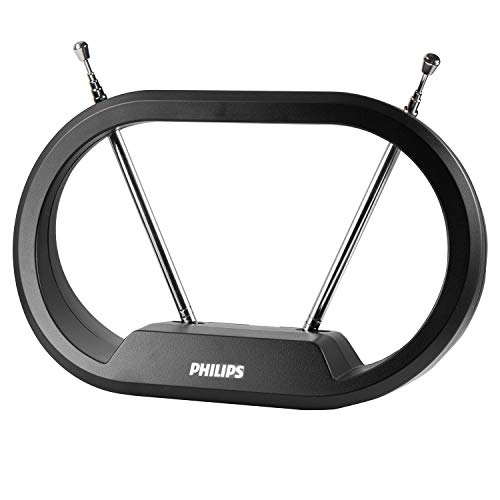
The 15-inch extendable dipoles and stated range make this Philips model distinct for buyers prioritizing specified antenna reach. It also has an adjustable loop and receives VHF and UHF broadcasts, with a 4-foot coaxial cable for connection to the TV or converter. The 30-mile figure is a manufacturer claim, not a guarantee of reception: terrain, buildings, and distance from transmitters can change results. This model suits a viewer who wants measurable antenna and cable dimensions; it still cannot replace a digital converter on an analog-only television.
Bottom line: Choose this for its 15-inch dipoles and 4-foot cable.
GE 33675 Modern Loop Rabbit Ears
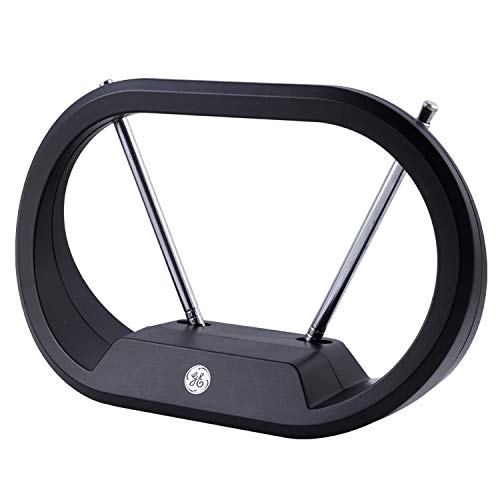
The GE combines a modern loop with adjustable 15-inch dipoles, giving it a clearly specified loop-and-rod configuration for VHF/UHF reception. Its 4-foot coaxial cable and stated range of up to 30 miles are the other measurable points to compare. The manufacturer’s range claim does not mean every station within that distance will come in clearly; obstructions and signal direction matter. This tabletop antenna fits a viewer who wants both a loop and extendable rods, while an analog-only TV still requires a separate digital converter.
Bottom line: Choose this if you want a loop paired with 15-inch dipoles.
Philips SDV8201B/27 Rabbit Ears

The 5-foot coaxial cable is the longest specified among these antennas, which can help when the best placement is farther from the TV. Its tabletop design uses adjustable dipoles and a circular UHF loop for VHF/UHF reception. The product also claims ATSC 3.0 compatibility, but that does not tell you whether an older television has a digital tuner or supports that broadcast standard. Buyers who need a known dipole length or stated range should compare another option; an analog-only set needs a converter box regardless of antenna placement.
Bottom line: Choose this when extra cable reach is the deciding factor.
Wideskall Universal Rabbit Ear Antenna

The Wideskall’s maximum extension of 24 inches is its defining measurable feature, exceeding the 15-inch dipoles specified for two alternatives. It has a 3-foot cable and supports VHF/UHF reception; the manufacturer also claims support for broadcasts up to 1080i and FM radio. The shorter cable can constrain placement if the TV sits far from a window or other useful position. This model suits buyers who value antenna extension, but analog-only TVs still need an ATSC converter to display digital over-the-air channels.
Bottom line: Choose this for its specified 24-inch maximum extension.
Choosing rabbit ears for an old TV
First determine whether the television has a digital tuner: an antenna receives radio signals, but a tuner decodes them into channels. An analog-only set needs an ATSC digital converter box; a VHF/UHF antenna by itself is not enough. Check the TV’s input as well: a coaxial antenna connection is the usual direct connection, while some older sets need a converter with a compatible output. With under 4 feet between the TV and a good antenna position, a 4-foot cable may be enough; measure the route, including slack, before choosing. None of these product names alone confirms a specific old TV model will work without a converter.
Positioning rabbit ears for VHF and UHF
Rabbit ears use adjustable rods primarily for VHF reception, while a loop is commonly used for UHF; these products combine the elements in different layouts. Start with the antenna near a window and as high as practical, then scan for channels after each meaningful position change. Keep the coaxial cable away from sharp bends and avoid hiding the antenna behind a large metal object. Rotate or extend the rods incrementally, since different stations can arrive from different directions. A claimed reception range is not a reliable indoor coverage boundary: hills, walls, and transmitter direction affect the signal. If a station breaks up, change position and rescan before concluding the television or antenna is incompatible.
Comparing antenna features and cable reach
Use the measurements below to narrow down placement and adjustment needs; the manufacturer’s distance claim is not a promise of reception at every location.
| Need | Relevant model | Measurement or feature |
|---|---|---|
| More cable reach | Philips SDV8201B/27 Rabbit Ears | 5-foot coaxial cable |
| Specified 15-inch rods | Philips SDV7114A/27 Rabbit Ears or GE 33675 Modern Loop Rabbit Ears | 15-inch extendable dipoles |
| More antenna extension | Wideskall Universal Rabbit Ear Antenna | Up to 24 inches |
| Older-TV targeting | Loxarenx Rabbit Ears Antenna | Product name identifies older TVs |
Match cable length to the actual path from the TV or converter to the placement spot, not just the straight-line distance. An extension cable adds another connection point and can complicate setup, so choose a built-in cable long enough for the planned route when possible. For weak reception, a clear and elevated position is usually a better first change than relying on a range number.
Scanning channels and avoiding setup mistakes
Run the television or converter’s channel scan only after connecting the antenna, since the scan stores channels it can detect at that position. If you move or rotate the antenna, scan again; a previously saved channel list may not reflect the new reception. A common mistake is connecting an antenna to an analog-only TV and expecting it to decode current over-the-air broadcasts: insert an ATSC converter between the antenna and television instead. Another is placing the antenna low behind the TV, where furniture and electronics can obstruct signals. When reception changes by station, reposition the rods or loop gradually and repeat the scan rather than changing several things at once.
Frequently Asked Questions
Can rabbit ears work with an analog television?
Yes, but an antenna alone cannot decode current digital broadcasts on an analog-only set. Connect an ATSC digital converter box between the antenna and TV, then scan for channels on the converter.
Does an older TV need a digital converter box?
An analog-only television needs an ATSC converter to display digital over-the-air channels. A TV with a built-in digital tuner generally does not need that separate box; check the TV’s model or menu for tuner capability.
How far should rabbit ears extend?
Extend the rods gradually and scan after changing their position; the products here specify extensions of 15 inches or up to 24 inches. The useful position depends on local station direction and obstructions, not simply maximum rod length.
Should an indoor antenna sit near a window?
A window-side position is a useful starting point because walls and metal obstructions can weaken reception. Raise the antenna if practical, then rescan after moving it to compare available channels.
Why does a channel disappear after moving the antenna?
Reception can change when the antenna’s direction or surroundings change, so the earlier scan may no longer reflect the new position. Rescan after each placement change and adjust the rods or loop in small steps.