
Best Air Compressor Silencer: 3 Fits Compared

M07 XY-07 3/4-Inch NPT Exhaust Muffler is the best fit for an air compressor exhaust port when your equipment accepts a 3/4-inch NPT male thread and operates within its 145 PSI rating. Choose an intake filter silencer instead if you need to quiet the compressor’s air inlet; the correct connection size and mounting location decide which type fits.
We earn a commission if you buy through links on this page. As an Amazon Associate I earn from qualifying purchases. Products are compared on manufacturer specifications, not hands-on testing.
- Best overall: M07 XY-07 3/4-Inch NPT Exhaust Muffler – It is an exhaust muffler with a 3/4-inch NPT male connection and a 145 PSI rating.
- Best for 1/2-inch intakes: 1/2-Inch Thread Intake Silencer, 2-Pack – The two-piece intake-filter set includes 1/2-inch male threads and replacement filter elements.
- Best for 1/4-inch intakes: Tnuocke 1/4-Inch Intake Silencer, 2-Pack – This two-piece intake filter silencer uses a 1/4-inch thread.
| Product | Best for | Thread | Function | Pack | Shop |
|---|---|---|---|---|---|
| M07 XY-07 3/4-Inch NPT Exhaust Muffler | Exhaust port muffling | 3/4-inch NPT male | Exhaust muffler | 1 piece | Check Price on Amazon |
| 1/2-Inch Thread Intake Silencer, 2-Pack | Larger intake threads | 1/2-inch male | Intake filter | 2 pieces | Check Price on Amazon |
| Tnuocke 1/4-Inch Intake Silencer, 2-Pack | Smaller intake threads | 1/4-inch | Intake filter | 2 pieces | Check Price on Amazon |
Air Compressor Silencers
Match the muffler type and thread to the compressor port before choosing between these options.
M07 XY-07 3/4-Inch NPT Exhaust Muffler

Unlike the two intake-filter options, this single-chamber muffler is made for an air exhaust port and uses a 3/4-inch NPT male connection. It is rated to 145 PSI. The maker says its muffler paper tube is heat- and corrosion-resistant and claims noise reduction over 30 dB. Choose it when the equipment has a matching port and pressure requirement; an intake port or a smaller thread calls for a different fit. The product identifies M07 and XY-07 as compatible interface dimensions.
Bottom line: Pick this for a matching 3/4-inch NPT exhaust port operating at or below 145 PSI.
1/2-Inch Thread Intake Silencer, 2-Pack
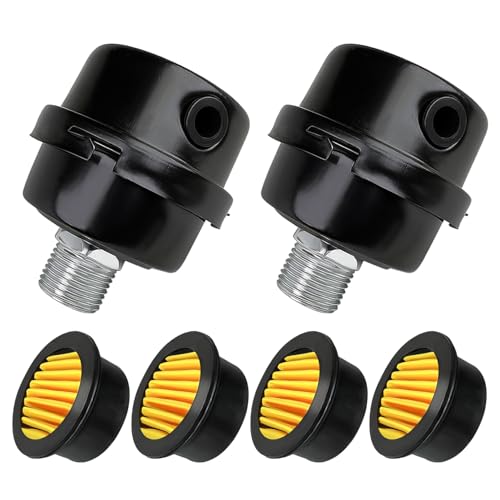
This two-piece set is the larger-thread intake choice among the filter-style options, with 1/2-inch male threads and two replacement filter elements. The metal shell is coated, and the sound-absorbing elements are intended to filter intake air. The maker says the filter blocks moisture, dust, and debris while reducing noise. It suits a compressor or other compatible equipment with a 1/2-inch intake port; it is not an exhaust muffler, and it will not fit a 1/4-inch port without a compatible adapter.
Bottom line: Choose this when the intake port requires a 1/2-inch male-thread filter silencer.
Tnuocke 1/4-Inch Intake Silencer, 2-Pack

This compact intake-filter option has a 1/4-inch thread and comes as a pair, distinguishing it from the 1/2-inch threaded set. Each unit measures 72.5 × 61 × 61 mm and weighs 94 grams. The coated metal shell houses a filter intended to block dust and moisture; the maker says it reduces compressor noise. It is intended for compatible compressor, generator, blower, boiler, or air-outlet equipment. Confirm the port’s thread and whether it is an intake before choosing, since this is not the 3/4-inch exhaust muffler.
Bottom line: Pick this for equipment with a matching 1/4-inch intake connection.
How to choose an air compressor silencer
Choose an air compressor silencer by mounting location first, then thread and pressure. Intake silencers sit before the compressor pump and combine a filter with a muffling function; exhaust mufflers attach to an outlet and are built for discharged air. These are different jobs, so a matching thread alone does not make one type interchangeable with the other. Identify the port on the compressor, then match its nominal thread designation; 1/4, 1/2, and 3/4 inch fittings are not interchangeable. For an exhaust muffler, also check the equipment’s operating pressure against the muffler’s rated limit. Never exceed that limit or modify a pressurized fitting to force a match.
Intake filter silencers versus exhaust mufflers
Intake filters and exhaust mufflers control noise at different points in the air path. An intake filter helps keep dust and moisture from entering the compressor, while an exhaust muffler reduces sound at a discharge port. Exhaust mufflers may have pressure ratings; the intake-filter models here are identified by thread and filter function rather than an exhaust pressure rating. Use this distinction to narrow the choice before comparing size:
| Need | Choose | Fit to verify |
|---|---|---|
| Filter and quiet incoming air | Intake filter silencer | Port thread and intake location |
| Muffle discharged air | Exhaust muffler | Port thread and pressure rating |
For an intake port under 1/2 inch, the 1/4-inch option may be the relevant candidate; for a 3/4-inch NPT exhaust port, consider the exhaust-specific model.
How to match compressor silencer threads
Match the fitting designation and gender before installation; a male-threaded silencer needs a compatible female port or suitable connection. Thread size is nominal, so do not identify a fitting from a quick outside-diameter measurement alone. Inspect the compressor manual or port markings to confirm the connection type and size. If the port type remains uncertain, verify the fitting before ordering rather than forcing threads together; cross-threading can damage a port and compromise a pressurized connection.
Safe installation and maintenance
Depressurize and disconnect the compressor before removing or installing a muffler, and keep hands clear of any hot exhaust components. Compressed air can cause serious injury, so never direct an air stream at skin or clothing. Intake filter elements need periodic inspection because dust buildup restricts airflow; shorten the inspection interval in dusty work areas and replace a clogged element rather than operating with a blocked inlet. Exhaust fittings should be checked for loosening or damage during routine compressor maintenance. Use only a muffler with a pressure rating that meets or exceeds the equipment’s operating pressure, and do not exceed a rating.
Frequently Asked Questions
Can an intake silencer replace an exhaust muffler?
No, an intake silencer filters incoming air while an exhaust muffler is made for discharged air. Match the part to the port location as well as its thread.
How do I know which thread size my compressor needs?
Check the compressor port marking or manual for the nominal size and thread form. The options here use 1/4-inch, 1/2-inch, and 3/4-inch NPT male connections, which are not interchangeable.
Does a compressor exhaust muffler need a pressure rating?
Yes, its rating must meet or exceed the compressor’s operating pressure. The exhaust muffler here is rated to 145 PSI, so do not use it above that pressure.
How often should an intake silencer filter be checked?
Inspect the filter element periodically and more often in dusty work areas, where buildup can restrict airflow sooner. Replace a clogged element rather than running the compressor with a blocked inlet.
Can compressed air be used to clean clothing?
No, compressed air should never be directed at skin or clothing because it can cause serious injury. Depressurize equipment before changing a silencer or filter.