
Best Camo Window Tint for Deer Blinds: 3 Options Compared

CoverTech HD Window Camo in Realtree Edge suits most deer blinds because its micro-perforated vinyl is designed for visibility from inside and measures 24 by 59 inches. Choose a different pattern or larger cut-to-fit sheet if your windows need another look or more coverage; a pop-up blind is a different solution, not window tint.
Camo window tint is patterned film applied to a blind’s glass or plexiglass, not a replacement for the window itself.
We earn a commission if you buy through links on this page. As an Amazon Associate I earn from qualifying purchases. Products are compared on manufacturer specifications, not hands-on testing.
- Best overall: CoverTech HD Realtree Edge – Micro-perforated outdoor vinyl in a 24-by-59-inch Realtree Edge panel.
- Best for bark pattern: CoverTech HD Olive Drab Bark – Same see-through micro-perforated vinyl in Olive Drab Bark.
- Best for larger coverage: RoundFunny Woodland Camo Film – Four woodland-pattern panels measuring 27 by 100 inches.
| Product | Best for | Panel size | Material | Pattern | Shop |
|---|---|---|---|---|---|
| CoverTech HD Realtree Edge | Realtree pattern | 24 × 59 in | Micro-perforated vinyl | Realtree Edge | Check Price on Amazon |
| CoverTech HD Olive Drab Bark | Bark pattern | 24 × 59 in | Micro-perforated vinyl | Olive Drab Bark | Check Price on Amazon |
| RoundFunny Woodland Camo Film | Large cut-to-fit | 27 × 100 in per panel | Self-adhesive PVC | Woodland camo | Check Price on Amazon |
Camo Window Tint for Deer Blinds
Compare each film by coverage, material, and pattern before measuring your blind window.
CoverTech HD Realtree Edge

The Realtree Edge version pairs a familiar woodland pattern with micro-perforated vinyl, distinguishing it from the four-panel cut-to-fit option. The 24-by-59-inch sheet is made for outdoor use and can be applied to glass or plexiglass; the maker says it provides visibility from inside and reduces movement detection and silhouette. It is intended for clear rather than tinted windows, so choose another approach if your blind glazing is already tinted. Measure the usable pane first and plan cuts around its frame so the sheet does not obstruct window operation.
Bottom line: Pick this if your clear window fits a 24-by-59-inch panel and you want Realtree Edge.
CoverTech HD Olive Drab Bark

The Olive Drab Bark pattern gives the same compact format as the Realtree Edge CoverTech sheet, but changes the exterior look. Its micro-perforated vinyl is made for outdoor use and applies to glass or plexiglass; the maker says it supports inside visibility while reducing movement detection and silhouette. The 24-by-59-inch size works best when a single window pane can be covered without seams. Because the maker advises against tinted windows, this is a poor match for glazing that already has a tint layer or for a buyer seeking blackout coverage.
Bottom line: Choose this for a bark-style pattern on a clear pane sized for one sheet.
RoundFunny Woodland Camo Film
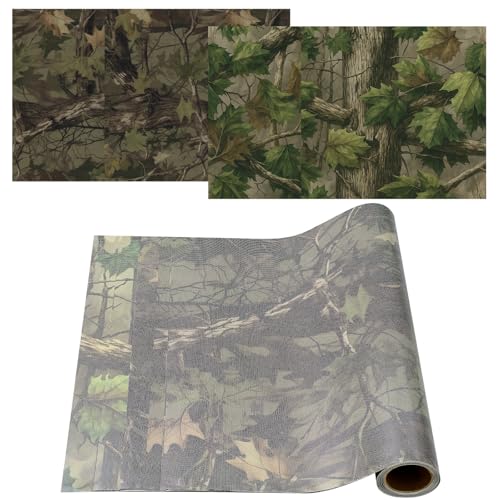
The RoundFunny set provides four long woodland-pattern PVC panels, offering more material to cut for multiple or larger blind windows than the two single-sheet CoverTech choices. Each panel is 27 by 100 inches, and the film is self-adhesive and intended to be cut to fit. The maker describes one-way vision, but that effect depends on lighting: a brighter side tends to reveal more through the film, so do not assume privacy works equally well at dawn, dusk, or when the blind is lit inside. It is not designed to replace curtains or block light like curtains.
Bottom line: Choose this if you need several long, cut-to-fit woodland panels.
How to choose deer blind window camo film
Match the film’s usable width and length to the flat pane, not the full frame. Micro-perforated window graphics use small holes to let light pass and preserve a view through the panel; larger holes generally make the image less opaque, while smaller holes can reduce visibility. One-way vision is not a permanent privacy guarantee: the brighter side is usually easier to see from, so interior light after dark can reverse the effect. For a one-piece installation, choose a panel that covers the pane with a little trimming margin; avoid seams across your main shooting view.
Measure each pane at its narrowest point and note handles or sliding tracks. If you hunt in a tinted window, verify film compatibility first because the CoverTech maker advises against tinted glass.
How to measure window film coverage
Measure the visible pane in inches, then compare it with the sheet’s width and length before cutting. A 24-by-59-inch panel covers 1,416 square inches before trimming; a 27-by-100-inch panel covers 2,700 square inches. Actual coverage is lower after shaping around corners, frame edges, and hardware. A simple rule: if either pane dimension exceeds the film dimension, one panel cannot cover it without a seam or a different sheet size.
| Window need | Film choice | Fit note |
|---|---|---|
| One pane up to 24 × 59 in | 24 × 59 in panel | Leave trimming margin |
| Longer or multiple panes | 27 × 100 in panels | Cut each pane separately |
| Already tinted glazing | Confirm compatibility | CoverTech advises against tinted windows |
Clean glass and dry it fully before applying adhesive film; grit trapped under a sheet can create visible bumps and interfere with adhesion.
How one-way camo film works in changing light
One-way vision relies on a brightness difference across a perforated or patterned surface, not a guaranteed one-direction mirror effect. In daylight, a bright exterior and dim interior tend to favor seeing out; after sunset, interior lights can make a person inside easier to see. Keep a small light off or shielded when concealment matters after dark, and check the view from outside under the light conditions you expect to hunt in.
Window films also change the appearance of the pane without making it a structural barrier. Do not treat camo film as protection from impacts, sharp edges, or weather leaks. Avoid applying film over a pane that slides or folds until you confirm the added layer will not catch on the frame.
Applying and maintaining blind window film
Start with an accurately measured, clean pane and cut gradually rather than trimming flush to the frame on the first pass. A clean plastic squeegee can help move air toward an edge without scratching the film; work from the center outward and keep dust away from the adhesive face. On a multi-panel set, test a small offcut first to confirm which side faces the glass and how the pattern appears from outside.
Inspect edges after transport and after wet or windy outings; lifted corners can collect dirt and peel further. Store unused sheets flat and protected from grit and creases, and replace a damaged panel if tears disrupt the view or leave exposed adhesive.
Frequently Asked Questions
Does camo window film work on tinted glass?
Check compatibility before applying film to tinted glazing. The CoverTech maker advises against tinted windows, and stacking films can reduce visibility or alter how the layers behave.
Can someone see into one-way film at night?
Yes, when the inside is brighter than the outside, one-way vision can reverse. Keep interior lights off or shielded when concealment matters after dark.
How much film do I need for a blind window?
Measure the visible pane in inches and compare both dimensions with the sheet. A 24-by-59-inch sheet cannot cover a pane wider than 24 inches without a seam or different material.
Can I cut hunting blind window film to size?
Yes, the RoundFunny PVC film is described as cut to fit. Measure each pane separately and trim slowly, since a short cut cannot be reversed.
Does camo window film block all light?
No, one-way and perforated films are designed to preserve some visibility rather than act like curtains. Choose an opaque covering instead if full light blocking is the goal.