
Best Celtic Sea Salt: 4 Options Compared by Use

For most cooks, Celtic Sea Salt Fine Ground, 1 lb is the best Celtic sea salt because its fine grind suits everyday cooking, baking, and finishing. Choose coarse crystals instead if you want salt for a grinder or a crunchy finish; a larger pack makes sense when you regularly use coarse salt.
Celtic sea salt is minimally refined sea salt, commonly sold in fine or coarse crystals. Grain size affects how it measures and dissolves, so choose by cooking use rather than mineral claims.
We earn a commission if you buy through links on this page. As an Amazon Associate I earn from qualifying purchases. Products are compared on manufacturer specifications, not hands-on testing.
- Best overall: Celtic Sea Salt Fine Ground, 1 lb – Fine grains work for everyday cooking, baking, and finishing.
- Best for grinders: Celtic Sea Salt Light Grey Coarse, 1 lb – Coarse whole crystals are sized for use in grinders.
- Best for a larger fine pack: Le Marinier Celtic Salt Fine Ground, 18 oz – This fine-ground option comes in an 18-ounce package.
- Best for frequent grinder use: Celtic Sea Salt Light Grey Coarse, 2-Pack – The two-pack provides 2 pounds of coarse crystals.
| Product | Best for | Grind | Package size | Pack count | Shop |
|---|---|---|---|---|---|
| Celtic Sea Salt Fine Ground, 1 lb | Everyday cooking | Fine | 1 lb | 1 | Check Price on Amazon |
| Celtic Sea Salt Light Grey Coarse, 1 lb | Salt grinders | Coarse | 1 lb | 1 | Check Price on Amazon |
| Le Marinier Celtic Salt Fine Ground, 18 oz | French sea salt | Fine | 1.1 lb | 1 | Check Price on Amazon |
| Celtic Sea Salt Light Grey Coarse, 2-Pack | Bulk coarse crystals | Coarse | 2 lb | 2 | Check Price on Amazon |
Celtic Sea Salt Options
Compare the grain size and package amount to match the salt to your cooking routine.
Celtic Sea Salt Fine Ground, 1 lb
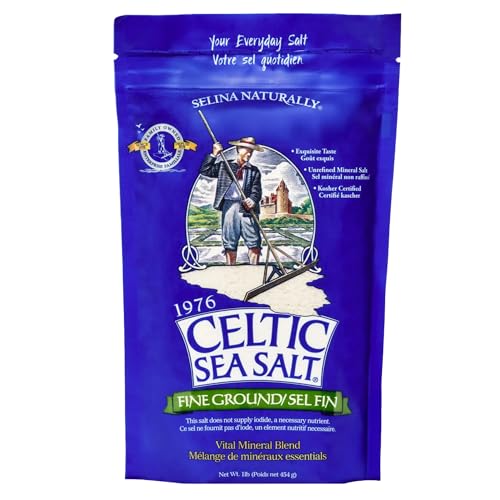
Fine grains make this option the most versatile for daily cooking: the maker describes it as suitable for baking, seasoning, and finishing. The 1-pound package is unrefined and free from additives, and the maker says it is third-party lab tested and GMP certified. Fine salt disperses and dissolves more readily than coarse crystals, which helps when mixing it evenly into doughs or sauces. Its limitation is texture: cooks seeking large crystals for a grinder or a crunchy finish should choose a coarse option instead.
Bottom line: Choose it for one fine-grain salt that can cover routine cooking and baking.
Celtic Sea Salt Light Grey Coarse, 1 lb

Whole coarse crystals set this 1-pound light-grey salt apart from the fine-ground choices and make it a fit for a grinder or a more pronounced finishing texture. The maker describes it as hand-harvested and lab tested, with no additives. Coarse grains take longer to dissolve than fine ones, so they are less convenient when a recipe needs salt distributed quickly through a batter or sauce. For baking or precise teaspoon-based recipes, fine-ground salt is usually easier to measure consistently.
Bottom line: Pick it when whole crystals and a coarse finish matter more than quick dissolving.
Le Marinier Celtic Salt Fine Ground, 18 oz
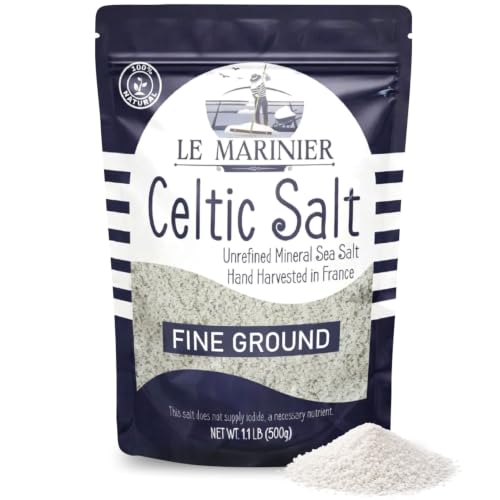
This French sea salt offers fine grains in an 18-ounce package, slightly more than the 1-pound fine-ground option. The maker says it is hand-harvested in French ocean marshes and unrefined, with no additives. Fine texture works well for seasoning and baking because the grains blend readily into ingredients. The maker also claims more than 82 minerals; that claim does not establish a nutritional or hydration benefit, so choose this salt for its origin and texture rather than as a supplement. It is not the best match for a coarse-crystal grinder.
Bottom line: Choose it for fine grains and a larger single package with a French origin.
Celtic Sea Salt Light Grey Coarse, 2-Pack

Two 1-pound packs distinguish this coarse light-grey option from the single-bag salts, providing 2 pounds in total for households that use coarse crystals regularly. The maker describes the crystals as unrefined and free from additives, with more than 70 trace minerals. Coarse crystals suit grinders and finishing better than quick-mixing recipes; dissolving them in a sauce can take longer than using fine salt. The larger combined quantity is less convenient if you rarely use coarse salt or want one compact package to store.
Bottom line: Pick the two-pack if coarse salt is a regular part of your cooking.
How to Choose Celtic Sea Salt by Grind
Choose fine-grain salt for baking and evenly seasoning mixtures; choose coarse crystals for grinders or a noticeable finish. Fine grains have more contact with food and dissolve faster, while coarse grains dissolve more slowly and can provide texture on the surface. Volume measurements are not interchangeable across grind sizes: a teaspoon of fine salt can contain more salt by weight than a teaspoon of coarse crystals because the smaller grains pack more closely. If a recipe gives a teaspoon amount, use the same grind it was written for or measure by weight when precision matters. A practical rule is to use fine salt for recipes that need uniform distribution and coarse salt when the crystal texture is part of the result.
How Celtic Sea Salt Differs From Table Salt
Celtic sea salt is typically sold as unrefined crystals, while ordinary table salt is refined into a consistent fine grain and commonly includes iodine and an anti-caking agent. Sea salt’s trace minerals do not make it a reliable source of nutrition; salt is primarily sodium chloride. Salt’s sodium content matters regardless of color or origin, and coarse-looking crystals are not a low-sodium substitute by default. For health-related sodium limits, compare nutrition labels and follow advice from a qualified clinician. For cooking, the practical distinction is texture, processing, and whether iodine is included—not a dependable difference in how much sodium a measured spoonful delivers.
How to Measure and Store Sea Salt
Measure salt by weight when a recipe needs repeatable results; crystal shape and grind change how much fits in a spoon. Keep salt in a dry, airtight container because moisture can cause crystals to clump, especially in less-refined sea salts that retain some moisture. Store it away from steam from pots and dishwashers, and use a dry spoon to prevent dampness entering the container. Coarse salt works in a grinder only if the grinder opening and mechanism accommodate its crystal size. If it jams, use a mill designed for larger crystals or keep the salt in a container for pinching and finishing rather than forcing it through.
Frequently Asked Questions
Does Celtic sea salt contain less sodium than table salt?
Celtic sea salt is still primarily sodium chloride, so its origin does not make it a low-sodium alternative. Crystal size changes the amount that fits in a teaspoon, which is why weight or label values are more useful for comparison.
Can fine Celtic sea salt be used for baking?
Yes, fine-ground salt mixes more evenly into dough and batter than coarse crystals. For a recipe that specifies a spoon measurement, use the same grind when possible because crystal size changes packing.
Can coarse Celtic sea salt go in a salt grinder?
Coarse crystals are commonly used in grinders, but the grinder must accept their size. If crystals jam the mechanism, choose a mill suited to larger grains rather than forcing them through.
How should Celtic sea salt be stored?
Keep sea salt in an airtight container in a cool, dry place to limit clumping. Use a dry spoon and store the container away from steam and splashes.
Is Celtic sea salt a meaningful source of minerals?
Salt’s trace minerals do not make it a dependable nutritional source; it is primarily sodium chloride. Choose it for culinary qualities, and account for sodium if you follow a dietary limit.