
Best Cooling Skull Cap: 4 Options for Heat and Helmets

MISSION Cooling Helmet Liner is the best cooling skull cap for people who can wet the fabric, because its maker says it cools when activated with water; mesh-only caps focus on airflow and sweat wicking instead.
Choose a mesh option if you want a dry liner without wetting it, or a multipack if you need several caps to rotate.
We earn a commission if you buy through links on this page. As an Amazon Associate I earn from qualifying purchases. Products are compared on manufacturer specifications, not hands-on testing.
- Best overall: MISSION Cooling Helmet Liner – Water activation gives it a distinct cooling method beyond the mesh ventilation and wicking found in the other options.
- Best for breathable mesh: QINGLONGLIN 3-Pack Mesh Skull Cap – Its 88% polyester and 12% spandex 3D mesh construction is designed for airflow and quick drying.
- Best for rotation: Haysandy 6-Pack Cooling Skull Cap – The six-cap pack suits buyers who want multiple liners to exchange and wash.
| Product | Best for | Cooling method | Fabric or feature | Pack size | Shop |
|---|---|---|---|---|---|
| MISSION Cooling Helmet Liner | Water-activated cooling | Water-activated | Ventilated mesh crown; UPF 50 | 1 cap | Check Price on Amazon |
| QINGLONGLIN 3-Pack Mesh Skull Cap | Breathable mesh | Moisture-wicking, quick-dry | 88% polyester, 12% spandex; 3D mesh | 3 caps | Check Price on Amazon |
| SUNMECI 2-Pack Camo Mesh Skull Cap | Camo helmet liner | Moisture-wicking, quick-dry | Breathable mesh | 2 caps | Check Price on Amazon |
| Haysandy 6-Pack Cooling Skull Cap | Six-cap rotation | Moisture-wicking | Polyester and spandex | 6 caps | Check Price on Amazon |
Best cooling skull caps
Compare how each cap manages heat, sweat and helmet use before choosing a style.
MISSION Cooling Helmet Liner

Unlike the dry-wearing mesh caps, this liner is made to be wetted for cooling. MISSION says it cools to 30 degrees below average body temperature in under 30 seconds after activation and stays cool for up to 2 hours; the maker’s sequence is wet, wring, and snap. Ventilated mesh at the crown promotes airflow, and the cap is intended for use under helmets and hard hats. Choose it if you can rewet it when needed. Its wet-activation method is less convenient when water is not available.
Bottom line: Pick this if you want a water-activated liner and can rewet it as needed.
QINGLONGLIN 3-Pack Mesh Skull Cap

QINGLONGLIN stands out for its fabric blend and three-cap pack. The 3D mesh fabric is 88% polyester and 12% spandex, with moisture-wicking and quick-dry construction intended to move sweat across the surface for evaporation. The one-size cap is described for use under hard hats and for activities such as cycling and running. It suits buyers who prefer a dry mesh liner rather than a water-activated cap. Its cooling approach relies on airflow and sweat evaporation, not wetting the fabric first.
Bottom line: Choose this if breathable mesh and a three-cap rotation are your priorities.
SUNMECI 2-Pack Camo Mesh Skull Cap

SUNMECI is the camouflage option among these mesh liners, supplied as a two-cap pack. Its breathable quick-dry fabric is designed to spread and evaporate moisture, while its stretch construction is described as lightweight and non-restrictive under a helmet. The one-size cap is aimed at cycling and other helmet uses. This makes it a fit for someone who wants a camo appearance and a dry-wearing liner. Unlike the MISSION option, its cooling features center on mesh and moisture management rather than water activation.
Bottom line: Pick this if you want a camo mesh liner in a two-cap pack.
Haysandy 6-Pack Cooling Skull Cap
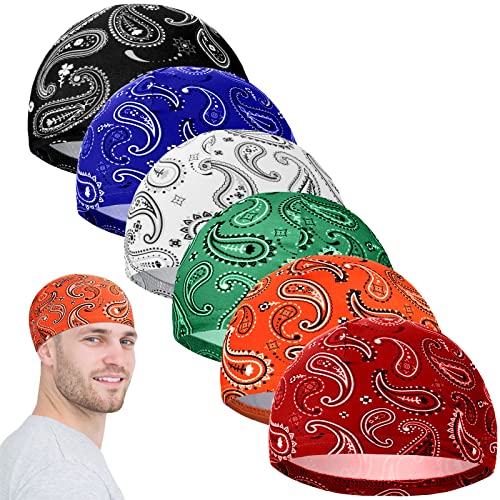
Haysandy provides the largest pack count here, with six caps intended for wearing, exchanging, washing, or sharing. The polyester-and-spandex fabric is described as breathable, elastic, and sweat-absorbent, and the caps are positioned for use under helmets and hard hats as well as running and cycling. Choose it if having several liners available matters more than a water-activated cooling method.
Bottom line: Choose this if you need six caps for frequent rotation or sharing.
How cooling skull caps manage heat
Cooling skull caps generally work through airflow, sweat evaporation, or water activation. A breathable mesh liner lets air move around the scalp, while moisture-wicking fabric spreads sweat over more fabric surface so it can evaporate; neither method guarantees a lower temperature in humid or still air. A water-activated liner adds moisture so evaporation can provide a cooling sensation, but it may need rewetting as it dries. Choose mesh for a dry-wearing liner and water activation when you can carry or access water. These mechanisms are not a replacement for shade, rest, or fluids in hot conditions. A cap can help manage sweat, but heat exhaustion symptoms such as dizziness, nausea, or unusual weakness call for stopping activity and cooling down.
Choosing a cap for helmets and hard hats
For helmet use, prioritize a close, smooth fit that does not bunch at the crown or alter how the helmet sits. A liner should not create pressure points or interfere with the helmet’s retention system; remove or adjust it if the helmet shifts or feels less secure. Mesh caps favor airflow, while a wet-activated liner may feel damp against the head and needs access to water. Match the cap to the actual use: hard hats and cycling helmets have different shapes, so confirm that the liner fits beneath your specific headwear before relying on it. Do not add bulky folds to fill a loose helmet; the helmet should fit correctly on its own.
Mesh, wicking and water-activated caps compared
Mesh and wicking caps suit buyers seeking a dry liner for recurring sweat, while water-activated caps are aimed at cooling through evaporation after wetting. Humidity matters: sweat and added water evaporate more slowly in humid air, so cooling can feel less effective and damp fabric can take longer to dry. Use this comparison to select by mechanism rather than assuming every cap cools in the same way.
| Need | Type to consider | Trade-off |
|---|---|---|
| Dry helmet liner | Breathable mesh | Cooling relies on airflow and evaporation |
| Cooling after wetting | Water-activated | Needs water and may need rewetting |
| Several caps to rotate | Multipack | Pack size does not determine cooling method |
For extended activity in heat, pick the method you can maintain: a mesh cap can be worn dry, while an activated cap needs water to refresh its cooling effect.
Washing and rotating skull caps
Wash a sweat-soaked skull cap after use and let it dry fully before storing it; trapped moisture can leave fabric damp and unpleasant. Follow the garment care label for wash temperature and drying method because stretch fibers can lose shape under excess heat. Multipacks make it easier to rotate a clean cap while another dries, but the fabric still needs regular laundering after workouts or hot shifts. For a water-activated style, rinse away sweat and let the cap dry between sessions rather than leaving it wet in a closed bag. Keep a spare dry liner available if you need to change during a long day.
Frequently Asked Questions
Do cooling skull caps work better when wet?
Water-activated caps need wetting to use evaporative cooling, while mesh and wicking caps can be worn dry. In humid air, water evaporates more slowly, so a wet cap may feel less cooling and take longer to dry.
Can a skull cap change how a helmet fits?
Yes, a thick or bunched liner can affect helmet position and comfort. Use a smooth, close-fitting cap and check that the helmet remains secure without shifting or pressure points.
How often should I wash a sweaty skull cap?
Wash a cap after a sweat-heavy workout or shift, then dry it fully before storing it. Rotating two or more caps gives each one time to dry between uses.
Does moisture-wicking fabric keep you cool in humidity?
Moisture-wicking fabric spreads sweat for evaporation, but high humidity slows evaporation. In humid conditions, airflow, breaks, and access to water matter alongside the cap.
Can I wear a cooling cap under a hard hat?
A thin, smooth liner can be worn under a hard hat if it does not interfere with the hard hat’s fit or suspension. Check the fit with the cap on and do not use folds or padding to compensate for a loose hard hat.