
Coleman Mini Bike Torque Converter: 3 Kits Compared

Choose another kit only after matching your engine shaft, chain, and mounting geometry; CT200U fit claims do not establish compatibility with every Coleman mini bike.
A torque converter is a belt-driven variable-ratio transmission that changes gearing as engine speed rises. Confirm the crankshaft diameter and chain size before ordering.
We earn a commission if you buy through links on this page. As an Amazon Associate I earn from qualifying purchases. Products are compared on manufacturer specifications, not hands-on testing.
- Best overall: Predator 212 30 Series Converter – Names the CT200U and specifies a 3/4-inch straight crankshaft.
- Best for spare belts: 212CC 30 Series Converter, 3/4 in – Includes three drive belts and offers both 10T and 12T sprockets.
- Best for adjustable engagement: GYMMEDS 30 Series Converter, 3/4 in – Gives an approximate 2,350 RPM engagement range and spring-adjustment range.
| Product | Best for | Chain sprockets | Belts included | Shop |
|---|---|---|---|---|
| Predator 212 30 Series Converter | CT200U compatibility | 10T #40/41/420; 12T #35 | 1 | Check Price on Amazon |
| 212CC 30 Series Converter, 3/4 in | Extra drive belts | 10T #40/41; 12T #35 | 3 | Check Price on Amazon |
| GYMMEDS 30 Series Converter, 3/4 in | Engagement adjustment | 10T #40/41/420; 12T #35 | — | Check Price on Amazon |
Coleman Mini Bike Torque Converters
Match the engine shaft, chain pitch, and converter mounting geometry before choosing a kit.
Predator 212 30 Series Converter
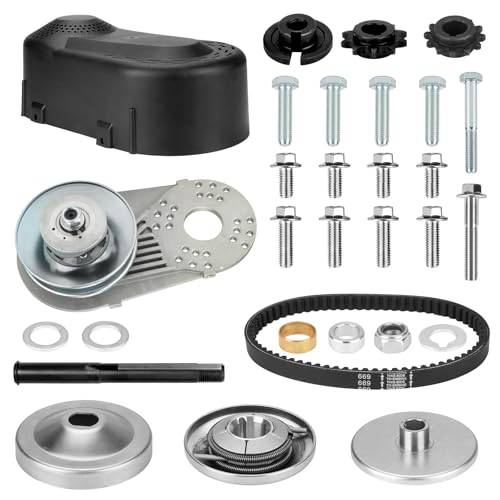
For a Coleman CT200U owner seeking an explicitly named fit, this kit identifies the CT200U, CT200U EX, and BT200X among compatible models. It is for 3/4-inch straight crankshafts and includes sprockets for #40/41/420 or #35 chain. The installation guidance calls for a 6 15/16- to 7-inch center distance and three to five no-load break-in cycles. The plastic cover may need a cutout for installation. The fit claim does not cover 5/8-inch or 1-inch shafts, so measure the crankshaft before choosing it.
Bottom line: Pick this if your Coleman is a model and its engine has a 3/4-inch straight shaft.
212CC 30 Series Converter, 3/4 in

Three included drive belts set this kit apart for riders who want spares on hand. The kit is described as a 3/4-inch 30 Series replacement and names the Coleman CT200U among several compatible mini bikes, along with the BT200X and CT200U EX. It offers a 10-tooth sprocket for #40/41 chain and a 12-tooth sprocket for #35 chain. The compatibility list is broad rather than specific to every Coleman model, and the maker says it is a replacement rather than a Comet-made part. Confirm the chain and mounting fit for your bike.
Bottom line: Choose this if the three included belts matter and your bike matches the specified shaft and chain.
GYMMEDS 30 Series Converter, 3/4 in

Adjustable engagement is the distinctive point of this kit: the maker gives an approximate 2,350 RPM engagement and says spring changes can adjust it from 1,200 to 3,100 RPM. This 3/4-inch 30 Series kit names the CT200U and BT200X among its suggested applications and includes 10-tooth and 12-tooth sprocket options for different chain sizes. The springs needed for adjustment are not included, so the adjustment range is not an out-of-box setting. Check your engine shaft and chain size, and determine whether you need to source springs separately.
Bottom line: Pick this if you want an adjustable engagement range and can source the required springs.
How to choose a Coleman mini bike torque converter
Start with shaft diameter: these kits specify a 3/4-inch bore, so they are not a fit for a 5/8-inch or 1-inch crankshaft. A torque converter uses a driver and driven pulley connected by a belt; as engine speed changes, the belt rides at different pulley positions to alter the drive ratio. Next, match the output sprocket to your chain: #35 and #40/41/420 are different chain sizes, not interchangeable labels. The kit that names your Coleman model offers a useful starting point, but model fit alone does not verify engine swaps or mounting changes. Measure the shaft and identify the installed chain before selecting a kit.
Check converter spacing and belt alignment
Mounting geometry matters because the belt must run straight between the driver and driven pulley. One kit gives a center distance of 6 15/16 to 7 inches, measured between the pulley centers; compare your frame and engine setup with that range before installation. Misalignment can make a belt track poorly or wear unevenly. Belt direction can matter too: one kit’s installation warning says the arrow on its belt must face down. Covers may also need clearance or a cutout, so inspect the intended mounting area before fitting parts. Keep hands, loose clothing, and tools away from the belt and pulleys whenever the engine is running.
Match the chain sprocket to your mini bike
Choose the converter sprocket that matches the chain already on the bike rather than assuming a tooth count identifies chain compatibility. The kits here pair 10 teeth with #40/41 or #40/41/420 chain and 12 teeth with #35 chain. Chain size is a separate fit check from shaft bore and mounting distance. A correctly sized chain still needs suitable alignment and tension; excessive slack can derail, while an overly tight chain loads the sprockets and bearings. Use the bike and engine specifications to verify chain routing and adjustment after installation. If the mini bike has been modified, confirm its current chain size rather than relying only on its model name.
Install and break in a torque converter safely
Install the kit with the engine off and secured against accidental starting, and keep fingers clear of the pulleys and belt. One kit calls for three to five no-load break-in cycles before full throttle, with the belt arrow facing down; those instructions are specific to that kit. Secure fasteners and recheck them after installation because rotating parts can cause serious injury if components loosen. A cover helps shield the moving drive, but do not operate the bike with exposed pulleys or a belt that rubs the frame. After the first low-speed check, stop and inspect belt tracking, chain alignment, and fastener security before riding normally.
Frequently Asked Questions
How do I measure a mini bike engine shaft?
Measure the straight crankshaft diameter with calipers, not the exposed shaft length. These kits require a 3/4-inch shaft, so a 5/8-inch or 1-inch shaft will not match.
Can I use a #35 chain with a 10-tooth sprocket?
The sprocket pairings in these kits put #35 chain on the 12-tooth sprocket, while the 10-tooth sprocket matches #40/41 or #40/41/420 chain. Confirm the chain marking or measure its pitch before choosing.
What center distance does a 30 Series converter need?
One kit specifies 6 15/16 to 7 inches between pulley centers. Measure with the engine and driven pulley in their intended positions, because a different mounting layout can affect belt alignment.
Should a new torque converter belt be broken in?
One kit calls for three to five no-load cycles before full throttle. Keep clear of moving parts during break-in and stop if the belt slips, rubs, or tracks off-center.
Can I adjust torque converter engagement speed?
The GYMMEDS kit gives an approximate 2,350 RPM engagement and says spring changes can adjust it from 1,200 to 3,100 RPM. The springs for that adjustment are not included.