
Meat-Cutting Saws: 4 Formats Compared by Use

For most home butchering, Weston 16-Inch Butcher Saw is the straightforward choice because it is a manual butcher saw with a 16-inch blade; choose an electric option instead when powered cutting or repeated thickness control matters more.
A meat saw cuts through bone as well as meat, but these options differ sharply in setup: Caliastro 9-Inch Reciprocating Blades is a blade set for a reciprocating saw, while VEVOR 1500W Countertop Bandsaw is a countertop bandsaw and 950W Battery-Powered Handheld Saw is handheld and battery-powered.
We earn a commission if you buy through links on this page. As an Amazon Associate I earn from qualifying purchases. Products are compared on manufacturer specifications, not hands-on testing.
- Best overall: Weston 16-Inch Butcher Saw – A dedicated manual butcher saw with a 16-inch serrated stainless steel blade and quick-release handle.
- Best for countertop batches: VEVOR 1500W Countertop Bandsaw – A bandsaw with a 0–4.3-inch cutting range, adjustable guide and 12.4-by-18.1-inch workbench.
- Best for existing reciprocating saws: Caliastro 9-Inch Reciprocating Blades – The five 9-inch food-grade stainless steel blades fit major reciprocating saw brands.
- Best for cordless use: 950W Battery-Powered Handheld Saw – The handheld saw includes a 3,900mAh battery and six blades.
| Product | Best for | Format | Cutting size or range | Power or included blades | Shop |
|---|---|---|---|---|---|
| Weston 16-Inch Butcher Saw | Manual butchering | Manual hand saw | 16-inch blade | 1 blade | Check Price on Amazon |
| VEVOR 1500W Countertop Bandsaw | Countertop batch cutting | Countertop bandsaw | 0–4.3 inches | 1500W; 7 extra blades | Check Price on Amazon |
| 950W Battery-Powered Handheld Saw | Cordless hand cutting | Handheld electric saw | — | 950W; 3,900mAh battery; 6 blades | Check Price on Amazon |
| Caliastro 9-Inch Reciprocating Blades | Existing reciprocating saws | Reciprocating saw blades | 9-inch blades | 5 blades | Check Price on Amazon |
Saws for Cutting Meat
Choose a format that matches your work surface, power source and the size of cuts you need to make.
Weston 16-Inch Butcher Saw
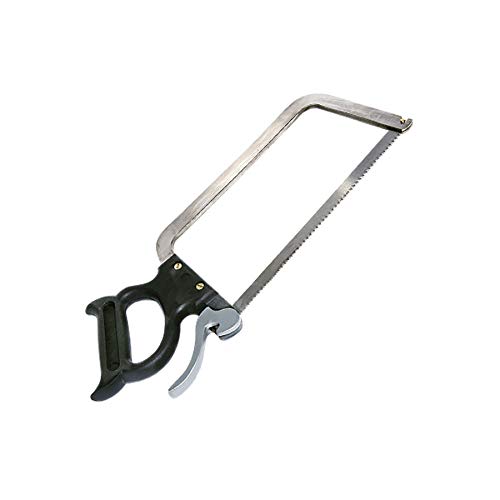
Unlike the powered options, this is a dedicated manual butcher saw with a 16-inch stainless steel serrated blade and a quick-release handle. It is intended for breaking down large cuts from a farm or field into smaller portions, including cuts that pass through muscle, sinew and bone. The ergonomic handle and trigger-lock tension mechanism suit buyers who prefer a manually operated tool. Choose another format if you need adjustable slice thickness or powered cutting; this saw requires hand strokes.
Bottom line: Pick this for manual breakdown of large cuts without a motor.
VEVOR 1500W Countertop Bandsaw
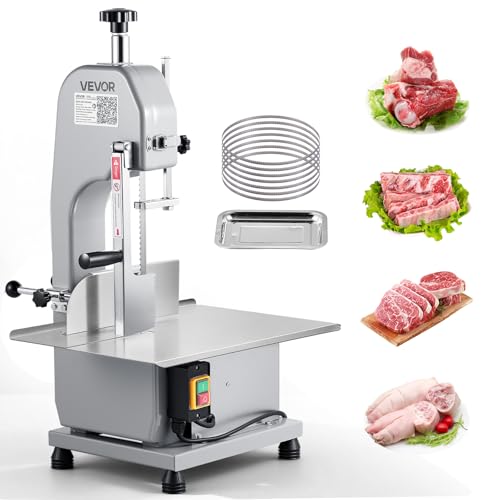
The countertop bandsaw is the only option here with a workbench and adjustable guide for controlling cut thickness, from 0 to 4.3 inches. Its 1,500W motor, 12.4-by-18.1-inch workbench and seven extra blades suit a fixed-workspace setup for frozen meat, bones and sausages. The maker says it cuts continuously with a gentle push. Its limitation is important: it is not for boneless fresh meat. At 62.5 pounds, it is also a substantial machine to position and store.
Bottom line: Choose this for thickness-guided cuts in frozen meat at a dedicated workspace.
950W Battery-Powered Handheld Saw

This handheld electric saw differs from the countertop machine by pairing a 950W brushless motor with a 3,900mAh battery, rather than relying on a workbench setup. It comes with six blades and a toolbox, and the maker says it is intended for frozen meat, bone and fish in home, farm or commercial butchering. The built-in LED is aimed at improving visibility in low light. The fields do not give a cutting range, so choose another option if you need a maximum thickness to plan cuts.
Bottom line: Pick this when a handheld, battery-powered meat saw suits the work area.
Caliastro 9-Inch Reciprocating Blades

These are replacement-style blades, not a standalone saw: the set contains five 9-inch stainless steel blades for a compatible reciprocating saw. The maker says the food-grade blade design is intended for frozen meat, fish and bone, and that the blades work with major reciprocating saw brands. This approach may suit someone who already has a compatible tool and wants dedicated meat-cutting blades.
Bottom line: Choose these only if you already have a compatible reciprocating saw.
How to Choose a Meat-Cutting Saw
Choose by cut volume and setup: a manual saw requires no motor, while powered saws reduce hand effort and a bandsaw adds a guided work surface. A useful rule is to favor a countertop bandsaw when repeatable slice thickness matters and its 0–4.3-inch range covers your planned cuts; choose a hand saw when you need a portable, self-contained tool. A reciprocating blade set is only useful with a compatible saw, so verify the connection before purchase. Meat saws can throw bone fragments, so keep hands clear of the blade path and use eye protection. Keep raw meat cold during processing, and clean food-contact surfaces and blades promptly after use.
Manual Saws, Bandsaws and Reciprocating Blades
Manual butcher saws, countertop bandsaws and reciprocating blades solve different setup problems rather than being interchangeable tools. A hand saw uses a framed serrated blade and requires repeated strokes; a bandsaw runs a continuous blade through a fixed work area; a reciprocating saw moves a short blade back and forth. For a quick choice, use this format guide before comparing motor power or included blades.
| Format | Good fit | Check before choosing |
|---|---|---|
| Manual butcher saw | Occasional large-cut breakdown | Blade length and comfortable grip |
| Countertop bandsaw | Guided, repeated thickness cuts | Workspace and cutting range |
| Reciprocating blades | Owners of compatible power saws | Blade connection compatibility |
Meat Saw Safety and Cleanup
Bone cutting calls for controlled feeding and a clear blade path; do not force a powered saw through a cut. Keep fingers away from the cutting line, stabilize the work, and wear eye protection because bone chips can scatter. Food-contact tools should be washed and sanitized after raw meat contact, then dried thoroughly to limit corrosion and contamination. For fresh meat, keep the work cold and return portions to refrigeration promptly; USDA guidance is to keep perishable food at 40°F or below. A bandsaw’s openable body may aid cleaning, but any blade or interior still needs careful handling during cleanup.
Common Meat-Saw Buying Mistakes
The most common mismatch is buying blades when a complete saw is needed: a reciprocating blade set depends on a separately owned compatible tool. Another mistake is choosing a countertop machine without space to place and clean it; the bandsaw here weighs 62.5 pounds. Frozen meat and fresh boneless meat are not equivalent workloads: the countertop model’s maker specifically excludes boneless fresh meat. Plan around your actual material, work surface and required cut thickness, then verify compatibility or range where relevant. Never use a meat-cutting saw for food until its blade and food-contact surfaces have been cleaned after prior use.
Frequently Asked Questions
Can a reciprocating saw cut frozen meat?
A reciprocating saw can be paired with blades designed for frozen meat and bone, but the blade must fit the saw’s connection. Keep the work stable and protect your eyes from bone fragments.
What is the difference between a bandsaw and a butcher saw?
A bandsaw uses a continuous powered blade and can guide cuts on a worktable, while a manual butcher saw cuts with hand-driven strokes. A countertop setup is useful when repeatable thickness matters and the machine’s cutting range covers the planned cut.
Can meat saws cut boneless fresh meat?
The countertop bandsaw described here is specifically marked by its maker as not for boneless fresh meat. Match the tool to the intended food and keep raw meat at 40°F or below while preparing it.
How should I clean a saw after cutting meat?
Wash and sanitize food-contact parts after raw meat contact, then dry them thoroughly. Disconnect or safely secure powered equipment before handling its blade during cleanup.
How thick can a countertop meat bandsaw cut?
The countertop bandsaw in this comparison has an adjustable 0–4.3-inch cutting range. Check that the maximum thickness covers the largest cut you plan to process.