
Best Detail Spray for Ceramic Coated Cars: 4 Picks

Griot’s Garage Ceramic Speed Shine 22 oz suits most ceramic-coated cars because it is intended for coating maintenance and can be misted onto a wet vehicle before wiping dry. Choose SHINE ARMOR Fortify Quick Coat 16 oz instead for light dust between washes, or TEC582 Ceramic Detail Spray, 1 Gallon if you want a gallon-size detail spray.
A ceramic detail spray is a maintenance product for touch-ups or drying, not a substitute for washing away heavy grit; avoid wiping a dirty panel, which can scratch the finish.
We earn a commission if you buy through links on this page. As an Amazon Associate I earn from qualifying purchases. Products are compared on manufacturer specifications, not hands-on testing.
- Best overall: Griot’s Garage Ceramic Speed Shine 22 oz – Its maker says it is for maintaining ceramic coatings, and its wet-vehicle application can fit a drying routine.
- Best for light dust: SHINE ARMOR Fortify Quick Coat 16 oz – It combines light cleaning, shine, and water-repellent protection for light dust and fingerprints between washes.
- Best for gallon size: TEC582 Ceramic Detail Spray, 1 Gallon – The gallon format is the largest size among these picks.
- Best for broad surface use: Chemical Guys HydroSpeed 16 oz – Its maker identifies paint, glass, and wheels as intended surfaces.
| Product | Best for | Size | Primary use | Application | Shop |
|---|---|---|---|---|---|
| Griot’s Garage Ceramic Speed Shine 22 oz | Coating maintenance | 22 fl oz | Coating maintenance | Mist on wet vehicle | Check Price on Amazon |
| SHINE ARMOR Fortify Quick Coat 16 oz | Light dust touch-ups | 16 fl oz | Light cleaning and protection | Damp, then dry towels | Check Price on Amazon |
| Chemical Guys HydroSpeed 16 oz | Multi-surface touch-ups | 16 fl oz | Ceramic coating booster | Spray and wipe | Check Price on Amazon |
| TEC582 Ceramic Detail Spray, 1 Gallon | Larger supply | 1 gal | Exterior detail spray | Light towel wipe | Check Price on Amazon |
Ceramic detail sprays for coated cars
Match the spray to the condition of the vehicle and the way you plan to apply it.
Griot’s Garage Ceramic Speed Shine 22 oz

For coating maintenance, this is the only option here whose maker specifically describes extending the life of ceramic coatings. The 22-ounce spray uses silane polymer technology and SiO2, and the maker says it creates a slick, glossy, hydrophobic finish. Its wet-vehicle application can also fit a drying routine: mist the surface and wipe dry. Choose it if you want a maintenance spray that can serve that role. Its directions are less suited to dry, light-dust touch-ups than a product explicitly presented for that purpose; wash away grit first.
Bottom line: Pick this for coating maintenance and wet-vehicle drying.
SHINE ARMOR Fortify Quick Coat 16 oz

For light dust and fingerprints between washes, this is the clearest match because its maker frames it as a waterless wash, shine, and protection spray for those conditions. Apply lightly in small sections, wipe with a clean damp microfiber towel, then buff with a separate clean, dry towel; change towel faces as they collect dirt. The maker says it adds a glossy, water-repellent finish. It is not the right choice for mud or heavy grit, which should be washed off before detailing to reduce scratch risk.
Bottom line: Pick this for light dust between proper washes.
Chemical Guys HydroSpeed 16 oz
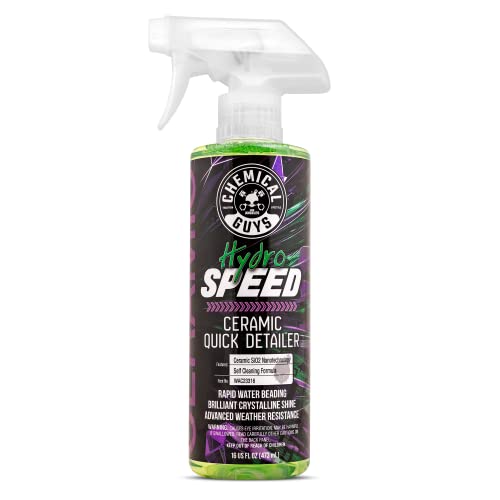
For a ceramic topper that can be used beyond paint, this spray is identified for paint, glass, and wheels. Its maker says ceramic polymers bond to surfaces and provide gloss, slickness, and water beading, and positions it as a booster for existing coatings, waxes, and sealants. That makes it a practical fit when you want one product for several exterior surfaces. The specifications do not establish a specific towel sequence, so use a clean, soft microfiber and follow the bottle directions for application.
Bottom line: Pick this when you want a ceramic booster for multiple exterior surfaces.
TEC582 Ceramic Detail Spray, 1 Gallon

The gallon container sets this apart for buyers who want more product on hand than the smaller sprays provide. TEC582 is described for exterior surfaces including glass, plastic trim, chrome, and wheels, and the maker says it delivers gloss, slickness, and protection. Its technique is to use one microfiber towel to lightly wipe the product into the finish. This format suits regular exterior upkeep, but the specifications do not give a measured durability interval; choose another option if you need a defined maintenance schedule.
Bottom line: Pick this if gallon-size quantity matters more than a compact bottle.
How to choose a detail spray for a ceramic coating
Choose by the surface condition and job: light-dust products are for touch-ups, while wet-vehicle sprays can fit drying and coating maintenance. A detail spray is not a wash; rinse or wash off mud, road film, and grit before using a towel. Dragging debris across paint can leave fine scratches even when the coating is intact. For routine wiping, use a clean, soft microfiber towel and fold it into quarters so you can turn to a clean face as it picks up soil. Work one panel at a time in shade on a cool surface; heat and direct sun can make a spray flash before it is evenly wiped. If the vehicle is visibly gritty, wash first rather than trying to save a step.
How to use a ceramic detail spray without scratching paint
Use the least-aggressive process that matches the dirt: wash a dirty vehicle, and reserve a light wipe for dust or fingerprints. Automotive microfiber towels commonly range around 300 to 500 GSM; GSM is fabric weight, not a guarantee of softness or paint safety. A plush, clean towel and frequent face changes help keep collected particles from rubbing against the finish. Spray a small section at a time and avoid letting product dry on hot paint. For a waterless-style touch-up, follow the product’s specified damp-then-dry towel sequence when provided. Do not use the same towel face for wheels and paint, since brake dust and road grit can mar clear coat.
Detail spray, drying aid, and coating topper differences
These labels describe overlapping jobs, but they do not mean every spray works the same way. A quick detail spray is generally for light surface contamination; a drying aid is applied to a wet vehicle to help the wipe-down; a topper is intended to refresh or supplement an existing protective layer. Read the application method before choosing. A spray that says to wipe on dry paint may not be the best fit for someone who wants a wet-panel drying step. Ceramic sprays also do not replace the underlying coating’s care routine or correct paint defects. For a practical choice, use a wet-vehicle product when the car is already washed and wet; use a light-cleaning product only when contamination is minimal.
| Vehicle condition or task | Suitable product type | Decision rule |
|---|---|---|
| Heavy dirt, mud, or grit | Car wash first | Do not towel-wipe visible grit |
| Light dust or fingerprints | Light-cleaning detail spray | Use only on lightly soiled panels |
| Washed, wet vehicle | Drying aid or wet-panel spray | Follow the wet-application directions |
| Maintaining existing protection | Coating topper | Check coating-maker compatibility |
Microfiber and surface care for coated cars
Keep paint towels separate from wheel towels, and wash microfiber without fabric softener; residue can reduce absorbency and leave streaks. Inspect towels for trapped grit before each use, because one particle can cause a visible mark. Most ceramic coatings still need ordinary washing: a spray topper is an optional maintenance step, not a replacement for removing road grime. Avoid applying any product to hot panels or in direct sun, where fast drying can make buffing harder. When trying a new spray on a coating, test a small, inconspicuous area first and check that the coating maker allows toppers; incompatible residue can affect water behavior or appearance.
Frequently Asked Questions
Can detail spray remove heavy dirt from ceramic-coated paint?
No; detail sprays are not a safe substitute for washing away mud, road film, or grit. Wash first whenever a panel feels gritty or has visible soil, since wiping particles across paint can scratch it.
How often should I use a ceramic detail spray?
There is no single interval that fits every spray or coating; use it when the vehicle needs the product’s specific job, such as a light-dust touch-up or wet-vehicle drying. Reapplication and coating compatibility depend on the coating and the spray, so verify compatibility before making it part of a regular routine.
Can I use ceramic detail spray on glass and wheels?
Some sprays are identified for surfaces beyond paint, but surface coverage differs by product. Check the intended-surface directions before applying to glass, trim, chrome, or wheels, and keep wheel towels separate from paint towels.
Should I use detail spray in direct sunlight?
No; work in shade on a cool surface to reduce the chance that the product dries before you can wipe it. Apply one small section at a time and buff promptly according to the spray’s directions.
Does a ceramic detail spray replace a coating?
No; a detail spray is for touch-up, drying, or supplemental maintenance, while a coating is the underlying protective layer. Use a topper only if it is compatible with the installed coating.