
Best Enclosed Trailer Trim Molding: 4 Options Compared

For most enclosed trailer owners seeking edge protection, Factory RV Enclosed Trailer Rub Rail is the closest match because it is a 92-inch aluminum rub rail designed for trailer edges. The other options are flexible, 1-inch RV trim inserts meant to cover screw channels, so choose one of those only if your trailer has a compatible insert channel.
Rub rail trim protects an exposed edge; an insert fills a narrow channel over fasteners. Measure the profile already on your trailer before choosing between them.
We earn a commission if you buy through links on this page. As an Amazon Associate I earn from qualifying purchases. Products are compared on manufacturer specifications, not hands-on testing.
- Best overall: Factory RV Enclosed Trailer Rub Rail – Its 92-inch aluminum rub rail is specifically described for enclosed trailer edge protection.
- Best for flexible TPE insert: 1-Inch TPE RV Trim Insert, 100 ft – The 1-inch TPE insert is described as softer and more flexible than vinyl.
- Best for UV-resistant insert: LATCH.IT 1-Inch Vinyl Trim Insert, 100 ft – Its 1-inch vinyl insert has a UV-protective coating and a 100-foot roll.
| Product | Best for | Trim type | Width | Length | Shop |
|---|---|---|---|---|---|
| Factory RV Enclosed Trailer Rub Rail | Trailer edge protection | Aluminum rub rail | 2.75 in | 92 in | Check Price on Amazon |
| 1-Inch TPE RV Trim Insert, 100 ft | Flexible TPE insert | Trim insert | 1 in | 100 ft | Check Price on Amazon |
| LATCH.IT 1-Inch Vinyl Trim Insert, 100 ft | UV-coated insert | Trim insert | 1 in | 100 ft | Check Price on Amazon |
| 1-Inch Vinyl Trim Insert, 120 ft | Long vinyl coverage | Trim insert | 1 in | 120 ft | Check Price on Amazon |
Enclosed Trailer Trim Molding Options
Match the trim profile to the job: edge protection and screw-channel coverage are different applications.
Factory RV Enclosed Trailer Rub Rail
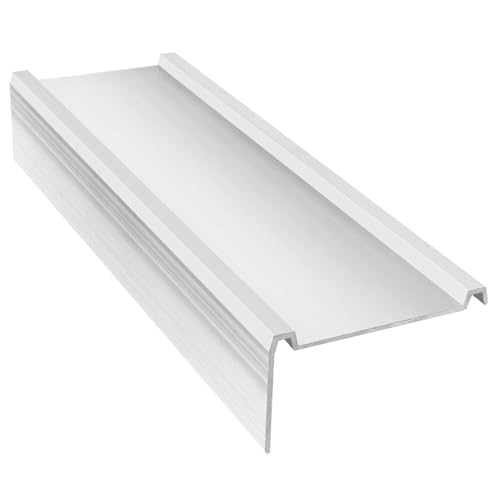
Unlike the flexible inserts below, this aluminum rub rail is designed to protect and seal an enclosed trailer’s lower edge. The 92-inch piece has a 2.75-inch width and a mill finish that can be painted. Its described purpose includes shielding the edge from water, road grime, and impact, making it the relevant choice when replacing a comparable rub rail rather than covering a narrow screw channel. The limitation is its fixed 92-inch length: measure each section and plan seams before selecting it for a longer run.
Bottom line: Choose this when your enclosed trailer needs a comparable lower-edge rub rail.
1-Inch TPE RV Trim Insert, 100 ft

This insert stands apart from the vinyl rolls by using TPE, which the maker describes as softer and more flexible than vinyl. The black, 1-inch-wide roll is 100 feet long and can be cut to fit a compatible trim channel on a camper or travel trailer. It is a screw-cover insert, not a broad rub rail for a trailer edge. Check the existing channel width and shape before ordering; a nominal 1-inch width alone does not establish that the profile will seat properly.
Bottom line: Choose this for a compatible channel when flexibility and TPE are priorities.
LATCH.IT 1-Inch Vinyl Trim Insert, 100 ft

This 100-foot vinyl insert distinguishes itself with a UV-protective coating, while keeping the 1-inch width shared by the other insert rolls. It is intended to replace old exterior trim insert on RVs, campers, and travel trailers, and the maker says it bends around corners and can be cut to length. It will not work on doors, windows, or vents, and it is not a substitute for a wide rub rail. Confirm the channel dimensions and profile, especially where the roll turns around corners.
Bottom line: Choose this for a compatible 1-inch channel when UV-coated vinyl suits the job.
1-Inch Vinyl Trim Insert, 120 ft

This vinyl insert offers the longest roll among the screw-cover options here, at 120 feet, while retaining a 1-inch width. It is intended for exterior RV, camper, and trailer trim channels and can cover longer runs with fewer roll changes than the 100-foot choices. It remains a flexible insert rather than a rigid edge rail, so it will not replace the aluminum rub rail when the exposed trailer edge needs protection. Match the profile and width of the existing channel before planning a continuous run.
Bottom line: Choose this when a compatible 1-inch insert channel needs up to 120 feet of coverage.
How to Choose Enclosed Trailer Trim Molding
Choose by profile first: a rub rail covers and protects an exposed edge, while an insert covers fasteners inside a narrow channel. Measure the face width and channel opening of the existing part, then compare those dimensions with the replacement; matching only the nominal width can still leave a loose or proud fit. For a straight run, measure the full path and add a little extra for cuts and corner turns. A 92-inch rigid rail is suited to a section about that length; flexible rolls can be cut to shorter sections. If the trailer has a broad edge rail, do not substitute a 1-inch insert just because it is called trim molding.
Rub Rail and Screw-Cover Inserts Compared
Rub rails and screw-cover inserts solve different problems, so identify the part before shopping. A rub rail is a wider trim piece attached along an exposed edge; an insert is a flexible strip seated in a matching channel to cover screws. Aluminum rails are rigid and typically installed in sections, while vinyl or TPE inserts follow an existing channel. Use this quick match-up to narrow the type before checking fit:
| Need | Trim type | Measure first |
|---|---|---|
| Protect a broad lower edge | Rub rail | Face width and section length |
| Cover fasteners in a narrow groove | Insert strip | Channel width and profile |
| Follow curved channel corners | Flexible insert | Channel fit and corner path |
A wrong profile can fail to seat even when the width seems close, so use the old part or channel as the comparison point.
Measuring Trim for a Trailer
Measure the channel or rail where the trim actually sits, not the overall trailer side. For an insert, check both the visible strip width and the hidden stem or channel shape; for a rub rail, compare the face width and mounting footprint. Mark each straight section separately and account for corner transitions, since a flexible strip can follow a curve that a rigid rail must handle with separate pieces. A practical rule is to avoid ordering from a width label alone when the channel profile is unknown: remove a short sample of the old trim and compare its cross-section. Keep cut ends neat and avoid stretching flexible insert material while fitting, which can leave it short after installation.
Installation and Material Considerations
Aluminum rub rail and flexible insert material do not install interchangeably: one forms a rigid edge piece, while the other seats into an existing groove. When replacing an edge rail, check how the old rail is attached and whether the new mounting footprint aligns with existing holes; a paintable mill finish can be customized, but paint preparation and compatibility depend on the coating system. For an insert, clean out debris from the channel and test a short section before committing to a long run. Trailer edges face road spray and debris, so inspect trim periodically for loose sections, cracks, or gaps and repair water paths promptly.
Frequently Asked Questions
How do I measure an enclosed trailer trim channel?
Measure the channel opening and the visible face width, then compare the cross-section with a sample of the existing insert. A nominal 1-inch strip width does not by itself confirm that its hidden profile will fit.
Can RV screw-cover insert replace a trailer rub rail?
No, an insert covers fasteners in a matching narrow channel, while a rub rail covers an exposed edge. If the trailer has a broad edge rail, choose a matching rail rather than a 1-inch insert.
How much extra trim should I allow for corners?
Measure each run along the path the trim will follow and add material for cuts and corner transitions. Flexible inserts can follow compatible curves, but rigid rails generally need separate sections at turns.
Can aluminum trim touch steel trailer panels?
Dissimilar metals in contact can corrode when moisture is present, so isolate aluminum from steel with a compatible nonconductive barrier where the mounting design allows. Keep water from being trapped at the joint.
How often should trailer trim be inspected?
Inspect trim at least once a year and after noticing water entry or impact damage. Look for loose edges, cracked insert material, gaps, and corrosion around fasteners; address openings before water can reach the trailer wall.