
Best Eyeglass Nose Pads: 5 Picks by Frame Fit

Bloom&Bloom Clear Silicone Teardrop Pads suits most people with plastic frames who want a low-profile adhesive pad: its clear silicone pads are 1 mm thick and have a teardrop shape. Choose Setex Gecko Grip 0.6 mm Pads or Setex Gecko Grip 1.0 mm Pads for microfiber grip, or Mr.ZzjOOj 15 × 8 mm Screw-In Air Pads if your frame has screw-in mounts; adhesive pads are not a substitute for that hardware.
We earn a commission if you buy through links on this page. As an Amazon Associate I earn from qualifying purchases. Products are compared on manufacturer specifications, not hands-on testing.
- Best overall: Bloom&Bloom Clear Silicone Teardrop Pads – Its clear, 1 mm silicone teardrop pads offer a slim profile for plastic frames.
- Best for thin grip: Setex Gecko Grip 0.6 mm Pads – At 0.6 mm, the microfiber pads are the thinnest option here.
- Best for screw-in frames: Mr.ZzjOOj 15 × 8 mm Screw-In Air Pads – The set includes screw-in air-chamber pads, screws, and a micro screwdriver.
- Best for larger pads: Silicone Adhesive Pads, 19 × 8 mm – The adhesive silicone pads measure 19 by 8 mm.
| Product | Best for | Mount | Thickness | Pack | Shop |
|---|---|---|---|---|---|
| Bloom&Bloom Clear Silicone Teardrop Pads | Slim silicone fit | Adhesive | 1 mm | 6 pairs | Check Price on Amazon |
| Setex Gecko Grip 0.6 mm Pads | Thin wet grip | Adhesive | 0.6 mm | 5 pairs | Check Price on Amazon |
| Mr.ZzjOOj 15 × 8 mm Screw-In Air Pads | Screw-in frames | Screw-in | — | 6 pairs | Check Price on Amazon |
| Setex Gecko Grip 1.0 mm Pads | Thicker microfiber grip | Adhesive | 1 mm | 5 pairs | Check Price on Amazon |
| Silicone Adhesive Pads, 19 × 8 mm | Larger adhesive pads | Adhesive | — | 20 pairs | Check Price on Amazon |
Eyeglass Nose Pads by Frame Fit
Match the mounting style first, then compare pad thickness and size for the feel you want.
Bloom&Bloom Clear Silicone Teardrop Pads

For a slim adhesive silicone option, Bloom&Bloom Clear Silicone Teardrop Pads has a 1 mm profile and a teardrop shape. The clear pads come in six pairs and are aimed at plastic frames and sunglasses. Bloom&Bloom says the upgraded adhesive lasts up to three times longer than ordinary nose-pad adhesive and peels away without residue or frame damage. This pick suits someone seeking a discreet pad rather than a thicker cushion. The thin profile may not provide as much lift or padding as a thicker pad, so it is a weaker fit if extra spacing is the priority.
Bottom line: Choose this for a clear, slim silicone pad on a plastic frame.
Setex Gecko Grip 0.6 mm Pads

At 0.6 mm, Setex Gecko Grip 0.6 mm Pads is thinner than the other pads with a thickness here. Its adhesive-backed microfiber surface is designed for full plastic, acetate, and TR90 frames, and the pack contains five clear pairs. Setex says each pad has 3,500 gecko-inspired microfibers and provides more grip than silicone, including in wet or oily conditions. This is a fit for buyers who want a very low profile and added traction. It is not the screw-in replacement to choose for frames that use nose-pad arms and screws.
Bottom line: Choose this when thin adhesive pads and wet-condition grip matter most.
Mr.ZzjOOj 15 × 8 mm Screw-In Air Pads

Unlike the adhesive options, Mr.ZzjOOj 15 × 8 mm Screw-In Air Pads mounts with screws and is made for frames that already have screw-in nose-pad mounts. Each pad measures 15 by 8 mm and uses a soft silicone air-chamber design; the kit includes six pairs of pads and screws plus a micro screwdriver. The maker says the air chamber deforms under pressure and the plastic backbone supports the frame. This set suits wire-frame glasses with matching hardware. It will not fit a plain plastic bridge or an adhesive-pad mounting area, so check the frame before choosing it.
Bottom line: Choose this only for frames with compatible screw-in nose-pad mounts.
Setex Gecko Grip 1.0 mm Pads

Setex Gecko Grip 1.0 mm Pads keeps the adhesive microfiber approach of Setex Gecko Grip 0.6 mm Pads but uses a 1 mm profile instead of 0.6 mm. The clear five-pair set is designed for plastic frames, including acetate and TR90. Setex says each pad has 3,500 gecko-inspired microfibers and is intended to maintain grip in sweaty, humid, or oily conditions. Its additional thickness may suit someone who wants more separation between the frame and nose than a very thin pad provides. The larger profile is less suited to a buyer prioritizing the thinnest possible adhesive layer.
Bottom line: Choose this for microfiber traction with a 1 mm pad profile.
Silicone Adhesive Pads, 19 × 8 mm
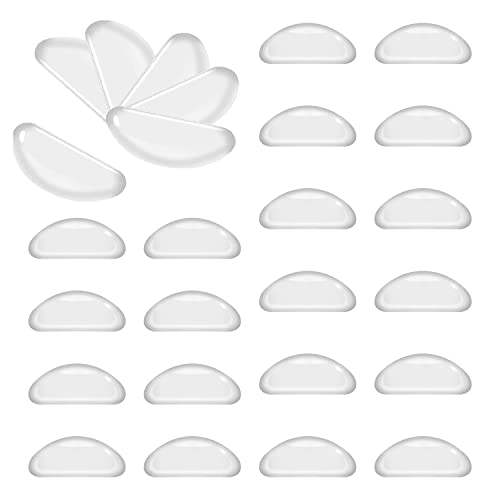
Silicone Adhesive Pads, 19 × 8 mm stands out for pack size and pad dimensions: it includes 20 pairs of transparent adhesive silicone pads measuring 19 by 8 mm. The maker recommends cleaning the application area with rubbing alcohol and letting it dry before sticking a pad on. These pads suit someone who wants a larger supply of general-purpose adhesive replacements for plastic-style frames.
Bottom line: Choose this for a large supply of transparent adhesive pads in a 19 × 8 mm size.
How to choose eyeglass nose pads
Start with the frame mount: adhesive pads stick to a smooth frame surface, while screw-in replacements need matching pad arms and screws. Adhesive pads are commonly used on plastic frames; screw-in pads are common on metal frames, but the frame’s actual hardware decides compatibility. For adhesive styles, compare thickness and shape: a 0.6 mm pad adds less bulk than a 1 mm pad, while a broader shape covers more contact area. If the bridge is under 4 mm wide, measure the available flat area before choosing a pad; an overhanging edge can peel sooner.
Use mount type as the first filter, then compare profile and dimensions:
| Frame or preference | Suitable direction |
|---|---|
| Smooth plastic bridge | Adhesive pad |
| Screw-in pad arms | Matching screw-in pad |
| Minimal added thickness | 0.6 mm profile |
| More separation from frame | 1 mm profile |
For screw-in replacements, match both the mounting slot and the old pad’s width and length; a similar-looking pad may still use a different screw position.
Adhesive versus screw-in nose pads
Adhesive nose pads attach without frame hardware, while screw-in pads replace a pad mounted on arms. Adhesive styles suit smooth surfaces with enough flat area; screw-in styles need the correct mounting slot and screw alignment. Plastic frames are often molded with no separate pad arms, whereas many metal frames have adjustable arms, but there are exceptions, so inspect the bridge rather than choosing by frame material alone. Adhesive pads generally need a clean, dry surface; skin oils and lotion can weaken the bond. Screw-in pads need a small screwdriver and careful handling because the screws are tiny and easy to lose. Never force a screw that does not align cleanly; it can damage the mount.
How nose pad thickness and shape affect fit
Pad thickness changes how far a frame sits from the nose: 0.6 mm is a lower-profile choice than 1 mm, and neither measurement alone predicts comfort. A teardrop or wider pad can distribute contact differently from a narrow pad, but bridge shape and frame weight also affect pressure. Measure the old pad or compare the intended contact area before replacing it; a pad extending beyond a narrow bridge may catch and lift at the edge. If glasses sit too close to the cheeks, a thicker pad may create useful clearance, but make changes evenly on both sides to avoid tilting the frame. For persistent fit problems, an optician can adjust frame arms and alignment rather than relying on thicker pads alone.
Applying and maintaining eyeglass nose pads
For adhesive pads, clean the attachment spot with rubbing alcohol and let it dry completely before placement; residue and moisture reduce adhesion. Align both pads at matching positions, then press them firmly without touching the adhesive surface. Avoid getting alcohol on frame coatings or finishes that the frame maker says are solvent-sensitive. Silicone and microfiber pads collect skin oil and dust, so wipe them with a soft damp cloth and mild soap when grip declines; dry them before wearing. Replace a pad that has lifted edges, cracks, flattened cushioning, or no longer stays in place. Small nose-pad screws can loosen over time, so check screw-in pairs occasionally and stop wearing glasses if a loose pad or screw creates a sharp edge or unstable fit.
Frequently Asked Questions
How do I know which nose pads fit my glasses?
Check whether the frame has a smooth bridge for adhesive pads or screw-in pad arms for replacement pads. For screw-in styles, compare the old pad’s shape and dimensions before ordering.
Are silicone or microfiber nose pads better?
Silicone is a common soft pad material, while microfiber pads are designed to add grip through their surface structure. If a low profile matters, compare thickness: the options here include 0.6 mm and 1 mm pads.
How do I apply adhesive nose pads?
Clean the attachment area and let it dry fully before applying an adhesive pad. Oils, moisture, and residue can interfere with adhesion, so avoid touching the cleaned spot before placement.
Can adhesive nose pads go on metal frames?
Adhesive pads can attach to a smooth, suitable surface, but many metal frames use separate screw-in pad arms instead. If the frame has those arms, use a compatible screw-in replacement rather than covering or bypassing the mount.
When should eyeglass nose pads be replaced?
Replace pads when they are loose, cracked, flattened, or no longer stay attached. Silicone pads can be cleaned periodically with mild soap and water; avoid harsh solvents on frames unless the frame maker permits them.