
Best Girdle for Back Support: 5 Models Compared

Mueller Adjustable Back Brace is the best back-support girdle for most people because its adjustable closure and eight steel springs pair with a 28- to 50-inch waist range. Choose a different option if you need plus-size sizing, a removable lumbar pad or a design emphasizing posture and full-back coverage.
A back-support girdle is a wraparound brace that compresses and supports the torso; the right fit and intended coverage matter more than the word “girdle.”
We earn a commission if you buy through links on this page. As an Amazon Associate I earn from qualifying purchases. Products are compared on manufacturer specifications, not hands-on testing.
- Best overall: Mueller Adjustable Back Brace – Adjustable closure, eight steel springs and a 28- to 50-inch waist range.
- Best for plus sizes: BraceAbility Bariatric Back Brace, 3XL – The 3XL size fits a 55- to 61-inch circumference measured at the belly button.
- Best for full-back coverage: Copper Fit Max Posture Support, L/XL – Reinforced panels and adjustable compression are designed for full-back support.
| Product | Best for | Waist fit | Support elements | Coverage or design | Shop |
|---|---|---|---|---|---|
| Mueller Adjustable Back Brace | Adjustable support | 28–50 in | 8 steel springs | Upper and lower back | Check Price on Amazon |
| FEATOL 4-Stay Brace, L/XL | Removable pad | 29.8–38.6 in | 4 stays; removable pad | Lower back | Check Price on Amazon |
| Copper Fit Max Posture Support, L/XL | Full-back coverage | 34–48 in | Reinforced panels | Full-back design | Check Price on Amazon |
| Sparthos Adjustable Back Brace, Large | Breathable lumbar pad | Large; range unknown | Adjustable lumbar pad; stays | Lower back | Check Price on Amazon |
| BraceAbility Bariatric Back Brace, 3XL | Plus-size fit | 55–61 in | Removable aluminum stays; tension straps | Lower back | Check Price on Amazon |
Back-Support Girdles Compared
Compare waist measurements and support construction before choosing a wraparound brace.
Mueller Adjustable Back Brace

Mueller Adjustable Back Brace stands out for its 28- to 50-inch waist range and eight steel springs. The wraparound design uses adjustable closure straps, and breathable mesh is treated to prevent odor, according to the maker. It is a practical choice if you want one adjustable brace for upper- and lower-back support. The size guidance says to measure around the widest part of your waist, so do not use your pants size. The one-size format may be limiting if your measurement falls outside its range.
Bottom line: Choose this if your waist measures 28 to 50 inches and you want adjustable support.
FEATOL 4-Stay Brace, L/XL

FEATOL 4-Stay Brace, L/XL is distinguished by four support strips and a removable lumbar pad, with the L/XL size fitting a 29.8- to 38.6-inch circumference. Its measurement point is the navel, unlike braces that ask for the widest waist measurement. That makes careful placement of the tape important before choosing a size. It suits someone seeking a lower-back wrap with a pad they can remove. The L/XL range is narrower than the adjustable one-size option, so check your measurement against the range rather than relying on the label.
Bottom line: Pick this for a removable lumbar pad and a 29.8- to 38.6-inch fit.
Copper Fit Max Posture Support, L/XL
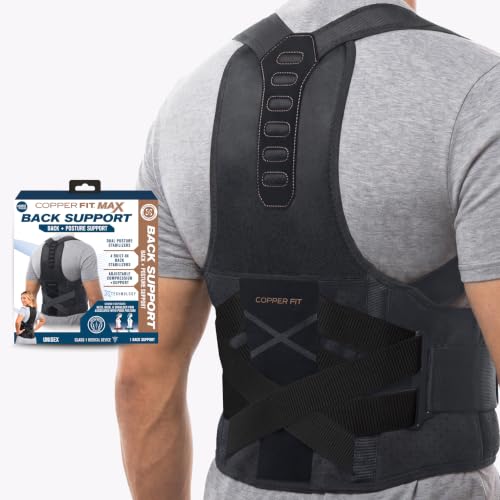
Copper Fit Max Posture Support, L/XL focuses on full-back coverage, reinforced panels and adjustable compression rather than a removable pad or a spring count. Its L/XL size fits a 34- to 48-inch waist measured at belly-button level; the maker recommends sizing up when between sizes. This option may suit someone looking for a posture-oriented support design across the back, not just a lower-back wrap. Its fit is determined by the specified waist range, so the L/XL label alone is not enough if your measurement is near either boundary.
Bottom line: Choose this if full-back coverage and its 34- to 48-inch fit suit you.
Sparthos Adjustable Back Brace, Large
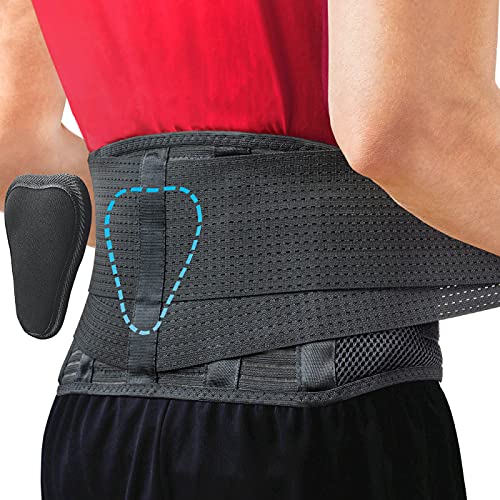
Sparthos Adjustable Back Brace, Large combines an adjustable lumbar pad with vertical support stays, setting it apart from designs centered on spring counts or full-back panels. The maker describes the brace as breathable mesh for wear during movement and work. It may suit someone who specifically wants a lower-back pad and stays, provided the Large size is confirmed as appropriate before ordering.
Bottom line: Pick this if you want an adjustable lumbar pad and can confirm the Large fit.
BraceAbility Bariatric Back Brace, 3XL

BraceAbility Bariatric Back Brace, 3XL is the plus-size choice, with its 3XL size fitting a 55- to 61-inch belly-button circumference. It uses double-pull tension straps and removable aluminum stays, which can be bent to conform to body shape according to the maker. The elastic brace has a padded back panel and is designed for wear over or under clothing. Measure with a soft, flexible tape at the belly button before choosing it. The 3XL range is specific, so it will not suit a waist outside those stated limits.
Bottom line: Choose this if your belly-button circumference is 55 to 61 inches.
How to Choose a Back-Support Girdle
Start with the waist measurement and the area you want supported, then compare closure and support components. Brace sizing may use the navel, the widest part of the waist, or a product-specific size chart; those locations can produce different numbers, so measure where the chosen brace directs. A flexible tape should lie level around the torso without digging into the skin. For example, the 28- to 50-inch range for Mueller Adjustable Back Brace uses the widest waist, while several other options specify belly-button level.
Match construction to your preference rather than assuming more stays are always better: braces in this group use springs, vertical stays, reinforced panels or a removable pad. A brace should feel snug and stable, not so tight that it restricts comfortable breathing or causes tingling. If it shifts, rolls or creates pressure, loosen and reposition it; persistent symptoms or a new injury call for medical guidance.
How to Measure for a Back Girdle
Measure your circumference at the location specified for the exact brace, because navel-level and widest-waist measurements are not interchangeable. Stand naturally, keep the tape horizontal, and take the measurement without pulling the tape tight. If the maker gives a range in inches, compare your number to that range rather than using clothing size or a broad label such as L/XL.
When your measurement is at a boundary, remeasure once and follow the sizing rule; Copper Fit Max Posture Support, L/XL recommends sizing up when between sizes. Do not assume adjacent sizes overlap unless the fit range says so. A table can help map the construction to a need:
| Need | Feature to compare | Example fit cue |
|---|---|---|
| Adjustable range | Closure plus waist range | 28–50 in at widest waist |
| Full-back emphasis | Panel coverage | Reinforced full-back design |
| Plus-size fit | Navel circumference | 55–61 in for 3XL |
Support Types and What They Do
Wraparound back braces use compression and closures to hold the brace against the torso, while stays or springs add structure. Steel springs, removable aluminum stays and vertical stays are different constructions; a larger count alone does not establish that a brace will fit or feel right. Some designs add a lumbar pad for more localized contact, while a full-back design covers a broader area.
Choose by coverage and adjustability: a lower-back brace is not the same design choice as a product emphasizing full-back support. Avoid treating a brace as a substitute for diagnosis or a lifting technique. For lifting, keep loads close to your body, avoid twisting while carrying, and seek help with a load you cannot control safely; no support belt makes an unsafe lift safe.
Wearing a Back-Support Girdle Safely
A brace should be secure without restricting breathing, bending, or circulation. Put it on in the position described for that design, fasten evenly, then move gently to check that it stays in place without pinching or rolling. If the brace causes numbness, tingling, skin irritation or increased discomfort, remove or loosen it; seek medical advice if symptoms persist or are severe.
Do not assume a brace should be worn all day or during every activity, because wearing schedules depend on the reason for use and individual guidance. Keep skin clean and dry beneath the brace, and follow the care directions for its materials and removable components. A new injury, weakness, or bowel or bladder changes warrants prompt medical attention rather than relying on compression alone.
Frequently Asked Questions
Where should I measure for a back-support girdle?
Measure at the point specified for that brace, such as the belly button or widest part of the waist. Keep a flexible tape level and snug without compressing your body; those measurement locations can yield different circumferences.
How tight should a lumbar support brace feel?
A lumbar brace should feel snug and stable while allowing comfortable breathing and movement. Loosen or remove it if you notice tingling, numbness, pinching, or increased discomfort.
Can I wear a back brace while lifting?
A brace may be worn during activity if appropriate for your situation, but it does not make an unsafe lift safe. Keep loads close, avoid twisting while carrying, and get help with loads you cannot control.
Should I wear a back brace all day?
There is no single all-day schedule that applies to every wearer or brace. Follow clinician guidance for a diagnosed condition, and remove the brace if it irritates your skin or causes numbness or tingling.
What should I do if a back brace keeps rolling?
A brace that rolls may be incorrectly positioned, too loose, or a poor size match. Reposition and adjust it without overtightening; persistent rolling is a reason to recheck the sizing instructions and fit.