
Best Glue for Glass: 3 Options Compared by Use

Loctite Glass Glue, 0.07 oz is the best fit for most glass repairs because it is made for glass-to-glass bonds and needs no clamping. Choose Glass Super Glue Liquid, 1 oz Thick for a larger, thicker application or Glass Glue Clear Repair, 30 g when pinpoint placement matters; use neither for structural glass repairs, such as a windshield or load-bearing pane.
Glass glue is an adhesive formulated to join glass surfaces, but the right choice depends on joint size, fit, and exposure to water or heat.
We earn a commission if you buy through links on this page. As an Amazon Associate I earn from qualifying purchases. Products are compared on manufacturer specifications, not hands-on testing.
- Best overall: Loctite Glass Glue, 0.07 oz – Made for glass-to-glass bonding, dries clear, and requires no clamping.
- Best for thicker application: Glass Super Glue Liquid, 1 oz Thick – A 1-ounce thick formula with a maker-claimed 60–180-second dry time.
- Best for precision work: Glass Glue Clear Repair, 30 g – Includes three tiny-nozzle droppers for small or hard-to-reach areas.
| Product | Best for | Amount (oz) | Application | Shop |
|---|---|---|---|---|
| Loctite Glass Glue, 0.07 oz | Everyday glass repairs | 0.07 oz | Tube | Check Price on Amazon |
| Glass Super Glue Liquid, 1 oz Thick | Thicker applications | 1 oz | Thick liquid | Check Price on Amazon |
| Glass Glue Clear Repair, 30 g | Small-area placement | 1.06 oz | Three precision droppers | Check Price on Amazon |
Best Glue for Glass
Compare the glass-specific adhesives by amount, application style, and stated use limits.
Loctite Glass Glue, 0.07 oz

For glass-to-glass repairs, Loctite Glass Glue, 0.07 oz stands out because it bonds without clamping and is made for several glass finishes, including tinted and stained glass. The 0.07-ounce tube is suited to small repairs rather than covering a broad area. The maker says it dries clear, is waterproof and heat resistant, and is dishwasher safe; it is for indoor use and is not recommended for exterior surfaces. It also bonds certain metals and plastics, so it can suit a mixed-material joint when those materials are involved.
Bottom line: Choose it for small indoor glass repairs where a clear bond and no-clamp application matter.
Glass Super Glue Liquid, 1 oz Thick
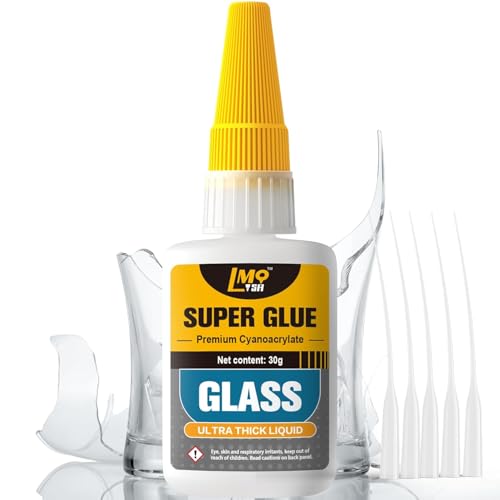
Glass Super Glue Liquid, 1 oz Thick is the larger, explicitly thick option in this group, making it a practical fit when a small tube is not enough for the repair. Its clear cyanoacrylate formula is marketed for glass and a range of other materials, including ceramic, metal, and plastic. The maker claims a 60–180-second drying time and a full cure within 24 hours, and describes it as waterproof and heat resistant. The product’s broad claims do not establish suitability for a structural glass joint, so reserve it for non-critical household repairs.
Bottom line: Pick it when you want a larger, thicker glass adhesive for a non-structural repair.
Glass Glue Clear Repair, 30 g

Glass Glue Clear Repair, 30 g comes with three tiny-nozzle droppers, a feature that separates it from the tube and thicker-liquid options for placing adhesive in a confined area. The 30-gram package is intended for glass, acrylic, mirrors, crystal, and crafts. Its maker describes it as strong and suitable for waterproof and heat-resistant use, but the product facts do not establish an indoor or outdoor restriction. This is a better match for precise placement than broad coverage; the uses do not make it a replacement for professional glazing or a structural bond.
Bottom line: Choose it for a non-structural repair that needs adhesive placed in a tight spot.
How to Choose Glue for Glass
For a small, close-fitting indoor glass joint, a glass-specific cyanoacrylate is usually the simplest type to apply. Cyanoacrylate sets quickly, so align the pieces before applying a small amount; excess adhesive can squeeze out and leave a visible seam. Epoxy is a different option when a joint has a gap, because two-part epoxy can fill space, but its mix and cure time vary by formula. UV-curing adhesives need light to reach the joint and are best suited to transparent, accessible seams. Match the adhesive to the materials at both sides of the joint, not just the glass. Avoid consumer adhesives for windshields, railings, or load-bearing panes, where a failed bond can cause injury.
Preparing Glass for a Clear Bond
Clean glass and a close fit matter more than applying a thick layer: dust, oil, and fingerprints interfere with adhesive contact. Wash the pieces, let them dry completely, then wipe the bonding area with isopropyl alcohol and allow the alcohol to evaporate. Keep the adhesive confined to the joint, since clear glue can still show as a ridge or trapped bubble. Test the alignment dry before adding glue, especially on a visible break. Do not force a fractured edge together if the pieces do not sit naturally. For glass used with food or drink, avoid returning a glued vessel to food contact unless the adhesive is specifically rated for that use; general-purpose glue claims do not establish food safety.
Glass Glue Types and Their Tradeoffs
Cyanoacrylate is the quick-set choice for small, close-fitting repairs, while two-part epoxy is often used where some gap filling is needed. UV-curing adhesive is useful only when light can reach the bond line, and silicone sealant is generally used for flexible sealing rather than a rigid, invisible break repair. This comparison helps narrow the adhesive type before choosing an application format.
| Repair need | Type to consider | Key constraint |
|---|---|---|
| Small, tight break | Cyanoacrylate | Fast setting leaves little time to reposition |
| Gap in a non-critical joint | Two-part epoxy | Mixing and cure time depend on formula |
| Accessible transparent seam | UV-curing adhesive | Light must reach the bond |
Those limits matter more than choosing the strongest-sounding label: a fast adhesive is not automatically suitable for a flexible or structural joint.
When Not to Repair Glass with Glue
Do not treat a consumer glass adhesive as a safe repair for a windshield, shower door, railing, or other safety glass. Those pieces can carry loads or protect occupants, and a failed bond can create sharp fragments or a fall hazard. Replace cracked glass in those applications or use a qualified glass professional. A glued drinking glass also raises a different concern: adhesive near food or drink needs explicit food-contact suitability, which general waterproof claims do not prove. Even a strong bond on a decorative object should not be used to support heavy weight overhead or near people. For valuable or fragile pieces, preserve the fragments and seek a repair service rather than relying on a household adhesive.
Frequently Asked Questions
How long should glass glue cure before use?
Cure time depends on the adhesive formula, and handling time is not always full cure. For the glass-specific product here that gives a cure claim, the maker says 60–180 seconds to dry and up to 24 hours to fully cure; wait for the full-cure period before stressing that joint.
Can glass glue go in a dishwasher?
Only use a glued glass item in a dishwasher if its adhesive explicitly supports that use. One glass glue here is described by its maker as dishwasher safe, but that claim does not apply to every glass adhesive or make a repaired vessel food safe.
How should glass be cleaned before gluing?
Wash away dirt, dry the pieces fully, then wipe the joint with isopropyl alcohol and let it evaporate. Oil or moisture at the bond line can interfere with a neat, close-fitting repair.
Can I use glass glue to fix a windshield crack?
No; a household glass adhesive is not a safe substitute for windshield repair or replacement. Windshields are safety components, so have a qualified auto-glass professional assess damage rather than relying on a surface glue bond.
Does clear glue make a glass repair invisible?
Not necessarily: clear adhesive can still leave a visible ridge, trapped bubble, or misaligned seam. Dry-fit the pieces first and apply only enough adhesive to the joint; a clean, close fit matters more than the word clear.