
Military Grade Night Vision Goggles: 3 Models Compared

For most people, AGM NVG-50 NL1 Dual Tube is the strongest fit because its dual tubes and 51-degree field of view offer a wider view than a conventional 40-degree NVG. Choose AGM PVS-7 NL3 Gen 2+ or AGM PVS-7 NL1 Gen 2+ Level 1 if you prefer a PVS-7-style biocular design; the PVS-7 uses one image tube viewed through both eyepieces.
We earn a commission if you buy through links on this page. As an Amazon Associate I earn from qualifying purchases. Products are compared on manufacturer specifications, not hands-on testing.
- Best overall: AGM NVG-50 NL1 Dual Tube – Dual tubes and a 51-degree field of view set it apart for scanning.
- Best for PVS-7 design: AGM PVS-7 NL3 Gen 2+ – Its Gen 2+ Level 3 P43-green image intensifier is the higher level among the PVS-7 options.
- Best for included mount kit: AGM PVS-7 NL1 Gen 2+ Level 1 – Its package includes a head mount assembly and multiple fit and lens accessories.
| Product | Best for | Design | Image intensifier | Shop |
|---|---|---|---|---|
| AGM NVG-50 NL1 Dual Tube | Wide-area scanning | Dual tube | Gen 2+ Level 1 | Check Price on Amazon |
| AGM PVS-7 NL3 Gen 2+ | Higher-level PVS-7 | PVS-7 biocular | Gen 2+ Level 3 | Check Price on Amazon |
| AGM PVS-7 NL1 Gen 2+ Level 1 | Included head mount | PVS-7 biocular | Gen 2+ Level 1 | Check Price on Amazon |
Military Grade Night Vision Goggles Compared
Compare the tube layout, intensifier level and viewing area before choosing a helmet-mounted system.
AGM NVG-50 NL1 Dual Tube

Unlike the PVS-7-style options, AGM NVG-50 NL1 Dual Tube has two image tubes and a 51-degree field of view, which can make scanning feel less tunnel-like than the common 40-degree NVG view. The Gen 2+ Level 1 system has manual gain control, a built-in IR illuminator and helmet-mount compatibility. Its dual tube layout can preserve more natural depth cues than a single tube viewed through two eyepieces. This is the clearest choice for buyers prioritizing wider peripheral coverage. Its 1.35-pound weight matters for long helmet sessions, so consider counterbalance and fit.
Bottom line: Choose this for a dual tube setup and wider-than-standard field of view.
AGM PVS-7 NL3 Gen 2+
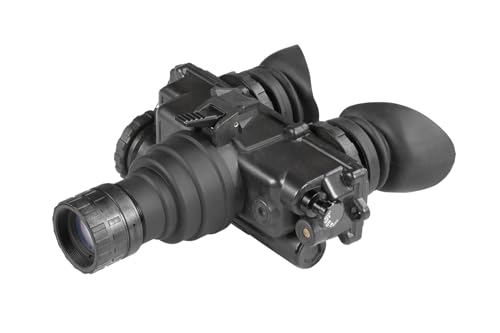
AGM PVS-7 NL3 Gen 2+ stands out among these PVS-7-style goggles with a Gen 2+ Level 3 P43-green image intensifier, compared with the Level 1 PVS-7 option. A PVS-7 is a biocular design: one intensifier tube feeds both eyepieces, rather than using separate tubes for each eye. The product features also specify automatic brightness control and bright-light cutoff. It suits a buyer seeking this traditional form factor with the higher listed intensifier level. Unlike AGM NVG-50 NL1 Dual Tube, it does not offer a 51-degree field of view, so buyers prioritizing a wide view should compare that requirement before choosing.
Bottom line: Pick this if you want a PVS-7 form with the higher stated intensifier level.
AGM PVS-7 NL1 Gen 2+ Level 1

AGM PVS-7 NL1 Gen 2+ Level 1 is the PVS-7 option whose package explicitly includes a head mount assembly, brow pads, eye cups, demist shields and a sacrificial window. Its Gen 2+ Level 1 system is paired with automatic brightness control, bright-light cutoff, automatic shut-off and a built-in IR illuminator with flood lens. Those controls and included fit parts suit someone assembling a hands-free setup from the box. The limitation is its 1.5-pound weight, the heaviest figure provided for these exact-fit options; that can matter when balancing a helmet over extended wear.
Bottom line: Choose this when the included head-mount and accessory set is a priority.
How to Choose Military Grade Night Vision Goggles
Start with tube layout and field of view, because those determine how you scan and judge distance. A conventional night-vision field is about 40 degrees; a wider field can reduce head movement while searching. Dual tube systems give each eye its own image tube and generally preserve depth cues better than biocular systems, where one tube feeds both eyes. Gen 2+ identifies an image-intensifier generation, while Level 1 or Level 3 is a separate grade descriptor; do not treat those level numbers as generations. If scanning a broad area is the priority, look for a field wider than 40 degrees. If a PVS-7 form matters more, compare intensifier level and weight instead.
Helmet Fit and Wear Time
Helmet compatibility does not guarantee a comfortable fit: mount geometry, eye relief and balance all matter. Eye relief is the distance from the eyepiece to the eye at which the full image remains visible, and a poor match can cause vignetting or force an awkward helmet position. A front-mounted goggle also shifts weight forward, so a counterweight can improve balance. For sessions longer than a few minutes, compare total system weight, not just the goggle body, and adjust the mount until both eyes see a full image without straining. Check that your helmet mount is compatible before ordering; “helmet-mountable” alone does not establish a particular mount interface.
Image Intensifiers and Infrared Illumination
Image intensifiers amplify available light, while digital night vision uses an electronic sensor and display; they are different technologies, not interchangeable performance grades. Gen 2+ tube performance can vary by tube grade and ambient light, so compare the specified level rather than relying on a broad “military grade” label. An onboard IR illuminator adds infrared light when ambient light is insufficient, but its beam is not invisible to every night-vision device. Use IR only when the added illumination is necessary and consider whether nearby equipment can detect it. Bright-light cutoff and automatic brightness control help manage sudden light changes, but they do not make an intensifier safe to expose to intense light deliberately.
Safe Use and Care for Night Vision Goggles
Keep image-intensifier goggles capped or switched off in daylight; intense light can damage the tube, and bright-light cutoff is not a license to look at the sun or powerful lamps. Remove the lens caps only in darkness or low light, and use the device’s controls rather than pointing it toward bright sources. Keep lenses clean with lens-safe materials, since grit can scratch coatings, and store the unit dry with caps on. Mount the goggles securely before moving, and avoid relying on night vision for driving or other tasks that require ordinary depth perception. In near-total darkness, an IR illuminator may help, but it uses power and can reveal the user to other night-vision equipment.
Frequently Asked Questions
What does Gen 2+ mean on night vision goggles?
Gen 2+ refers to an image-intensifier generation, not a field-of-view measurement or a guarantee of identical performance across tubes. The level grade is a separate descriptor, so compare both generation and level when choosing.
Are dual tube goggles better for depth perception?
Dual tube goggles provide a separate image to each eye and generally support more natural depth cues than a biocular single-tube design. For close obstacles or uneven ground, that distinction can matter more than a wider field of view.
How wide is a typical night vision field of view?
A common night-vision field of view is about 40 degrees, while wider optics can show more area without as much head movement. A wide field does not by itself establish image quality or detection distance.
Can night vision goggles be used in daylight?
Image-intensifier goggles should not be used with their lenses exposed to bright daylight because intense light can damage the tube. Keep objective caps on or switch the device off in bright conditions; automatic cutoff does not replace that precaution.
Does an infrared illuminator reveal your position?
An IR illuminator is not visible to the unaided eye, but other night-vision equipment can detect its beam. Use it only when needed, especially when operating near other users of night vision.