
Best Pool Silicone Sealant: 3 Pool-Specific Picks

BOSS 802 Pool Silicone, 2-Pack is the best fit for most pool and spa repairs because it is pool-specific and supplies two 280 mL tubes. Choose a 3-ounce tube instead for a smaller job or if you prefer a compact package.
Pool silicone sealant is a flexible sealant for joints around pool and spa components; it is not a substitute for grout or a way to repair a structural crack.
We earn a commission if you buy through links on this page. As an Amazon Associate I earn from qualifying purchases. Products are compared on manufacturer specifications, not hands-on testing.
- Best overall: BOSS 802 Pool Silicone, 2-Pack – Pool- and spa-oriented sealant in a two-tube pack totaling 560 mL.
- Best for small jobs: BOSS 315 RTV Pool & Spa, 3 oz – A pool and spa RTV adhesive/sealant in a 3-ounce tube.
- Best for neutral cure: BOSS 801 Neutral Cure Pool & Spa, 3 oz – A clear 3-ounce pool and spa product identified as neutral cure.
| Product | Best for | Package size | Color | Product type | Shop |
|---|---|---|---|---|---|
| BOSS 802 Pool Silicone, 2-Pack | Larger pool jobs | 2 × 280 mL | Clear | Silicone sealant | Check Price on Amazon |
| BOSS 315 RTV Pool & Spa, 3 oz | Small pool repairs | 3 fl oz | Clear/transparent | RTV adhesive/sealant | Check Price on Amazon |
| BOSS 801 Neutral Cure Pool & Spa, 3 oz | Neutral cure preference | 3 fl oz | Clear | Neutral-cure silicone adhesive | Check Price on Amazon |
Pool Silicone Sealant Picks
Choose by the job size and the product type identified for each pool or spa application.
BOSS 802 Pool Silicone, 2-Pack

For a larger pool or spa sealing job, this BOSS 802 package provides two 280 mL tubes rather than a single 3-ounce tube. BOSS describes the formula as professional-grade and water-resistant, and identifies pool tiles and spa components among its uses. The clear color can suit joints where a colored bead would stand out. The pack also names household uses such as sinks and baths. Its larger total quantity is useful when several joints need attention, but may be more than needed for a small, isolated repair.
Bottom line: Choose this when you need more sealant for pool or spa joints.
BOSS 315 RTV Pool & Spa, 3 oz

This BOSS 315 is a compact pool-and-spa option in a 3-ounce tube, unlike the larger two-tube package of BOSS 802 Pool Silicone, 2-Pack. Its product name identifies it as an RTV silicone adhesive/sealant, which distinguishes it from BOSS 801 Neutral Cure Pool & Spa, 3 oz, identified as neutral cure. The clear/transparent color is suited to buyers seeking a visually unobtrusive seal. The specifications do not describe its cure timing or compatible surfaces, so make sure the package instructions match the specific joint and substrate before applying it.
Bottom line: Pick this for a smaller pool or spa job when RTV is the type you want.
BOSS 801 Neutral Cure Pool & Spa, 3 oz
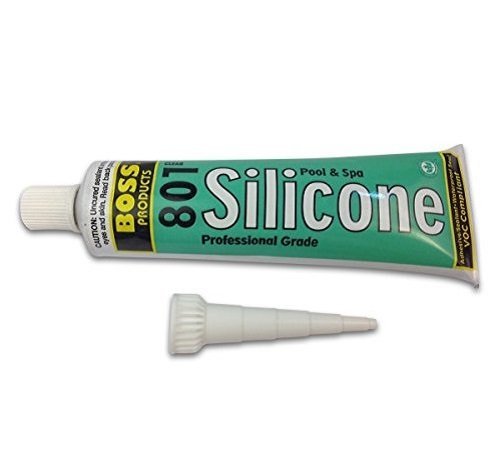
BOSS 801 Neutral Cure Pool & Spa, 3 oz is the clearest choice if neutral cure is the deciding factor: its product name identifies that cure type, while BOSS 315 RTV Pool & Spa, 3 oz is identified as RTV. This clear BOSS 801 comes in a 3-ounce size and is designated for pool and spa use. Its smaller package fits a limited repair better than the two 280 mL tubes in BOSS 802 Pool Silicone, 2-Pack.
Bottom line: Choose this when you specifically want neutral cure silicone in a small tube.
How to Choose Pool Silicone Sealant
Choose a sealant labeled for pool or spa use, then match the package amount to the repair. Among these picks, one option provides 560 mL total, while the other two are 3 fluid ounces each; 1 US fluid ounce is about 29.6 mL. Cure type also separates the small tubes: one is identified as RTV and another as neutral cure. If you are sealing a submerged joint, lower the water until the surface is dry before application; silicone sealant needs a clean, dry bonding surface. A bead is for sealing a joint, not replacing missing grout or repairing a crack that moves or runs through the pool structure. For structural damage, use a pool repair method designed for that problem.
Prepare the Pool Joint Before Sealing
A sound seal starts with a dry, clean joint, not with a thicker bead. Remove loose material and residue, then allow the area to dry completely; water, oils and dust can interfere with adhesion. For a below-waterline repair, bring the water level below the joint and keep it there while the sealant cures. Cure time is product-specific, so use the package directions to determine when the area can be exposed to water. Do not assume that a water-resistant claim means the sealant can be applied underwater or immersed immediately. Apply only to substrates the product instructions permit, and avoid stretching silicone across a gap that changes width substantially as the pool moves.
Pool Sealant Types Compared
The product type and intended application matter more than color alone. This comparison distinguishes the pool-specific options by their identified type and pack size.
| Choice | Identified type | Package quantity |
|---|---|---|
| BOSS 802 Pool Silicone, 2-Pack | Silicone sealant | 560 mL total |
| BOSS 315 RTV Pool & Spa, 3 oz | RTV adhesive/sealant | 3 fl oz |
| BOSS 801 Neutral Cure Pool & Spa, 3 oz | Neutral cure silicone adhesive | 3 fl oz |
Use the neutral cure designation as a meaningful distinction only when cure type matters for the particular materials being joined. The 3-ounce sizes suit a limited repair; 560 mL gives more material for multiple joints. Confirm surface compatibility and cure timing from the package before starting.
Common Pool Silicone Sealing Mistakes
The most common mistake is sealing over damp or dirty material, which can compromise the bond. Dry the joint fully and remove loose sealant before applying a new bead. A second mistake is treating silicone as grout: grout fills tile joints, while sealant is used at movement joints and changes in plane where flexibility is needed. Do not bridge a structural crack with a surface bead; movement or water pressure can defeat that repair. Finally, avoid refilling the pool based only on a water-resistant label. Silicone cure times differ by formula, bead thickness and conditions, so keep water off the repair for the cure period specified on its packaging.
Frequently Asked Questions
Can pool silicone sealant be applied underwater?
No; lower the water below the repair and let the joint dry before applying sealant. Keep the joint dry through the product-specific cure period before refilling.
How much pool silicone sealant should I buy?
A 3-fluid-ounce tube suits a small, isolated joint, while the 560 mL two-pack gives more material for several areas. Actual coverage depends on joint width and bead depth.
Should I use silicone instead of pool grout?
No; grout fills tile joints, while flexible sealant is typically used at movement joints and changes in plane. Use a repair product intended for the actual damage rather than covering a structural crack with a bead.
How long should pool silicone cure before refilling?
Use the cure time on the package, since the formula, bead thickness and conditions affect when water exposure is appropriate. Do not treat a water-resistant description as permission for immediate immersion.
Does clear pool silicone work on every surface?
No; confirm compatibility with the exact substrate before applying it. Clean and dry the surface first, since residue and moisture can interfere with adhesion.