
Best Radar Guns for Speeding: 5 Models Compared

For checking vehicle speeds, Bushnell Velocity Speed Gun is the clearest fit because it measures 10 to 200 mph and is intended for traffic monitoring as well as sports. Choose a sports-focused model instead if you need ball-speed readings, app analysis or a hands-free practice setup.
A radar speed gun estimates an object’s speed from reflected radio waves; it is not the same as a radar detector, which alerts drivers to radar signals.
We earn a commission if you buy through links on this page. As an Amazon Associate I earn from qualifying purchases. Products are compared on manufacturer specifications, not hands-on testing.
- Best overall: Bushnell Velocity Speed Gun – Its 10–200 mph range and stated traffic-monitoring use suit vehicle-speed checks.
- Best for pitch and exit speed: Bushnell MACH2 Smart Radar Gun – It displays pitch and ball exit speeds simultaneously and connects to a mobile app.
- Best for hands-free practice: Pocket Radar Ball Coach Pro Bundle – The bundle includes a tripod and rotating phone mount, and the gun stores 25 readings.
| Product | Best for | Speed range | Accuracy | Key feature | Shop |
|---|---|---|---|---|---|
| Bushnell Velocity Speed Gun | Vehicle speed checks | 10–200 mph | — | Traffic monitoring | Check Price on Amazon |
| Pocket Radar Smart Coach | App-based ball analysis | — | ±1 mph | App and video integration | Check Price on Amazon |
| Bushnell MACH2 Smart Radar Gun | Pitch and exit speed | 20–125 mph | ±1 mph | Dual-speed display | Check Price on Amazon |
| Pocket Radar Ball Coach Pro Bundle | Tripod-based practice | 25–130 mph | ±1 mph | 25-reading memory | Check Price on Amazon |
| Pocket Radar Ball Coach | Standalone ball readings | — | — | Standalone operation | Check Price on Amazon |
Radar guns for speeding and sports
Compare the intended use and measurement features first, since most options here are designed around sports rather than traffic.
Bushnell Velocity Speed Gun

For vehicle-speed checks, this handheld gun is the only option here whose uses include traffic monitoring. It measures speeds from 10 to 200 mph and has a pistol grip and LCD display, making it suited to quick readings as well as sports such as auto racing. The manufacturer describes the measurements as accurate but provides no accuracy figure in the specifications. If you need readings for official enforcement, confirm that the device meets your jurisdiction’s requirements before relying on it; recreational traffic observation is a different use.
Bottom line: Pick this for general vehicle-speed observation and a broad stated speed range.
Pocket Radar Smart Coach
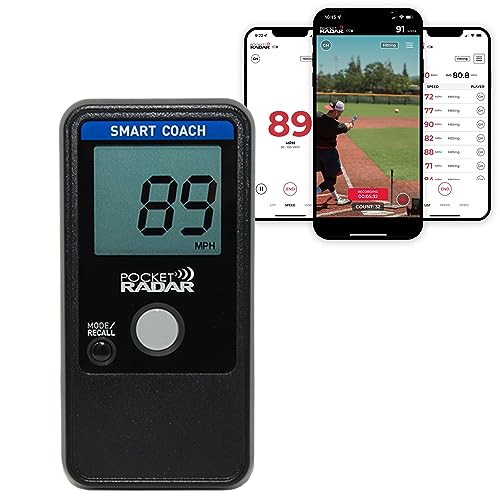
For ball-speed coaching rather than traffic checks, this compact radar pairs readings with video through a companion app. The manufacturer claims ±1 mph accuracy on baseball throws from 120 feet and softball throws from 150 feet. Its sports focus and app workflow suit coaches or athletes reviewing pitching and hitting; those features do not make it a traffic-monitoring model. Choose another option if you specifically need to measure passing vehicles, or if you want a standalone device without app-based analysis.
Bottom line: Choose this when mobile video and ball-speed analysis matter more than traffic use.
Bushnell MACH2 Smart Radar Gun

For baseball and softball sessions that need two readings at once, this model displays pitch speed and exit speed simultaneously. The manufacturer claims ±1 mph accuracy across its 20–125 mph range, and Bluetooth app connectivity adds remote triggering, audible calls and player profiles. That combination is distinct from a general-purpose traffic speed gun: its design centers on ball measurement. Its upper limit is 125 mph, so buyers whose target speeds fall outside the range should choose a different instrument.
Bottom line: Choose this for simultaneous pitch and exit-speed readings during team practice.
Pocket Radar Ball Coach Pro Bundle

For a fixed practice setup, this bundle adds a 59-inch tripod and a rotating phone mount to the radar gun. The manufacturer says it measures the fastest speed of an object in flight from 25 to 130 mph, with accuracy within ±1 mph, and supports constant-on or button-triggered operation. It can store the last 25 readings, useful for reviewing a session without an app. The bundle is oriented to sports training, not traffic monitoring; the mount and stand also make it less compact than a handheld-only setup.
Bottom line: Pick this for stationary team practice with a stand and stored readings.
Pocket Radar Ball Coach

For simple ball-speed readings without app compatibility, this stand-alone model covers baseball, softball, tennis, volleyball, lacrosse, hockey and cricket. Its purpose is to measure the fastest speed of a ball or puck in flight, so it is a sports tool rather than a traffic speed gun. The manufacturer includes a two-year warranty. The specifications give no speed range or accuracy figure, which matters if you need to compare a particular pitch-speed window or require a specified precision; select a model with those figures when they are essential.
Bottom line: Choose this for basic standalone readings across several ball sports.
How to choose a radar gun for vehicle speeds
Start with the target: a device intended for vehicle speeds differs from a sports radar built to track a thrown ball. Check that the target falls within the gun’s speed range, then consider how you will hold or position it and read the display. Radar speed guns use the Doppler effect: reflected radio waves shift frequency when they bounce off a moving target. The angle between the gun and the target’s path affects the reading; an oblique angle can produce a lower measured speed than a direct approach. For official enforcement, local rules may require approved equipment, calibration and trained operators, so verify those requirements before purchase. With no such requirement and a recreational purpose, prioritize an explicit traffic-monitoring use and a readable display.
What the speed range and accuracy mean
A speed range tells you which speeds the manufacturer says a model can measure; it does not by itself establish accuracy at every distance or angle. Compare the intended target and the range together: a 20–125 mph ball-speed instrument is not automatically suitable for every vehicle-speed task. Accuracy stated as ±1 mph means the measurement may differ from the target speed by up to 1 mph under the conditions the manufacturer specifies. Those conditions matter, including distance and target type. For any candidate, check the permitted target, working distance and accuracy conditions before relying on a number. If readings must meet an official standard, confirm that standard and calibration requirements locally rather than assuming a sports specification qualifies.
Traffic radar guns and sports speed guns compared
Traffic-oriented and sports-oriented radar guns measure motion, but the intended targets and workflow differ. A traffic observation device should explicitly support vehicle speeds; a sports model may prioritize a ball’s fastest speed, player profiles or video overlays. Choose by the target first, then by range and operation.
| Need | What to prioritize | Option here |
|---|---|---|
| Vehicle-speed observation | Traffic-monitoring use and a suitable speed range | Bushnell Velocity Speed Gun |
| Pitch and exit readings | Simultaneous displays and sports workflow | Bushnell MACH2 Smart Radar Gun |
| Tripod practice setup | Hands-free positioning and stored readings | Pocket Radar Ball Coach Pro Bundle |
| Ball readings without an app | Standalone operation | Pocket Radar Ball Coach |
Do not assume that a device suited to sports practice is approved for enforcement. A traffic observation use and an official citation use have different requirements.
How aiming and positioning affect readings
Hold or position a radar gun so its aim follows the target’s direction of travel as closely as practical; a larger angle can lower the displayed speed because radar measures only the component of motion toward or away from the unit. Keep the target unobstructed and avoid pointing at several moving objects at once, which can complicate which return produces the displayed reading. In sports settings, target distance and ball trajectory matter too: compare the actual setup with the manufacturer’s specified range and accuracy conditions. A tripod can help keep position consistent during repeated practice readings, while a handheld model is easier to move between locations. Never use a reading alone as the basis for a traffic citation unless the equipment and operator meet local requirements.
Frequently Asked Questions
Are radar guns and radar detectors the same thing?
No. A radar gun transmits and measures a reflected signal to estimate target speed, while a radar detector alerts a driver to radar signals. Choose a speed gun when you need a speed measurement rather than an in-car warning.
Can a sports radar gun measure passing cars?
Only if its intended use and speed range support vehicle measurement; sports-focused models are built around balls or pucks. A model with an explicit traffic-monitoring use is the more suitable choice for vehicle observation.
How does the angle change a radar speed reading?
An angle between the gun and a target’s path can make the reading lower than the target’s actual speed. Aim along the direction of travel as closely as practical, and follow the manufacturer’s specified setup conditions.
What does ±1 mph accuracy mean?
A ±1 mph specification means a reading may differ from the target speed by as much as 1 mph under the test conditions. Distance, target type and aiming angle can affect whether those conditions apply.
Can I use a handheld radar gun for enforcement?
Do not assume a sports or recreational speed gun qualifies for enforcement. Requirements for approved equipment, calibration and operator training vary by jurisdiction, so verify local rules before using readings for official action.