
Hunter Max Metal Detector Options Compared by Features

The Garrett AT Max is the closest match for a Hunter Max metal detector search, with 13.6 kHz operation and waterproofing to 10 feet. Choose a different option if you want an entry-level detector with three modes or a geolocation-focused device instead.
We earn a commission if you buy through links on this page. As an Amazon Associate I earn from qualifying purchases. Products are compared on manufacturer specifications, not hands-on testing.
- Best overall: Garrett AT Max Jase Robertson Edition – Its 10-foot waterproof rating and Z-Lynk wireless headphones make it the most complete AT Max configuration here.
- Best for target recovery: Garrett AT Max Z-Lynk Bundle – This bundle adds a Z-Lynk Pro-Pointer AT for pinpointing targets during recovery.
- Best for simple controls: Bounty Hunter Tracker IV – Three detection modes and adjustable sensitivity suit beginners who want straightforward operation.
| Product | Best for | Waterproofing | Frequency | Included extras | Shop |
|---|---|---|---|---|---|
| Garrett AT Max Jase Robertson Edition | All-terrain detecting | To 10 ft | 13.6 kHz | MS-3 headphones, duck call | Check Price on Amazon |
| Garrett AT Max Z-Lynk Bundle | Pinpointing targets | — | 13.6 kHz | MS-3 headphones, Pro-Pointer AT, hat | Check Price on Amazon |
| Gold Hunter Smart Geolocator | Geolocation features | IP68 rated | — | OLED display | Check Price on Amazon |
| Bounty Hunter Tracker IV | Beginner controls | Waterproof coil | — | 8-inch coil | Check Price on Amazon |
Hunter Max Metal Detectors Compared
Compare the closest AT Max matches with two alternatives by their key features and included equipment.
Garrett AT Max Jase Robertson Edition

This AT Max configuration stands out for its Jase Robertson edition accessories, combining the detector with MS-3 wireless headphones and a duck call. Garrett says the detector is waterproof to 10 feet, and its 6 × 11-inch DD Viper coil is suited to all-terrain use. Iron Audio lets the user hear discriminated iron before digging. The 13.6 kHz operating frequency and adjustable sensitivity are relevant to buyers seeking the AT Max platform. Choose this version if the headphones and themed accessories suit your needs; the duck call adds little to a detector-only setup.
Bottom line: Pick this version if you want the AT Max with wireless headphones and the edition accessories.
Garrett AT Max Z-Lynk Bundle

The distinguishing feature of this AT Max bundle is the Z-Lynk Pro-Pointer AT, which adds a handheld tool for narrowing down a target after digging. The package also includes MS-3 wireless headphones and an AT Max hat. Garrett says Z-Lynk audio has near-zero delay, and the detector operates at 13.6 kHz with enhanced electronics for depth and sensitivity. Its true all-metal mode detects all metal types, while Iron Audio helps identify discriminated iron.
Bottom line: Choose this bundle if a wireless pinpointer is a priority.
Gold Hunter Smart Geolocator

The Gold Hunter Smart Geolocator differs from the AT Max by emphasizing geolocation features and a display rather than listed operating frequency or audio accessories. The manufacturer says it has an IP68 rating and supports six languages; its OLED screen includes a thermometer, clock and muting options. The adjustable length reaches 76 inches, which may help accommodate different users or terrain. Consider it if those interface features are central to your search. Its feature set is not a direct substitute for the AT Max’s specified coil, Iron Audio and wireless headphone setup.
Bottom line: Pick it if multilingual controls and an OLED display matter most.
Bounty Hunter Tracker IV
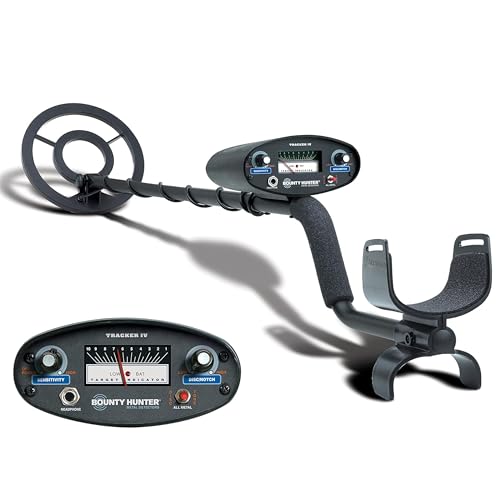
The Tracker IV is the simpler alternative here: it uses analog controls and provides three detection modes rather than the AT Max’s wireless audio feature set. Its 8-inch coil is waterproof, and its modes include all-metal, tone and discrimination. The manufacturer describes it as lightweight and adjustable in sensitivity, with use aimed at adults and kids. This is a fit for a buyer who values basic mode selection and an accessible control layout. The coil’s waterproofing should not be treated as proof that the detector’s control housing is submersible.
Bottom line: Choose it for basic controls and three selectable detection modes.
How to choose a Hunter Max metal detector
Choose by matching the detector’s controls and included equipment to the way you plan to search. A detector’s coil scans the ground, while its control unit interprets signals and sends audio or visual feedback; a separate pinpointer can narrow the search once a target is exposed. The AT Max options focus on wireless audio and iron identification, while the Tracker IV centers on analog controls and three modes. The geolocator option emphasizes an OLED display and multilingual operation. Use this quick comparison to narrow the type before weighing extras.
| Need | Closest fit |
|---|---|
| Wireless headphones and AT Max features | Garrett AT Max Jase Robertson Edition or Garrett AT Max Z-Lynk Bundle |
| Pinpointing aid included | Garrett AT Max Z-Lynk Bundle |
| Three modes and analog controls | Bounty Hunter Tracker IV |
| OLED display and multiple languages | Gold Hunter Smart Geolocator |
For an AT Max, choose between the themed accessories of Garrett AT Max Jase Robertson Edition and the recovery tool in Garrett AT Max Z-Lynk Bundle.
Waterproofing and search conditions
Waterproof ratings apply to the component and depth the manufacturer specifies, so distinguish a waterproof coil from a fully submersible detector. Garrett AT Max Jase Robertson Edition is rated waterproof to 10 feet, whereas Bounty Hunter Tracker IV specifies a waterproof coil; do not assume the Tracker IV control housing can be submerged. Gold Hunter Smart Geolocator carries an IP68 rating, but the rating alone does not give a depth limit for use. For beach or shallow-water searching, verify the exact submersion limits for the control unit, coil and connectors before entering water. Saltwater can also complicate detector signals compared with dry ground, so use the manufacturer’s operating guidance for that environment.
Coils, modes and target identification
Coil size and search pattern influence how an area is covered, but the dimensions are not a guaranteed depth measure. Garrett AT Max Jase Robertson Edition includes a 6 × 11-inch DD Viper coil, while Bounty Hunter Tracker IV has an 8-inch waterproof coil. A DD coil uses overlapping detection fields and is commonly chosen for ground coverage and handling mineralized soil; conditions and settings still affect results. Detection modes change how the detector responds to targets: all-metal mode prioritizes detection, while discrimination can suppress selected target responses. Iron Audio on the AT Max helps hear discriminated iron, but target identification is not a guarantee of what is underground.
Safe metal detecting and target recovery
Safe detecting starts with checking land access rules and locating buried utilities before digging; call 811 in the United States before digging on private property where utility lines may be present. Keep holes as small as practical and restore the ground after recovering a target. A pinpointer such as the one bundled with Garrett AT Max Z-Lynk Bundle can help narrow a target’s location in disturbed soil, reducing unnecessary digging. Do not dig near marked utility routes or disturb archaeological sites and protected land. At beaches, parks and historic locations, local rules can prohibit detecting or removing finds, so confirm the rules before beginning.
Frequently Asked Questions
Can the AT Max be used underwater?
The Jase Robertson AT Max is rated waterproof to 10 feet. Stay within that depth and confirm that seals and connectors are properly maintained before submersion.
What does a 13.6 kHz detector frequency mean?
A 13.6 kHz operating frequency describes how often the detector’s electromagnetic signal oscillates. Frequency can affect sensitivity to different target sizes and conditions, but coil design, ground mineralization and settings also matter.
Is a waterproof coil enough for beach detecting?
A waterproof coil alone does not mean the control housing can be submerged. For surf or shallow-water use, confirm the depth rating of every component, and rinse salt residue from equipment after use according to its care guidance.
What is the difference between all-metal and discrimination modes?
All-metal mode responds to a broad range of metal targets, while discrimination can reject selected target responses. Rejection settings may also mask desirable targets near rejected signals, so use them conservatively when the ground contains mixed targets.
Do metal detectors find buried utilities before digging?
A hobby detector is not a substitute for utility locating, since many buried lines are not detectable with reliable accuracy. In the United States, contact 811 before digging and follow the markings and instructions for the site.