
Best Saw Blade for Vinyl Plank Flooring: 5 Compared

The CRALY 7-1/4-inch blade is the best saw blade for vinyl plank flooring here because its 140 teeth and 2.0 mm thin kerf are specified for plastic and vinyl siding. Choose a manual floor cutter instead if you want to make plank cuts without a powered saw.
These options include a circular saw blade, manual cutters, and a replacement cutter blade; select by tool type and the plank’s thickness and width.
We earn a commission if you buy through links on this page. As an Amazon Associate I earn from qualifying purchases. Products are compared on manufacturer specifications, not hands-on testing.
- Best overall: CRALY 7-1/4-Inch 140T Circular Saw Blade – Its 140 teeth, 7-1/4-inch diameter, and thin 2.0 mm kerf suit saw users seeking a blade specified for plastic and vinyl siding.
- Best for thick planks: CUTTEREX 13-Inch Floor Cutter – The manual cutter is rated for material up to 15.8 mm thick and 13 inches wide.
- Best for varied cuts: 13-Inch Pro Rigid Core Vinyl Floor Cutter – Its cut types include straight, angle, L-shaped, U-shaped, and rip cuts.
| Product | Best for | Tool type | Maximum width | Maximum thickness | Shop |
|---|---|---|---|---|---|
| CRALY 7-1/4-Inch 140T Circular Saw Blade | Saw blade users | Circular saw blade | — | — | Check Price on Amazon |
| CUTTEREX 13-Inch Floor Cutter | Thicker planks | Manual floor cutter | 13 in | 15.8 mm | Check Price on Amazon |
| NAACOO 13-Inch Laminate Floor Cutter | Angle cuts | Manual floor cutter | 13 in | 13 mm | Check Price on Amazon |
| NAACOO 13 mm Replacement Cutter Blade | NAACOO owners | Replacement cutter blade | — | 13 mm | Check Price on Amazon |
| 13-Inch Pro Rigid Core Vinyl Floor Cutter | Complex cut shapes | Manual floor cutter | 12.9 in | 9.5 mm | Check Price on Amazon |
Saw Blades and Cutters for Vinyl Plank Flooring
Compare the powered saw blade with manual floor cutters and a cutter replacement blade by tool type and cutting capacity.
CRALY 7-1/4-Inch 140T Circular Saw Blade

Unlike the manual cutters here, this is a circular saw blade with a 7-1/4-inch diameter, 140 teeth, and a 5/8-inch arbor. Its thin 2.0 mm kerf is designed to reduce burrs and splinters, and the manufacturer specifies it for plastic and vinyl siding as well as plywood, OSB, and paneling. Choose it if you already have a compatible saw and need a powered cut. The specifications do not give a vinyl plank thickness limit, so confirm the blade and saw are suitable for your material before cutting.
Bottom line: Pick this if you want a circular saw blade rather than a manual flooring cutter.
CUTTEREX 13-Inch Floor Cutter

For a manual tool rated for thicker stock, this cutter handles material up to 15.8 mm thick and 13 inches wide. Its applications include LVP, LVT, SPC, WPC, and other flooring, and its angle settings include 0°, 15°, 22.5°, 30°, and 45°. It is a floor cutter, not a saw blade, so it suits installers who want a non-powered cutting method. Its maximum capacity does not establish whether every plank profile cuts cleanly; check the plank dimensions against the tool’s limits.
Bottom line: Choose this manual cutter when your planks are no thicker than 15.8 mm.
NAACOO 13-Inch Laminate Floor Cutter

This manual cutter stands out for its included extra replaceable blade and four angle settings: 0°, 15°, 30°, and 45°. Its capacity is 13 inches wide and 13 mm thick, and its aluminum-alloy and HDPE construction contrasts with the circular saw blade in this group. It is intended for vinyl plank and several other flooring types, so it may suit flooring jobs that need repeat angle cuts without powering a saw. Its 13 mm thickness limit is lower than the CUTTEREX cutter’s, making it a poor fit for thicker material.
Bottom line: Pick this for manual angle cuts on flooring up to 13 mm thick.
NAACOO 13 mm Replacement Cutter Blade
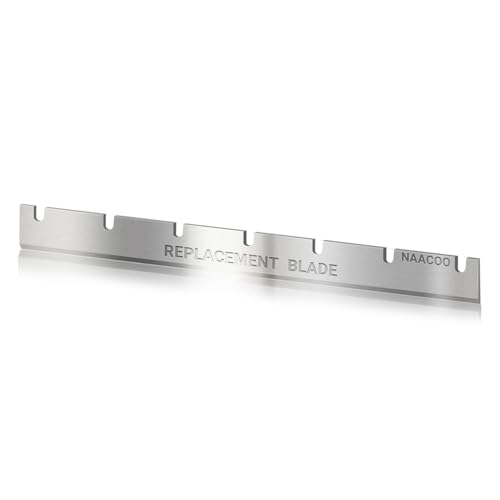
This is a replacement blade for the NAACOO floor cutter, rather than a circular saw blade. It is intended for the cutter’s 13 mm capacity and can be used for vinyl plank, laminate, engineered wood, and several other flooring materials. Choose it only if you need a compatible spare for that floor cutter; it does not replace a powered saw blade. The product name identifies it for the NAACOO cutter, so confirm the cutter model before ordering if you own a different manual tool.
Bottom line: Choose this only when replacing the blade in a compatible NAACOO floor cutter.
13-Inch Pro Rigid Core Vinyl Floor Cutter

Among the manual options, this cutter lists the widest range of cut types: straight, angle, L-shaped, U-shaped, and rip cuts. Its maximum cutting width is 12.9 inches and its maximum depth is 9.5 mm, with angle positions at 0°, 15°, 22.5°, 30°, and 45°. The included gap repair tool is a separate accessory, not part of the cutting mechanism. This is a specialized manual cutter rather than a saw blade, and its 9.5 mm limit makes it unsuitable for planks that exceed that thickness.
Bottom line: Pick this for varied manual cut shapes on planks no thicker than 9.5 mm.
How to choose a vinyl plank saw blade
Start with the tool: a circular saw blade and a guillotine-style flooring cutter are different tools, not interchangeable blades. For a circular saw, compare the blade diameter, arbor size, tooth count, and kerf with the saw and material; this set’s circular saw option is 7-1/4 inches with a 5/8-inch arbor. A higher tooth count generally gives a finer cut in thin sheet goods than a low-tooth framing blade, though feed rate and material can change the result. For manual cutters, compare the maximum width and thickness with the actual plank, including its rigid core. If a plank exceeds either published limit, select another cutting method rather than forcing it through.
Cutting vinyl planks safely and cleanly
Use eye protection and keep hands clear of the blade path whenever cutting flooring; powered saws also call for hearing protection and dust control. A utility knife and straightedge can score many flexible vinyl planks for a snap cut, while a saw is useful for cuts a knife cannot finish. With a circular saw, support the plank close to the cut and secure it so it cannot shift. Place the finished face down when using a conventional circular saw, whose teeth cut upward through the work, to help reduce visible tearout on the top face. Test a scrap first, because plank construction and blade condition affect the edge.
Manual floor cutters versus circular saws
Manual flooring cutters make cuts without a powered saw, while circular saw blades require a compatible saw and arbor. A hand cutter’s capacity is determined by its throat width and maximum material thickness; check both, since an angle cut can also consume extra width. A circular saw is more flexible for long rip cuts, but the cut quality depends on suitable blade geometry and secure support. The table distinguishes the tool types and highlights where the included options have published capacities.
| Tool choice | Useful when | Check before cutting |
|---|---|---|
| Circular saw blade | Powered straight or rip cuts | Diameter, arbor, material compatibility |
| Manual floor cutter | Non-powered cross or angle cuts | Width, thickness, angle range |
| Replacement cutter blade | Restoring a compatible cutter | Tool model and blade fit |
Choosing cut direction and reducing mistakes
Measure each plank and mark the finished face before cutting; reversing the measurement is a common source of waste. Leave the manufacturer’s required expansion gap at the room perimeter rather than cutting planks tight to the wall; many floating floors use roughly 1/4 inch, but the flooring maker’s installation instructions control. Avoid using a floor cutter beyond its rated thickness or width, since a forced cut can bind or damage the plank. For saw cuts, a dull or dirty blade can increase heat and roughness, so keep the blade clean and replace or sharpen it when cutting quality declines.
Frequently Asked Questions
Can I use a circular saw to cut vinyl plank flooring?
Yes, a circular saw can cut vinyl plank when fitted with a compatible blade and the plank is securely supported. Check the blade diameter and arbor against the saw, and make a test cut on scrap to assess the edge.
What tooth count works for vinyl plank?
A higher tooth count is generally preferable for a cleaner edge in thin flooring materials than a coarse framing blade. The circular saw option here has 140 teeth, but tooth count alone does not establish compatibility with every plank core.
Should vinyl plank be cut face up or down?
For a conventional circular saw, place the finished face down because the teeth enter from the underside and exit at the top. For a different saw design, check its cutting direction and test a scrap first.
How thick a plank can a manual flooring cutter handle?
Capacity depends on the cutter: the manual cutters here range from 9.5 mm to 15.8 mm maximum thickness. Measure the plank first and do not force stock that exceeds the tool’s rated limit.
Do vinyl planks need an expansion gap at walls?
Many floating vinyl floors call for about a 1/4-inch perimeter gap, but the flooring manufacturer’s installation instructions take precedence. The gap allows for movement, so do not cut the last row tight against a wall.