
Best Self-Inflating Cushion Options for Travel and Events

For most travelers and eventgoers, Sportneer 2-Inch Self-Inflating Cushion is the best self-inflating cushion because it combines a 2-inch foam-and-air design with adjustable firmness and self-inflation. Choose ATEPA 15 × 11-Inch Foam Cushion if you need a lighter, smaller packed pad and can manage a brief first-use setup; choose an air-only cushion if compactness matters more than self-inflating foam.
We earn a commission if you buy through links on this page. As an Amazon Associate I earn from qualifying purchases. Products are compared on manufacturer specifications, not hands-on testing.
- Best overall: Sportneer 2-Inch Self-Inflating Cushion – A 2-inch foam-infused cushion self-inflates, with 1–2 breaths available to increase firmness.
- Best for lighter packing: ATEPA 15 × 11-Inch Foam Cushion – It weighs 0.35 lb and packs to 5.9 × 3.5 inches.
- Best for simple air inflation: Teton Inflatable Seat Cushion – The 1.5-inch cushion uses a few puffs of air and has a non-slip base.
| Product | Best for | Seat size | Thickness | Weight | Shop |
|---|---|---|---|---|---|
| Sportneer 2-Inch Self-Inflating Cushion | Adjustable firmness | 17.9 × 14.4 in | 2 in | 0.48 lb | Check Price on Amazon |
| ATEPA 15 × 11-Inch Foam Cushion | Lightweight packing | 15 × 11 in | 2 in | 0.35 lb | Check Price on Amazon |
| Whispering Winds Inflatable Seat Cushion | Compact air pad | 16.5 × 13 in | Adjustable to 2 in | Under 0.5 lb | Check Price on Amazon |
| Teton Inflatable Seat Cushion | Non-slip seating | 17 × 12 in | 1.5 in | 0.38 lb | Check Price on Amazon |
Self-Inflating Cushions Compared
Compare how each cushion inflates, its seat dimensions and the trade-off between packed size and padding.
Sportneer 2-Inch Self-Inflating Cushion

Among these options, Sportneer 2-Inch Self-Inflating Cushion offers self-inflating foam with firmness adjustment: open its valve, then add 1–2 breaths if you want a firmer seat. The cushion measures 17.9 × 14.4 inches and is 2 inches thick, making it a substantial choice for bleachers, travel or outdoor events. It weighs 0.48 lb and packs compactly for carrying. The trade-off is that extra firmness requires manual inflation, so buyers who want a fully air-only pad or the lightest option may prefer another style.
Bottom line: Choose this if you want self-inflating foam and the option to tune firmness.
ATEPA 15 × 11-Inch Foam Cushion
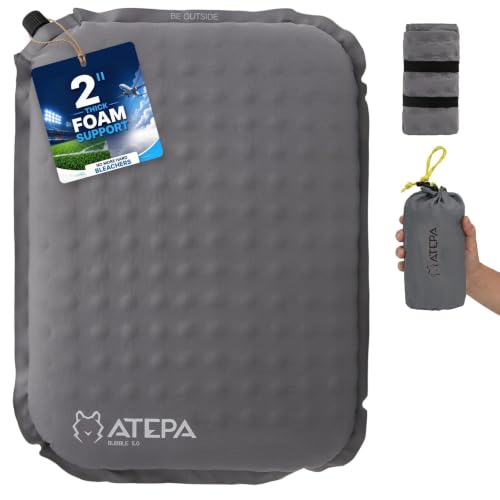
At 0.35 lb, ATEPA 15 × 11-Inch Foam Cushion is the lightest self-inflating foam cushion here, and it packs to 5.9 × 3.5 inches. Its 15 × 11-inch surface and 2-inch thickness suit buyers prioritizing a compact carry for flights, hikes or bleachers. The maker says first-time setup takes 2–3 breaths to help activate and expand its compressed foam core; the cushion gradually regains its self-inflating ability after 2–3 uses. That setup makes it less immediate on the first outing than a cushion that opens and inflates without that initial effort.
Bottom line: Pick this for lower carry weight and a small packed footprint.
Whispering Winds Inflatable Seat Cushion

Unlike the foam-core self-inflating choices, Whispering Winds Inflatable Seat Cushion is described as a blow-up cushion, so it suits buyers willing to inflate it themselves for a packable seat. It measures 16.5 × 13 inches and adjusts to 2 inches high; the packed size is 8 × 3.5 inches, and it weighs under 8 oz. The product features cite a leakproof air valve, waterproof bottom layer and soft top fabric. Its key limitation for this search is the distinction between manual blow-up inflation and self-inflating foam.
Bottom line: Choose this if compact packing matters more than self-inflating foam.
Teton Inflatable Seat Cushion
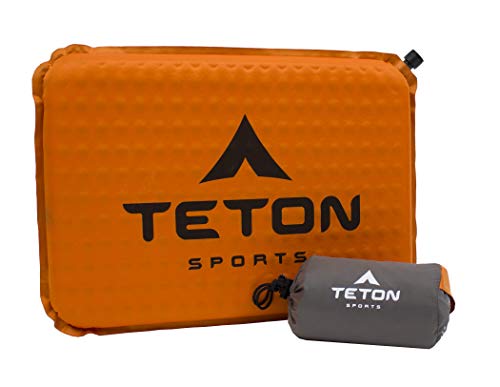
Teton Inflatable Seat Cushion stands out with a non-slip heavy-duty base, a useful distinction for hard office chairs or stadium seating where pad movement is a concern. The orange inflatable cushion measures 17 × 12 inches, is 1.5 inches thick and weighs 0.38 lb. Its soft stretch top is described as durable and easy to keep clean, and it inflates with a few puffs of air. It is an air-filled pad rather than a foam-core self-inflating model, and it is thinner than the 2-inch options.
Bottom line: Pick this if a non-slip base matters more than self-inflating foam.
How to choose a self-inflating cushion
Start with the inflation mechanism and the amount of padding you want: self-inflating pads use open-cell foam that expands as air enters through an open valve, while air-only cushions need breath inflation. A 2-inch cushion is a practical target for hard bleachers or travel seats when more separation from the seat matters; a thinner pad is easier to compress but provides less thickness. For carrying, compare both weight and packed dimensions rather than assuming that a larger seat will pack larger. If you want no first-use effort, choose a model that self-inflates without an activation step; if adjustable firmness matters, favor a design that allows a few breaths after expansion.
Seat dimensions and fit
Measure the usable seat area before choosing a cushion: a 15 × 11-inch pad covers less width than a 17.9 × 14.4-inch pad, which can matter on broad bleachers or airplane seats. Cushion thickness is a separate choice from footprint; 1.5 inches and 2 inches describe the height of padding, not its seated width. For narrow seats, avoid letting the pad overhang, since an unsupported edge can shift under movement. A simple rule is to match the pad width to the flat seat area and choose the thickest cushion that still sits securely without extending beyond the seat. Keep a measuring tape handy for unusually narrow stadium or transit seating.
Self-inflating foam versus air-only cushions
Self-inflating foam cushions combine expanding foam with air, so opening a valve begins inflation and a few breaths can top up firmness. Air-only inflatable cushions rely on the user to add air and may appeal when packed dimensions are the main priority. The products here illustrate the distinction: foam-core options are 2 inches thick, while the manual-inflation choices are 1.5 inches or adjustable up to 2 inches. A foam core also needs time to expand after being stored compressed, especially on its first use. For predictable setup at an event, open the valve before arriving and allow expansion time instead of waiting until seating begins.
| Need | Choose this construction | Trade-off |
|---|---|---|
| Automatic expansion | Self-inflating foam | May need expansion time |
| Manual firmness control | Air cushion or top-up valve | Requires breath inflation |
| Less seat thickness | Thinner cushion | Less padding height |
Inflation, storage and care
Self-inflating foam needs an open valve and time for the foam to draw in air; adding a small number of breaths can firm it up. On a new compressed foam cushion, allow for a few initial uses before expecting its usual expansion behavior. Store a foam pad uncompressed with its valve open when practical, rather than leaving it tightly rolled for long periods, so the foam can recover between trips. Keep an inflatable cushion away from sharp edges and inspect the valve before use; a puncture or poorly closed valve can reduce support. A waterproof underside is useful on damp ground, but it does not make every cushion suitable for immersion or wet storage.
Frequently Asked Questions
How long does a self-inflating seat cushion take to inflate?
Most self-inflating cushions begin expanding after the valve is opened, but foam recovery and temperature affect how quickly they fill. Allow several minutes before sitting if the cushion has been stored compressed, and add a breath or two if the seat needs more firmness.
Do self-inflating cushions need to be blown up?
Many self-inflating cushions expand on their own through an open valve, but a few breaths can increase firmness. A new compressed foam pad may need initial breaths and several uses before the foam reliably resumes its expansion.
What thickness is best for hard bleachers?
A 2-inch cushion gives more padding height than a 1.5-inch pad, which can help when a bleacher is especially hard. Choose a width that fits the actual seat; a thick pad that overhangs a narrow bench can shift.
Can I leave a self-inflating cushion rolled up?
A cushion can be rolled for transport, but long-term compression can slow foam recovery. Store a foam-core cushion unrolled with its valve open when possible, and keep it dry between outings.
How do I keep a cushion from sliding?
A non-slip base can help limit movement on smooth seats, while a close fit also reduces sliding on bleachers. Keep the cushion fully supported by the seat rather than placing an edge beyond its flat surface.