
Best Soldering Torch for Plumbing: 4 Torches Compared

For most plumbing soldering, SuniqFyre 10,000-BTU Torch Head stands out for its 10,000-BTU output, fuel compatibility and claimed inverted operation for up to 30 minutes. Choose another torch if a different handle shape or trigger-start design better suits your grip and work area.
A plumbing soldering torch heats copper pipe and fittings so solder can flow into the joint; controlled heat matters more than the highest flame temperature.
We earn a commission if you buy through links on this page. As an Amazon Associate I earn from qualifying purchases. Products are compared on manufacturer specifications, not hands-on testing.
- Best overall: SuniqFyre 10,000-BTU Torch Head – Its 10,000-BTU output and compatibility with propane, MAPP and MAP-Pro cover several common fuel choices.
- Best for a textured grip: DOMINOX DM-022 Torch Head – The maker describes its handle as having an anti-slip frosted texture.
- Best for a pencil flame: RTTOOA GJ-8000pro Torch Head – Its product name identifies a pencil flame, which can help direct heat toward a fitting.
| Product | Best for | Output | Fuel compatibility | Inverted operation | Shop |
|---|---|---|---|---|---|
| SuniqFyre 10,000-BTU Torch Head | Multi-fuel compatibility | 10,000 BTU | Propane, MAPP, MAP-Pro | Up to 30 minutes, maker claim | Check Price on Amazon |
| DOMINOX DM-022 Torch Head | Textured handle | — | Propane, MAPP, CGA600 interface | Up to 30 minutes, maker claim | Check Price on Amazon |
| RTTOOA GJ-8000pro Torch Head | Pencil flame | 10,000 BTU, maker claim | Propane, MAPP, MAP | — | Check Price on Amazon |
| Bernzomatic TS 8000 Torch | Propane torch head | — | Propane | — | Check Price on Amazon |
Plumbing Soldering Torches
Compare the torch heads by output, fuel compatibility and the operating features that affect access to a joint.
SuniqFyre 10,000-BTU Torch Head

The SuniqFyre combines a 10,000-BTU output with compatibility across propane, MAPP and MAP-Pro fuels. Its built-in regulator and flame lock distinguish it from the other torch heads. The maker says the torch can burn upside down for up to 30 minutes without flare-ups. That feature may help when a joint is awkwardly positioned, but it does not replace keeping the flame away from nearby combustibles or shielding surrounding surfaces. This is a torch head, so choose a compatible fuel cylinder separately.
Bottom line: Choose this if you want several fuel options and the maker’s inverted-use capability.
DOMINOX DM-022 Torch Head
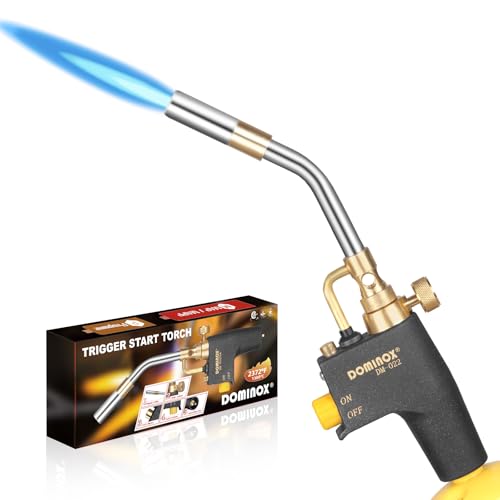
The DOMINOX DM-022 is the option with an anti-slip frosted handle texture, a useful distinction if a smooth grip is uncomfortable. It connects to propane or MAPP fuel through a CGA600 interface, according to the specifications, and has a built-in pressure regulator. The maker claims successful ignition every time and says the torch can be used upside down for up to 30 minutes. It suits buyers prioritizing grip texture and fuel-interface fit.
Bottom line: Pick this if the textured handle and CGA600 connection fit your setup.
RTTOOA GJ-8000pro Torch Head

The RTTOOA GJ-8000pro is identified as a pencil-flame torch, making its flame style the main point of difference. The maker says its maximum output is 10,000 BTU and describes a built-in pressure regulator as supporting flame stability. It is intended for propane, MAPP or MAP fuel. A pencil flame concentrates heat into a narrower area than a broad flame, but copper fittings still need even heating around the joint; avoid directing the flame at one spot for too long. Its features do not establish an inverted-use duration.
Bottom line: Choose this if a pencil-style flame is your priority and its fuel compatibility matches.
Bernzomatic TS 8000 Torch

The Bernzomatic TS 8000 is a trigger-start torch head for propane, with a heavy-duty hand-torch design. Unlike the other options here, the specifications do not give an output rating or fuel alternatives, so it is best suited to buyers who already use propane and value the named trigger-start format. A torch head alone is not a complete soldering setup: the cylinder connection and any required accessories must match. For plumbing joints, apply heat to the fitting rather than melting solder directly with the flame.
Bottom line: Pick this if you want a trigger-start propane head and do not need a BTU figure.
How to Choose a Plumbing Soldering Torch
For small copper plumbing joints, choose a torch with controllable heat and a fuel connection that matches your cylinder; maximum flame temperature alone is not a useful measure of soldering suitability. Common lead-free plumbing solder melts around 420–460°F, while a torch flame is far hotter, so the goal is to warm the fitting evenly rather than blast the solder. Compare stated BTU output only when the maker provides it, and treat flame shape, ignition and regulator design as separate considerations. A narrow flame can direct heat, while a broad flame can warm more of a fitting. If working around framing, insulation or wiring, use a flame-resistant shield and keep combustible material clear.
| Need | Compare | Decision rule |
|---|---|---|
| Fuel already on hand | Fuel compatibility and cylinder interface | Choose only a torch compatible with your fuel and connection |
| Awkward joint angle | Manufacturer’s inverted-use guidance | Use only within the duration and conditions |
| Precise heating | Flame style and flame control | Favor a controllable flame that fits the joint area |
Preparing Copper Pipe for Soldering
A sound soldered joint starts with clean, round pipe and a fitting that seats fully; torch output cannot compensate for poor preparation. Cut copper square, remove internal and external burrs, then clean the pipe end and fitting cup until bright metal shows. Apply a thin, even layer of plumbing flux to both mating surfaces and assemble the joint before heating. Keep water out of the joint because residual water absorbs heat and can prevent solder from flowing. Measure the pipe and fitting before assembly, and support the line so the joint does not move while the solder cools. Use lead-free solder for potable-water plumbing.
Heating a Copper Joint Without Overheating It
Heat the fitting, not the solder, and move the flame around the fitting so the joint warms evenly. Touch solder to the joint opposite the flame; when the metal is hot enough, capillary action draws solder into the narrow gap. A typical small copper joint often takes only seconds of focused heating, but pipe size, fitting mass, torch output and wind change the time. Stop heating once solder flows around the seam, then remove the flame. A shiny bead outside the fitting does not prove solder reached the full joint. Let the connection cool naturally before wiping away flux residue, and avoid moving it while the solder sets.
Plumbing Torch Safety and Common Mistakes
A torch flame can ignite nearby materials and heat metal beyond the visible flame, so clear a generous area around the joint and protect wood with a flame-resistant shield. Check connections for leaks with an approved leak-detection method before lighting; never use a flame to look for escaping gas. Keep the cylinder in its required upright position unless the torch maker explicitly allows another orientation, and follow its limits. Common mistakes include heating solder instead of the fitting, using too much flux, and continuing to heat after solder flows. For concealed or fire-sensitive locations, use a method appropriate to the work area rather than assuming a compact torch makes open-flame work safe.
Frequently Asked Questions
What solder should I use for plumbing copper?
Use lead-free plumbing solder for potable-water copper lines. Solder commonly begins melting around 420–460°F, so heat the fitting until solder flows into the joint rather than melting it directly with the flame.
How do I know when a copper fitting is hot enough?
Touch solder to the joint on the side opposite the flame; solder should melt against the warmed fitting and flow into the seam. If it does not flow, keep the flame moving around the fitting instead of concentrating heat on one spot.
Can I use a propane torch for copper pipe soldering?
Yes, a propane-compatible torch can solder copper plumbing when the torch and cylinder connection match. Small pipe joints need even heating, and wind or a larger fitting can increase the time required.
Should I turn a torch upside down while soldering?
Only do so if the specific torch maker permits inverted operation and within any time limit. Keep the fuel cylinder in its required orientation, since torch head capability does not automatically mean the cylinder can be inverted.
How long should a soldered copper joint cool?
Let a copper joint cool naturally until it is no longer hot to the touch before handling or wiping flux residue. Do not move the pipe while solder is setting, because movement can disturb the joint.