
Best Stren Original Monofilament Fishing Line Compared

Stren Original 4-Pound is the best Stren Original monofilament fishing line for anglers who want the brand’s Original formula in a long 1,000-yard spool; its 4-pound test suits lighter freshwater setups. Choose Stren Original Monofilament Fishing Line, 10-Pound, 100-Yard instead if you want 10-pound test, while anglers seeking a different brand or heavier line should consider Berkley Trilene XL Monofilament Fishing Line, 4-Pound, 330-Yard or Zebco Outcast 30-Pound, 160-Yard. Monofilament is a single-strand line, commonly made from nylon, with some stretch under load.
We earn a commission if you buy through links on this page. As an Amazon Associate I earn from qualifying purchases. Products are compared on manufacturer specifications, not hands-on testing.
- Best overall: Stren Original 4-Pound – The Stren Original line comes in a 1,000-yard spool with 4-pound test.
- Best for 10-pound test: Stren Original Monofilament Fishing Line, 10-Pound, 100-Yard – This Stren spool provides 100 yards of 10-pound line.
- Best for twist resistance: Berkley Trilene XL Monofilament Fishing Line, 4-Pound, 330-Yard – Berkley says the 4-pound line resists twists and kinks.
| Product | Best for | Pound test | Spool length | Color | Shop |
|---|---|---|---|---|---|
| Stren Original 4-Pound | Light freshwater rigs | 4 lb | 1,000 yd | Clear/Blue Fluorescent | Check Price on Amazon |
| Stren Original Monofilament Fishing Line, 10-Pound, 100-Yard | Heavier freshwater setups | 10 lb | 100 yd | Clear/Blue Fluorescent | Check Price on Amazon |
| Berkley Trilene XL Monofilament Fishing Line, 4-Pound, 330-Yard | Twist-conscious casting | 4 lb | 330 yd | Fluorescent Clear/Blue | Check Price on Amazon |
| Zebco Outcast 30-Pound, 160-Yard | Heavy line needs | 30 lb | 160 yd | Clear | Check Price on Amazon |
Stren Original monofilament fishing line options
Compare the Stren choices by test strength and spool length, then see how two alternatives differ.
Stren Original 4-Pound

Stren Original 4-Pound stands out for its 1,000-yard spool, giving anglers a long supply of Stren Original at 4-pound test. Stren lists superior knot, shock and tensile strength, plus abrasion resistance, limpness and controlled stretch. That combination suits light freshwater presentations where a thinner line and long spool are useful. The 4-pound test is the key constraint: anglers targeting larger fish or fishing around heavy cover may want stronger line. Match the test to the rod, reel and target species rather than choosing by spool length alone.
Bottom line: Pick this for light freshwater fishing when you want a long spool of Stren Original.
Stren Original Monofilament Fishing Line, 10-Pound, 100-Yard
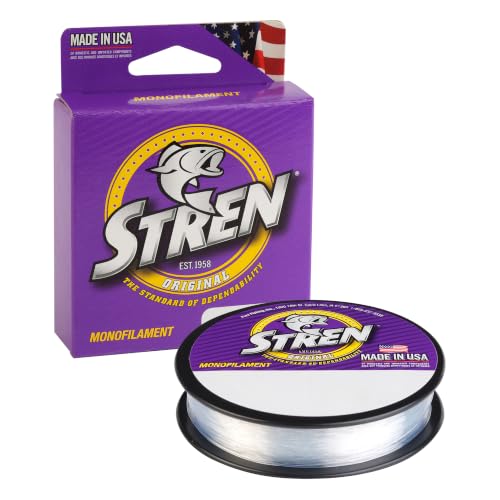
Stren Original Monofilament Fishing Line, 10-Pound, 100-Yard separates itself with 10-pound test, compared with the 4-pound Stren Original spool. Its 100-yard length may suit a partial refill or a setup that does not need a large reserve. Stren describes the line as low memory and says its fluorescent color is easy to track in water; the product is identified for freshwater environments. Check that 100 yards is enough for your reel’s intended fill, since larger reels can require more line.
Bottom line: Choose this when your freshwater setup calls for 10-pound test and 100 yards is sufficient.
Berkley Trilene XL Monofilament Fishing Line, 4-Pound, 330-Yard
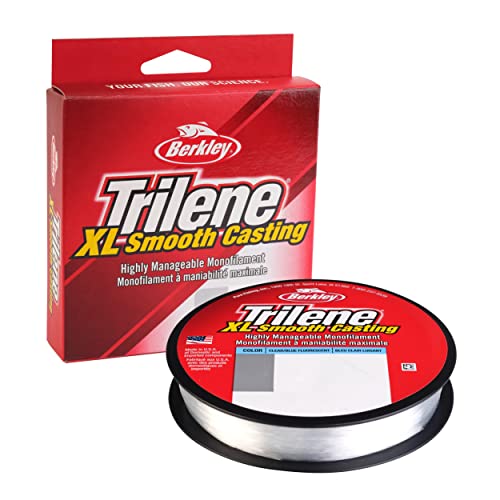
Berkley Trilene XL Monofilament Fishing Line, 4-Pound, 330-Yard is the non-Stren alternative here, with a 330-yard spool of 4-pound monofilament. Berkley says the line resists twists and kinks and offers manageable casting across a range of baits and techniques. It provides more line than the 100-yard Stren spool but less than the 1,000-yard Stren spool, making spool size a practical differentiator. The product is intended for freshwater use. Its 4-pound test remains a light-line choice, so anglers who need more strength for cover or larger fish should compare their rod and reel ratings before settling on it.
Bottom line: Choose this if you want 4-pound mono from another brand with a mid-length spool.
Zebco Outcast 30-Pound, 160-Yard

Zebco Outcast 30-Pound, 160-Yard is the heaviest option, at 30-pound test, and is a clear mono line on a 160-yard spool. Zebco says it has low memory and stretch, resists twists and kinks, and offers high tensile strength. That makes it a different-purpose choice from the light Stren spools: consider it when your tackle and fishing conditions call for heavier line, not as a direct 4-pound substitute. The substantial test may not suit a light rod or reel. Check your equipment’s line rating and the target species before spooling it.
Bottom line: Pick this only when your tackle and fishing conditions call for 30-pound line.
How to choose monofilament pound test
Choose line test to match your rod, reel, target fish and cover; a heavier test is not automatically a better fit. Pound test is the line’s rated breaking load, while actual knots and abrasion can reduce the load a rig withstands. A useful starting point is to stay within the rod and reel’s printed line rating, then move toward the higher end when fishing around weeds, wood or rocks. For small freshwater fish and light lures, 4-pound mono is a common light-line choice; 10-pound is a more general medium-light option, while 30-pound belongs on tackle intended for heavy line. Match line diameter and reel capacity too, because thicker line generally reduces how much fits on a spool.
Spool length and reel capacity
Spool length determines whether a package can fill a reel or only replace worn line. A 100-yard spool can be enough for a small reel or a partial refill, while 1,000 yards gives more reserve for repeated spooling; the exact amount a reel holds depends on line diameter and spool design. Check the reel’s capacity marking, commonly shown by line test and yardage, and compare it with the package before buying. Avoid overfilling: leave a small gap below the spool lip so line can peel off without spilling coils. Underfilling can shorten casting distance. If the package length is less than the reel’s capacity, use backing or buy enough line for the intended fill.
Monofilament compared with other line types
Monofilament stretches more than braid and is usually easier to handle and knot, while braid has little stretch and can provide greater strength for a similar diameter. Fluorocarbon is denser and less visible underwater than many mono lines, but stiffness and handling vary by product. These distinctions affect lure action, bite detection, spool capacity and ease of tying knots. For a forgiving, general freshwater line, mono is a practical choice; for sensitivity and thin diameter, many anglers consider braid, and for a low-visibility leader they may use fluorocarbon. The table gives a starting rule rather than a substitute for checking rod and reel ratings.
| Need | Line type to consider |
|---|---|
| Forgiving stretch and familiar handling | Monofilament |
| Low stretch and thin diameter | Braid |
| Leader with reduced underwater visibility | Fluorocarbon |
Knots, line memory and safe handling
Fresh mono can retain coils from the spool, and line memory often becomes more noticeable as line ages or takes a tight wrap. Close the bail by hand after a cast and remove slack before turning the handle to reduce loose coils and tangles. Wet the knot before tightening to reduce friction heat, and trim the tag end close without cutting the knot. Inspect line after contact with rocks, docks or other abrasive surfaces; replace a damaged section rather than trusting a nicked strand. Never wrap fishing line around bare fingers to pull against a snag, since a tight line can cut skin. Keep discarded line contained and dispose of it responsibly to avoid wildlife entanglement.
Frequently Asked Questions
How often should monofilament fishing line be replaced?
Replace mono when it shows nicks, rough spots, discoloration or persistent coils; inspect it before each outing and after contact with abrasive cover. Even unused line can take a set on a spool, so periodic replacement is sensible for frequently used reels.
Does monofilament stretch when a fish pulls?
Yes, mono stretches under load, which can cushion sudden surges but soften bite feedback compared with low-stretch braid. A loose drag and a rod with some flex also help absorb a fish’s run.
How full should a spinning reel spool be?
Leave roughly 1/8 inch between the line and the spool lip on many spinning reels. Overfilling encourages loops to spill off, while substantial underfilling can reduce casting distance; use the reel’s capacity marking as a guide.
Can I use 4-pound line for larger freshwater fish?
A 4-pound line can be used where cover is open and the tackle is rated for it, but rocks, weeds and forceful runs increase the chance of break-off. Choose a test within the rod and reel rating and consider heavier line when abrasion or fish size demands it.
What does pound test mean on fishing line?
Pound test is the line’s rated breaking strength under specified conditions, not a guarantee that every knot or damaged section will hold that load. A poorly tied knot or abrasion can make a line fail below its rating.