
Best Tape for Brick: 5 Options by Use and Hold

VELCRO Brand Extreme Outdoor Tape, 14 ft is the best tape for brick for most mounting jobs because it is made for brick and concrete and holds up to 15 pounds. Choose a painter’s tape instead when you need to mask a rough brick surface for painting, not attach an object.
Brick is porous and uneven, so adhesion depends on the surface and the tape’s intended use; clean, dry masonry gives mounting adhesives the best chance to bond.
We earn a commission if you buy through links on this page. As an Amazon Associate I earn from qualifying purchases. Products are compared on manufacturer specifications, not hands-on testing.
- Best overall: VELCRO Brand Extreme Outdoor Tape, 14 ft – Designed for brick and concrete, with a 15-pound hold claim and UV- and weather-resistant construction.
- Best for clear mounting: Scotch-Mount Multi-Purpose Gel Tape, Clear – Clear double-sided gel tape supports up to 20 pounds and is described as suitable for brick.
| Product | Best for | Use | Width | Hold or length | Shop |
|---|---|---|---|---|---|
| VELCRO Brand Extreme Outdoor Tape, 14 ft | Outdoor mounting | Mounting | 1 in | 15 lb | Check Price on Amazon |
| Scotch-Mount Multi-Purpose Gel Tape, Clear | Clear mounting | Mounting | 1.18 in | 20 lb | Check Price on Amazon |
| Gorilla Invisible Hold Mounting Squares | Pre-cut mounting | Mounting squares | 1 in squares | 24 squares | Check Price on Amazon |
| Gorilla Invisible Hold Mounting Tape, Clear | Clear permanent bond | Mounting | 1 in | 15 lb | Check Price on Amazon |
Tape for Brick: Picks by Project
Choose mounting tape to attach objects and painter’s tape to mask brick during painting; those jobs need different adhesives.
VELCRO Brand Extreme Outdoor Tape, 14 ft

VELCRO Brand Extreme Outdoor Tape, 14 ft is the outdoor mounting option specifically aimed at brick and concrete, unlike masking tape made to protect surfaces during painting. The black double-sided roll measures 14 feet by 1 inch, and the brand says its adhesive holds up to 15 pounds and resists water and UV exposure. It suits firmly attached décor or other mounting projects where a no-tool adhesive is appropriate. Its black color and permanent-style adhesive approach matter for visible edges or objects that may need frequent removal; choose another solution if those limitations do not fit the job.
Bottom line: Choose it for outdoor brick mounting when its black finish and 15-pound claim suit the project.
Scotch-Mount Multi-Purpose Gel Tape, Clear
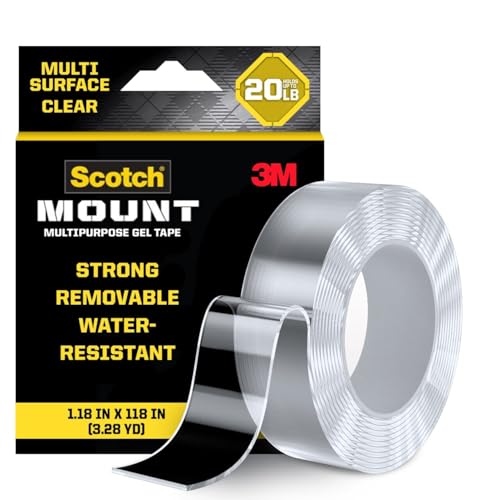
Scotch-Mount Multi-Purpose Gel Tape, Clear offers a clear gel-style mounting option for brick, with a maximum hold of 20 pounds; that claim is not a universal safe load for every brick surface or object. The 1.18-inch-wide tape measures 118 inches long and is water-resistant, making it relevant to humid areas as well as dry indoor projects. The brand calls it removable, which distinguishes it from a permanent-bond choice, but removal can still depend on the masonry finish and adhesive contact. Use this option when transparency matters and the mounting surface is suitable.
Bottom line: Choose it when a clear tape and up-to-20-pound claim fit the mounting task.
Gorilla Invisible Hold Mounting Squares
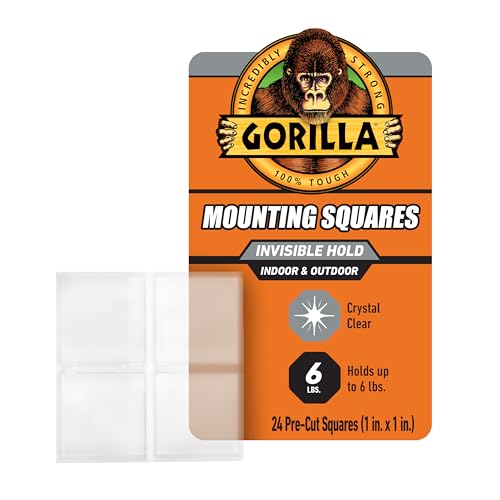
Gorilla Invisible Hold Mounting Squares comes as 24 clear, pre-cut 1-inch squares, so there is no roll to measure or cut for small mounting points. The manufacturer says the weatherproof adhesive grips brick, stone, stucco, plaster, and wood for indoor or outdoor use. The small squares suit discrete placements behind objects, but their package does not give a load capacity; avoid assigning them the pounds-per-roll claim of other tapes. Clear adhesive can blend behind décor, while the fixed square shape is less adaptable than continuous tape for long or irregular contact areas.
Bottom line: Pick the pre-cut squares for small, discrete placements on brick.
Gorilla Invisible Hold Mounting Tape, Clear

Gorilla Invisible Hold Mounting Tape, Clear is a continuous clear strip for mounting on brick, offering a different format from the pre-cut squares. The 1-inch-wide roll is 60 inches long, and the brand claims a 15-pound hold with an instant, permanent bond and indoor/outdoor use. The clear finish can be less visible behind signs or décor, and the permanent bond is useful when repositioning is not expected. That permanence is a limitation for renters or anyone planning to remove the mounted item; consider a removable approach if later changes are likely.
Bottom line: Choose it for a clear continuous strip where a permanent bond is acceptable.
How to choose tape for brick
Choose by job first: mounting tape attaches objects, while painter’s tape masks an edge during painting. Brick’s rough, porous face reduces the area adhesive can contact, and mortar joints add unevenness; a flat, clean, dry brick face is a better bonding target than dusty or crumbly masonry. For outdoor mounting, select a product explicitly intended for masonry and weather exposure rather than assuming any double-sided tape will work. A measurable rule: if the object’s weight exceeds the product’s hold limit, do not use that tape for the job. Leave extra margin for outdoor wind, leverage, and uneven contact.
Mounting tape versus painter’s tape on brick
Mounting tape and painter’s tape solve different problems, so a roll labeled for rough surfaces is not automatically suitable for hanging. The table separates the intended job and the product-specific limit or dimension to compare.
| Project need | Tape type | Useful comparison |
|---|---|---|
| Attach an object | Double-sided mounting tape | Check claimed load, width, and weather resistance |
| Mask before painting | Rough-surface painter’s tape | Check roll length and adhesive set time |
| Small placement points | Pre-cut mounting squares | Check square size and number included |
On textured brick, press tape into the surface rather than bridging gaps, but avoid relying on it where a falling object could injure someone or damage property.
Preparing brick for an adhesive bond
Adhesives bond best to clean, dry, stable masonry; dust, soot, loose paint, and moisture can weaken contact. Brush loose grit away and let damp brick dry before application, since water resistance after bonding does not mean every tape can attach reliably to a wet surface. Brick is also highly variable: fired brick, painted brick, sealed masonry, and rough mortar joints offer different contact conditions. Keep the tape on brick faces where possible instead of straddling a joint or loose coating. For a valuable object or a heavy load, use a mechanical masonry fastener suited to the wall rather than treating an adhesive’s claimed maximum as a safety rating.
Removing or painting over tape on brick
Painter’s tape and mounting tape should be removed according to their different purposes. The rough-surface painting tape here uses a 30-to-60-minute wait before painting, then slow removal at a 45-degree angle; pulling quickly can lift paint or fibers from a fragile surface. Mounting adhesives can leave residue or pull off weak coatings, especially on porous brick, so test a hidden spot before committing to a visible area. Do not paint over mounting tape as though it were masking tape: thick adhesive edges can remain visible and may not provide a clean paint boundary. Confirm compatibility with the brick finish before applying a permanent adhesive.
Frequently Asked Questions
Will mounting tape stick to rough brick?
Mounting tape can adhere to rough brick when the adhesive contacts a clean, stable surface. Deep texture and mortar joints reduce contact, so use the brick face rather than bridging gaps and keep loads within the product’s claim.
Can painter’s tape be used to hang items?
Painter’s tape is intended to mask surfaces during painting, not support mounted objects. Use mounting tape for attachment and compare the object’s weight with the product’s capacity.
How long should painter’s tape sit before painting?
The rough-surface painter’s tape here calls for a 30-to-60-minute set before painting. Pull tape off slowly at a 45-degree angle to reduce the chance of lifting a delicate finish.
Does mounting tape work on damp brick?
A water-resistant adhesive does not guarantee bonding to wet masonry. Let brick dry first; moisture and surface dust can interfere with contact even when a bonded tape resists later weather.
How much weight can tape hold on brick?
Use the tape’s capacity as a ceiling, not a universal guarantee: surface texture, contact area, and loading direction affect the result. Do not use adhesive tape for a load that could injure someone if it falls.