
Silver Dip for Cleaning Silver: 4 Options Compared

Goddard’s Silver Cleaner Dip, 10 oz suits most people because its 10-ounce silver dip is described for both flatware and jewelry, including intricate filigree. Choose Hagerty Flatware Silver Dip, 16.9 oz instead if you want a dipping basket for flatware, or Hagerty 17128 Silver Dip, 1 gal for larger jobs.
Silver dip is a liquid tarnish remover used by immersing silver items briefly, then rinsing and drying them. It is not a universal cleaner: avoid dipping pieces with pearls, gemstones, glued components, lacquer, or intentional dark oxidation.
We earn a commission if you buy through links on this page. As an Amazon Associate I earn from qualifying purchases. Products are compared on manufacturer specifications, not hands-on testing.
- Best overall: Goddard’s Silver Cleaner Dip, 10 oz – Its 10-ounce container is described for silverware, jewelry and intricate filigree.
- Best for basket-assisted flatware cleaning: Hagerty Flatware Silver Dip, 16.9 oz – A dipping basket is included, and the container holds 16.9 fluid ounces.
- Best for larger jobs: Hagerty 17128 Silver Dip, 1 gal – The 1-gallon container is intended for larger jobs or replenishing a cleaning supply.
| Product | Best for | Volume | Basket included | Immersion guidance | Shop |
|---|---|---|---|---|---|
| Goddard’s Silver Cleaner Dip, 10 oz | Intricate silver | 10 fl oz | No | Submerge until tarnish disappears | Check Price on Amazon |
| Hagerty Flatware Silver Dip, 16.9 oz | Flatware batches | 16.9 fl oz | Yes | Less than 10 seconds | Check Price on Amazon |
| Brilliant Silver Dip, 8 oz | Short timed dips | 8 fl oz | No | 10–30 seconds; do not over-soak | Check Price on Amazon |
| Hagerty 17128 Silver Dip, 1 gal | Larger cleaning jobs | 1 gal | No | — | Check Price on Amazon |
Silver dip for cleaning silver
Compare container size and handling features to choose a dip that suits the pieces you plan to clean.
Goddard’s Silver Cleaner Dip, 10 oz
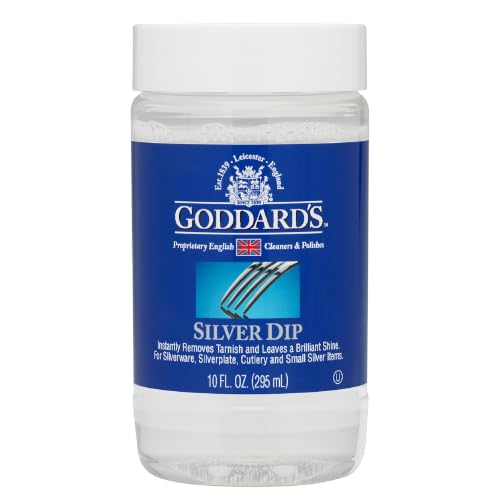
Goddard’s Silver Cleaner Dip, 10 oz is the option here explicitly suited to intricate filigree as well as silverware and jewelry. The maker says to submerge an item until tarnish disappears, then rinse with soapy water and dry with a soft cloth; no scrubbing is needed. Its 10-fluid-ounce container is a practical choice for occasional small-piece cleaning. Because this is an immersion cleaner, it suits only pieces that can safely be submerged; keep it away from stones, pearls, glued parts and intentional dark details. Avoid treating the product’s broad use claims as permission to dip every jewelry component.
Bottom line: Choose this for submersible sterling or silver-plated pieces with intricate detail.
Hagerty Flatware Silver Dip, 16.9 oz

Hagerty Flatware Silver Dip, 16.9 oz stands out for its included dipping basket, which can help transfer flatware without putting hands in the solution. The maker describes a dip, rinse and dry process and says it works in less than 10 seconds. Its 16.9-fluid-ounce container is aimed at silverware, though the maker also mentions jewelry and collectibles. The basket does not make unsuitable pieces safe to immerse: avoid items with stones, glued elements or deliberate oxidation, and keep the solution off other materials. Its larger container and basket matter most when cleaning several small flatware pieces.
Bottom line: Pick this for flatware cleaning when the included basket is useful.
Brilliant Silver Dip, 8 oz

Brilliant Silver Dip, 8 oz gives the clearest immersion limit among these options: the maker says to dip for 10–30 seconds and not to over-soak. The 8-fluid-ounce container suits a smaller cleaning supply or occasional jobs. Its fast-acting formula is described as removing tarnish in seconds, so the short interval is especially important; do not leave silver sitting in the liquid. This product is a straightforward dip without a basket, so it is less convenient when handling multiple pieces or when you want a tool to keep fingers out of the solution.
Bottom line: Choose this if you want a small container with a defined short dip interval.
Hagerty 17128 Silver Dip, 1 gal

Hagerty 17128 Silver Dip, 1 gal is the largest container here at 1 gallon, and its uses are larger jobs and replenishing a silver-cleaning supply. That capacity can make sense where silver pieces are cleaned repeatedly or in batches. The maker does not give a specific immersion time or describe a basket, so this choice requires more care in setup than options with a handling feature or timing guidance. Keep the container secured and follow its label for the correct process; do not assume that a larger volume means a longer safe soaking time.
Bottom line: Choose this for a larger cleaning workload or to replenish a supply.
How to choose a silver dip
Choose by the pieces you need to clean, not just by container size. A dip works by immersing suitable silver so the liquid reaches tarnish in crevices; that makes it useful for intricate patterns but risky for components that should not contact the solution. Sterling silver is 92.5% silver, while silver plate is a thin silver layer over another metal, so avoid abrasive scrubbing that can wear plating. For occasional jewelry or a few pieces, a smaller container is easier to manage; for batches, prioritize a basket or more volume. With stones, pearls, glued components, lacquer, or deliberate dark oxidation, choose a non-immersion method instead.
How long to leave silver in dip
Keep immersion brief and use the product’s interval when one is provided. The options here give different guidance: one specifies 10–30 seconds, another says less than 10 seconds, and one directs users to submerge until tarnish disappears. Those instructions are not interchangeable, so do not transfer one product’s timing to another. Remove the piece promptly once clean, rinse away residue, and dry with a soft cloth; trapped moisture can leave spots, especially in grooves and hollow forms. Work over a stable basin and keep the solution away from food, children and pets. Never leave an item soaking unattended.
Silver dip compared with polishing cloths
A dip reaches recessed patterns with little or no rubbing, while a polishing cloth gives more control over small areas and avoids immersing an entire object. Use a dip for plain, fully submersible silver; choose a cloth for mixed-material pieces, stones, or silver with intentionally darkened recesses. Silver-plated items need a light touch because the silver coating is thin, and repeated aggressive polishing can remove it. A quick decision rule: if any part of the item cannot safely be submerged, do not use a dip on the assembled piece. Separate removable components only when the design allows it safely.
| Need | More suitable approach | Reason |
|---|---|---|
| Intricate, plain silver | Silver dip | Liquid reaches recessed detail |
| Pearls or attached stones | Targeted cloth cleaning | Avoids immersing mixed materials |
| Darkened decorative recesses | Gentle localized cleaning | Preserves intentional contrast |
Safe handling and common mistakes
Silver dip is a chemical cleaner, so keep it off skin and out of eyes, use it in a ventilated area, and follow the container’s safety directions. Wear gloves if the label recommends them, and never mix silver dip with another cleaner. A common mistake is using immersion on an assembled piece with a stone, adhesive, lacquer or hollow handle; liquid can affect those materials or remain trapped. Another is assuming a longer soak will improve the result: short, controlled contact is the safer approach. Rinse thoroughly after dipping, dry crevices, and store the cleaner closed and out of reach of children and pets.
Frequently Asked Questions
Can silver dip be used on silver-plated flatware?
Many silver dips are intended for sterling and silver-plate, but plating is thin and can wear with repeated polishing. Use only a brief dip appropriate to that cleaner and avoid abrasive rubbing.
Can I use silver dip on jewelry with gemstones?
Do not immerse assembled jewelry with gemstones unless the cleaner and stone-care guidance explicitly allow it. Pearls, porous stones, glued settings and other attached materials can be damaged by immersion.
Should silver be rinsed after using dip?
Yes, rinse dipped silver after treatment and dry it thoroughly with a soft cloth. Pay particular attention to grooves and hollow areas where liquid can remain.
How often should silver be cleaned with dip?
Use dip only when tarnish needs removal rather than on a fixed schedule. Frequent chemical cleaning can wear silver plate and may remove intentional dark oxidation from decorative pieces.
Can silver dip remove tarnish from antique silver?
Avoid dipping antique silver with darkened details, lacquer, mixed materials or uncertain construction. A dip can remove intentional patina, so identify the finish and components before choosing an immersion cleaner.