
Blue Devil Oil Stop Leak: 4 Options Compared

BlueDevil 49499 Oil Stop Leak is the closest match for shoppers seeking Blue Devil oil stop leak, with 8-ounce bottles formulated for gasoline and diesel engines. Choose another option if you need a multi-fluid formula or a different engine oil treatment; confirm the product is suitable for the fluid system and leak before adding it.
We earn a commission if you buy through links on this page. As an Amazon Associate I earn from qualifying purchases. Products are compared on manufacturer specifications, not hands-on testing.
- Best overall: BlueDevil 49499 Oil Stop Leak – The BlueDevil formula is designed for engine oil leaks and comes in six 8-ounce bottles.
- Best for synthetic oil: Lucas Oil 10278 Engine Oil Stop Leak – Lucas says its formula is compatible with petroleum, semi-synthetic and full synthetic motor oils.
- Best for multiple fluid systems: Bar’s Leaks 1334 One Seal – One Seal is made for minor engine oil, transmission fluid and power steering fluid leaks.
| Product | Best for | Product type | Container size | Stated compatibility | Shop |
|---|---|---|---|---|---|
| BlueDevil 49499 Oil Stop Leak | BlueDevil engine leaks | Engine oil stop leak | 8 oz; 6 bottles | Gasoline and diesel engines | Check Price on Amazon |
| Lucas Oil 10278 Engine Oil Stop Leak | Synthetic oil users | Engine oil stop leak | 1 qt | Petroleum, semi-synthetic and full synthetic | Check Price on Amazon |
| Bar’s Leaks 1334 One Seal | Multi-fluid leaks | Multi-fluid stop leak | 11 oz | Engine oil, transmission and power steering | Check Price on Amazon |
| Bar’s Leaks 1000 High Mileage Engine Repair | Worn engine symptoms | Engine repair additive | 16.9 oz | — | Check Price on Amazon |
Blue Devil oil stop leak and alternatives
Compare each formula by its intended use, container size and stated fluid compatibility.
BlueDevil 49499 Oil Stop Leak

For a BlueDevil-branded engine oil stop leak, BlueDevil 49499 Oil Stop Leak is the direct match; the package contains six 8-ounce bottles. BlueDevil says the formula is intended to recondition rubber seals in oil systems and permanently seal seeping or dripping oil leaks. Its gasoline- and diesel-engine compatibility makes it relevant across those engine types. The multipack suits buyers who want multiple bottles on hand, but its use is oil systems, not the transmission or power-steering systems covered by some alternatives. Check the vehicle’s oil capacity and product directions before adding any treatment.
Bottom line: Pick this if you want BlueDevil’s engine oil leak formula in a six-bottle pack.
Lucas Oil 10278 Engine Oil Stop Leak

Unlike the 8-ounce bottles in BlueDevil 49499 Oil Stop Leak, Lucas Oil 10278 Engine Oil Stop Leak comes in a quart container and is compatible with petroleum, semi-synthetic and full synthetic motor oils. Lucas says its blend renews worn seals without harmful solvents or risk of damage or eventual corrosion; it also says the formula can reduce engine noise and oil consumption while raising oil pressure. That makes it a practical alternative when oil type is the deciding factor. The quart size may not suit someone seeking a smaller container, and the specifications do not establish an application dose for a particular engine, so confirm the required amount before use.
Bottom line: Choose this when compatibility across conventional and synthetic motor oils matters.
Bar’s Leaks 1334 One Seal

Bar’s Leaks 1334 One Seal differs from the engine oil-only formulas by targeting minor leaks in engine oil, transmission fluid and power steering fluid systems. Bar’s Leaks says one bottle treats one of those systems and describes the formula as a sealer for leaks associated with normal wear and age. At 11 ounces, it is a single-bottle option for a buyer addressing one compatible fluid system. Its broader system coverage is useful only when the leak is in one of those named systems; it is not the direct BlueDevil-branded engine oil product. Identify the leaking fluid before choosing a treatment.
Bottom line: Pick this if you need a single treatment for one of its three named fluid systems.
Bar’s Leaks 1000 High Mileage Engine Repair
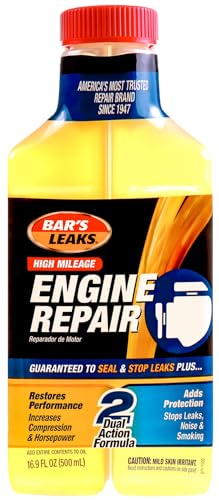
Bar’s Leaks 1000 High Mileage Engine Repair is an engine repair additive rather than a dedicated oil stop leak formula like BlueDevil 49499 Oil Stop Leak or Lucas Oil 10278 Engine Oil Stop Leak. Bar’s Leaks says it is intended to address oil-related problems in worn cylinders, rings, bearings and seals, and claims it can reduce noise, oil consumption and smoking while restoring compression and power. It may suit someone considering a broader high mileage engine treatment, but the claims do not make it a direct substitute for a seal-focused leak product.
Bottom line: Consider this for broader high mileage engine concerns, not as the closest BlueDevil match.
How to choose an engine oil stop leak
Start with the fluid system and the location of the leak: engine oil treatments are not interchangeable with transmission or power steering treatments. Oil stop leak additives generally aim to condition or swell aging seals; they cannot repair a cracked housing, loose drain plug or damaged gasket surface. For a small seep at a seal, a compatible additive may be considered, but active dripping or a rapidly falling oil level calls for diagnosis rather than repeated topping-up. Check the product label for engine type, oil compatibility and dose, and compare that dose with the engine’s oil capacity. Never add multiple treatments at once, since combining formulas can change the oil’s additive balance.
When an oil leak needs mechanical repair
An additive is not a safe substitute for repair when the oil-pressure warning light appears, oil is pooling under the vehicle, or the dipstick level falls quickly. Keep the level between the dipstick’s low and full marks, and stop driving if the warning light stays on; low oil pressure can damage an engine quickly. A few drops after parking may come from a seal, filter, drain plug or another point, so identifying the source matters before selecting a treatment. Avoid pouring a product into transmission or steering fluid unless its label specifically names that system. If oil reaches hot exhaust parts or produces smoke, have the leak inspected promptly because spilled oil can create a fire hazard.
What different stop leak product types do
Engine oil seal treatments, multi-fluid sealers and broader engine repair additives have different purposes. The table separates these categories by their intended scope, so match the treatment to the leaking fluid rather than relying on the word “stop leak” alone. A product claiming broader compatibility still needs to name the system you plan to treat. None of these categories fixes broken metal parts or incorrect assembly.
| Type | Intended target | Choose when |
|---|---|---|
| Engine oil seal treatment | Engine oil seep at seals | Leak appears to involve an engine oil seal and the formula matches the engine |
| Multi-fluid sealer | Named oil, transmission or steering systems | The fluid system is confirmed and named on the product |
| Engine repair additive | Broader oil-related wear concerns | The intended use includes the symptom or engine part involved |
How to add an oil treatment safely
Use the package dose and account for the engine’s total oil capacity before pouring anything into the crankcase. Many passenger-car engines hold roughly 4 to 6 quarts, but capacity varies substantially by engine, so use the vehicle’s specified capacity rather than assuming a typical amount. Check the dipstick on level ground after the oil settles, and do not overfill; excess oil can cause foaming and engine damage. Add a treatment during an oil change only if its directions allow that use, or follow directions for topping up existing oil. Keep additives away from skin and eyes, wipe spills promptly, and store them out of reach of children and pets.
Frequently Asked Questions
Can oil stop leak fix a leaking gasket?
An oil stop leak additive may help with a minor seep from a compatible aging seal, but it cannot repair a torn gasket or damaged sealing surface. A persistent drip or falling dipstick level needs mechanical diagnosis.
How much oil stop leak should I add?
Use the dose on the product package and compare it with the engine’s oil capacity, which is commonly about 4 to 6 quarts in passenger cars but varies by model. Do not overfill the crankcase to accommodate an additive.
Can I drive with an oil leak?
A slight seep with a stable oil level is different from a leak that rapidly lowers the dipstick reading. Stop driving if the oil-pressure warning light stays on, and have active dripping or oil contacting hot exhaust inspected promptly.
Can engine oil stop leak go in synthetic oil?
Compatibility depends on the specific formula, not simply on the phrase “stop leak.” Lucas Oil 10278 Engine Oil Stop Leak is stated to work with petroleum, semi-synthetic and full synthetic motor oils; verify compatibility for any other product before use.
Will oil stop leak work on a transmission leak?
Only use a product that specifically names transmission fluid as a compatible system. Bar’s Leaks 1334 One Seal is described for transmission fluid as well as engine oil and power steering fluid, while engine oil-only formulas should not be assumed safe for transmissions.